
Last updated November 15, 2026
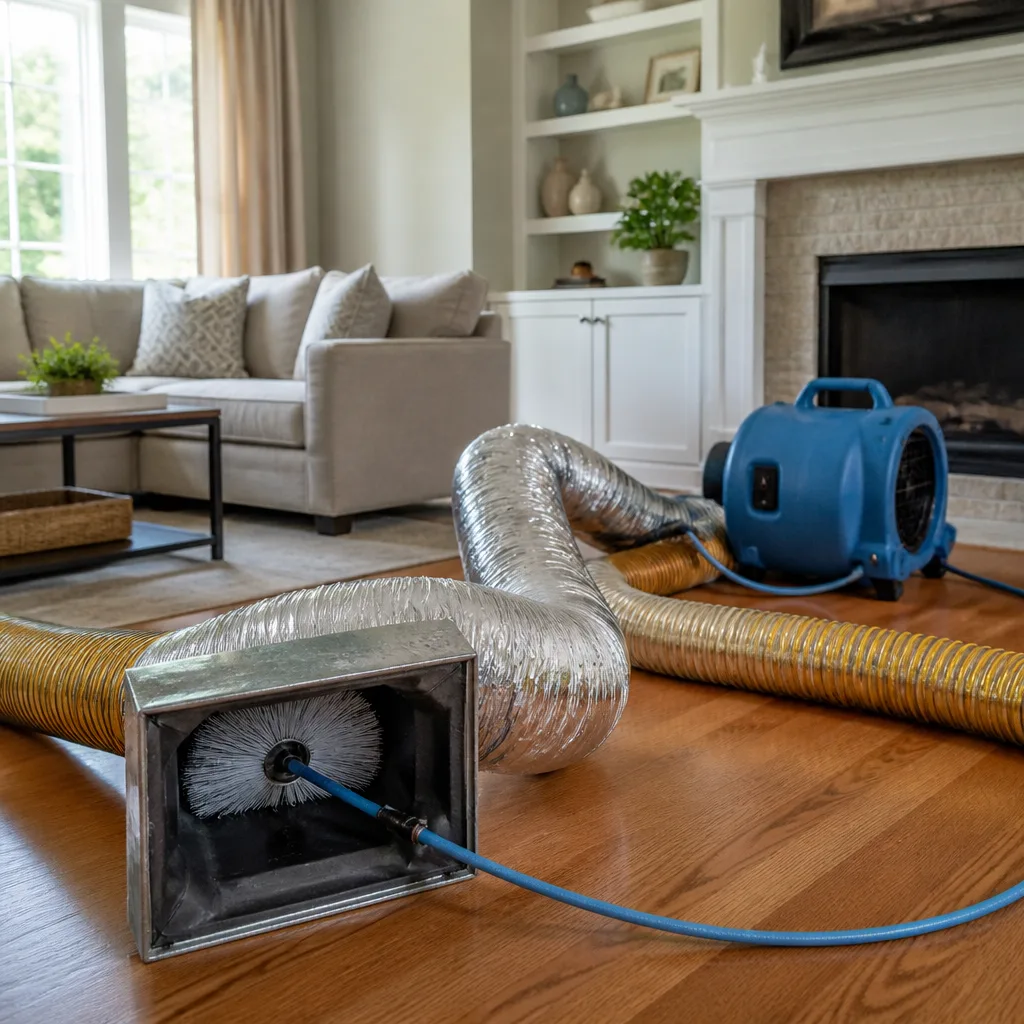 Whole-home duct cleaning
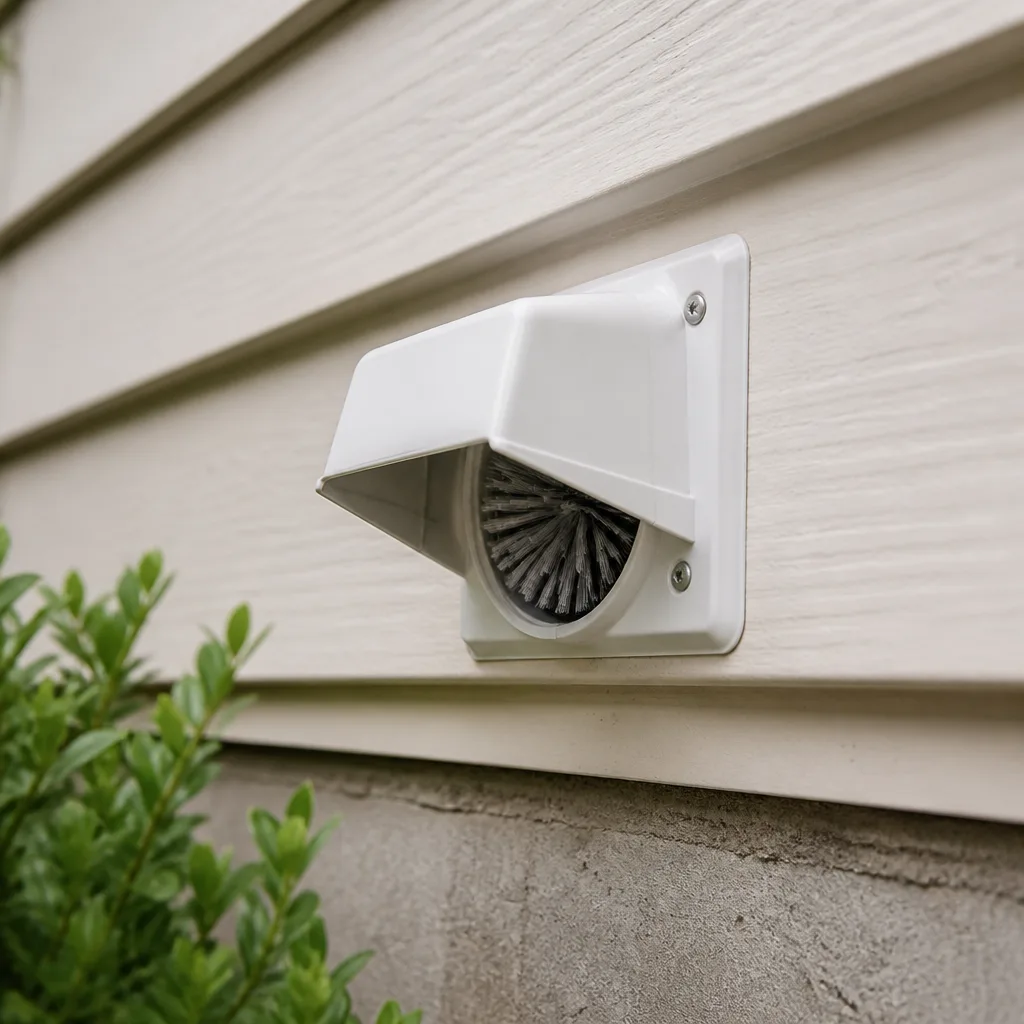 Dryer vent cleaning
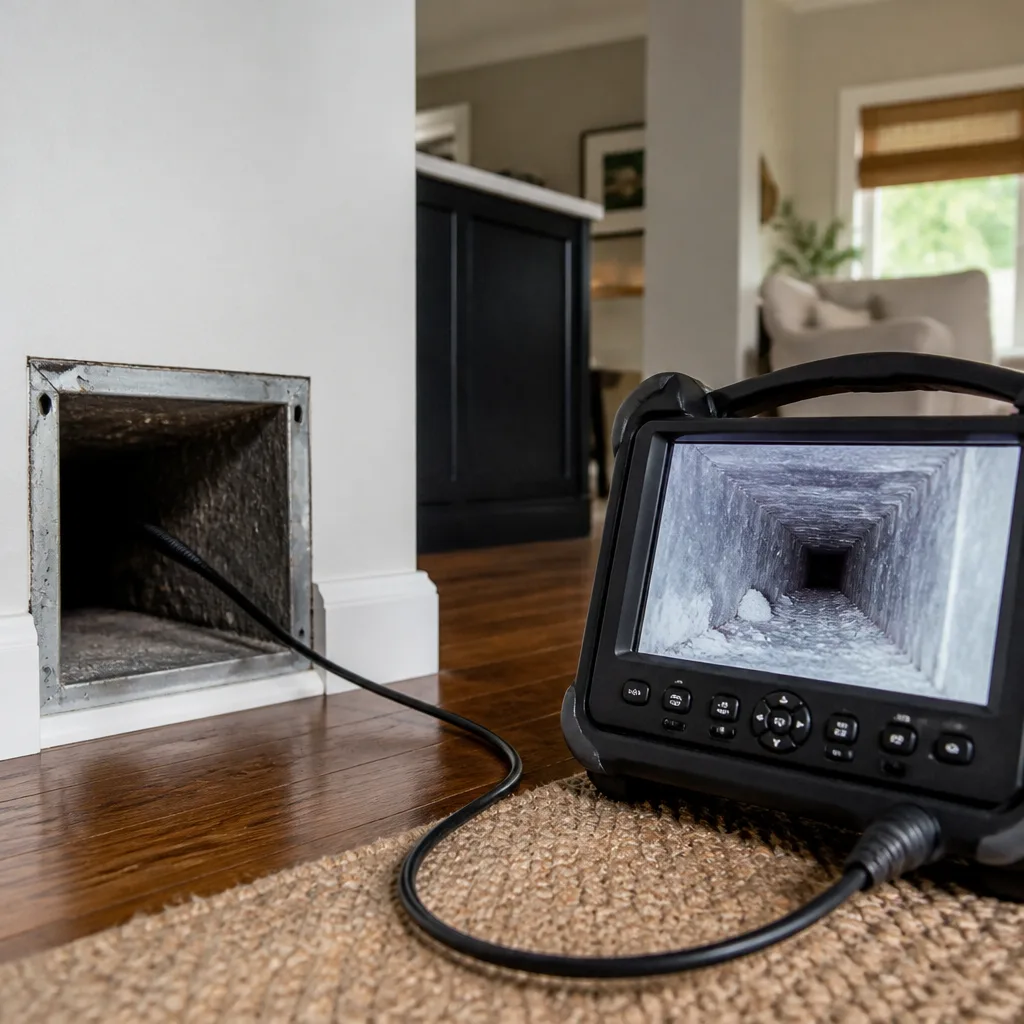 Camera inspection
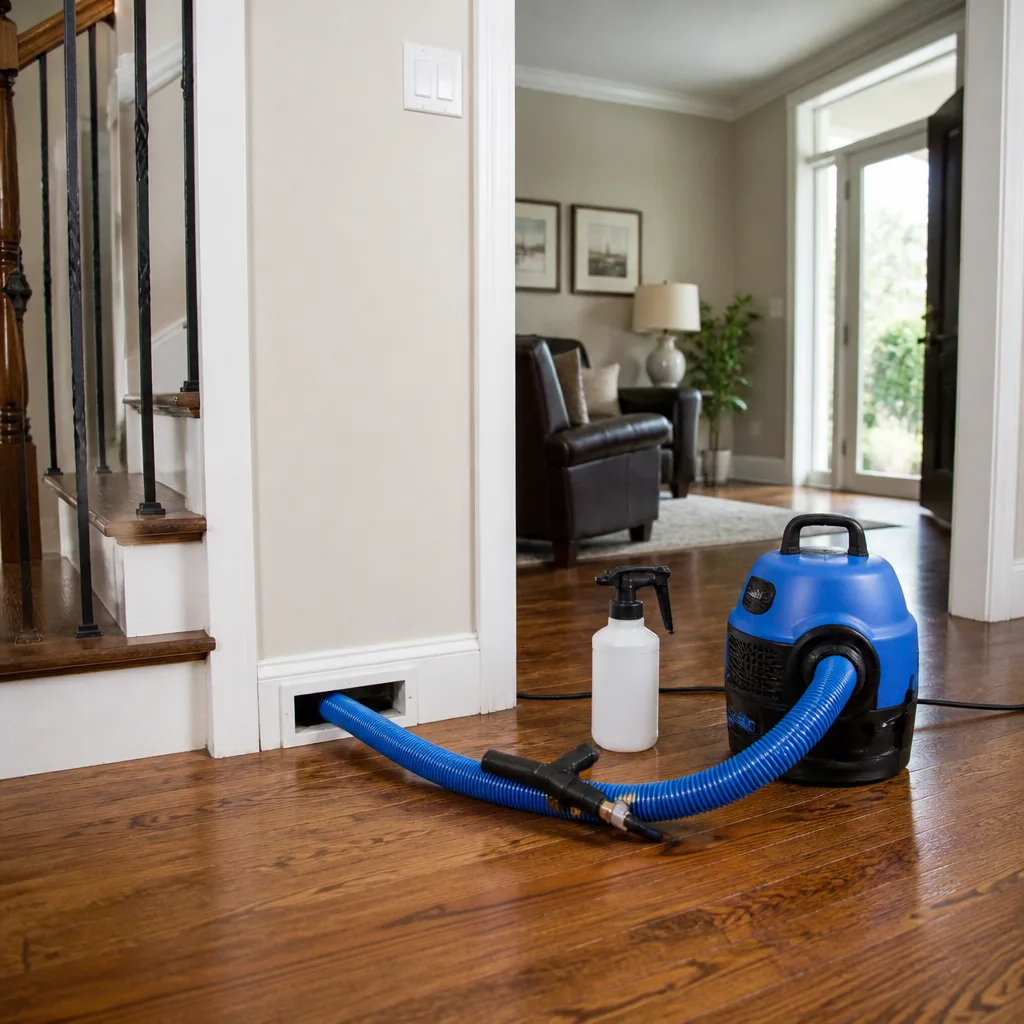 Sanitizing & deodorizing
Whole-system duct and dryer vent check with before-and-after photos - you see exactly what came out of your vents
That "$99 whole-house special" is a bait ad - the real number appears once they are in your hallway, or the "clean" is a shop-vac at the register. We photograph the inside of your ducts before and after instead.
Air Duct Cleaning Troubleshooting in Joliet: Common Problems and How to Fix Them
If your ducts were cleaned six months ago and dust is already settling back on the registers, the problem probably isn’t dirt. It’s more likely a disconnected joint or a collapsed run of flex duct pulling unconditioned air out of a crawl space or wall cavity, and no amount of vacuuming will fix that. Cleaning a leaking system just gives you clean ducts that keep leaking. This guide is written for Joliet homeowners and property managers who’ve already tried the obvious things and want to understand what’s actually happening inside the ducts. We’ll walk through how to read symptoms the way a technician does, how to tell buildup from a breach from equipment failure, and how to decide whether the job needs a brush, a repair, or both. Mention Joliet once and you’ll see we keep coming back to it, because the housing stock here shapes most of these problems.
Quick Answer
Most recurring duct problems in Joliet fall into three categories: contamination buildup (dust, debris, microbial growth), physical breaches (disconnected joints, crushed flex runs, torn liner), or equipment and airflow failures elsewhere in the HVAC system that show up as duct symptoms. Troubleshooting starts by matching the symptom to the likely cause, then confirming with a pressure check or visual inspection before any cleaning begins. Cleaning alone solves buildup; it does not solve a breach or a coil problem, and treating those as cleaning jobs is the most common mistake we see.
Styles & brands we work with
- Whole-home duct cleaning
- Dryer vent cleaning
- Camera inspection
- Sanitizing & deodorizing
Table of Contents
- Symptom-to-Cause: How to Read What Your Ducts Are Telling You
- How to Spot a Disconnected or Crushed Duct Before You Call Anyone
- Why Odors Come Back After Cleaning
- When a Rotobrush Agitation Pass Is the Fix, and When It Isn’t
- Repair or Replace: The Decision Tree for Damaged Flex Duct
- Low Airflow and Hot Rooms: Ducts or Something Else?
- The Dryer Vent Problem That Gets Mistaken for a Duct Problem
- Common Mistakes to Avoid
Symptom-to-Cause: How to Read What Your Ducts Are Telling You
A technician doesn’t start with a vacuum. They start with a list of symptoms and work backward to the mechanism that produces them. That’s the single most useful skill a homeowner can borrow. When you learn to map a symptom to a cause, you stop paying for the wrong service and you can have a much more productive conversation on the phone.
Here’s the mapping we use when we assess a system. The left column is the symptom, the right is what it usually points to.
- Dust returns to registers within weeks of a cleaning – breach in the system. A disconnected joint or torn flex duct acting as a dust draw. Cleaning won’t help until the breach is sealed.
- Musty or earthy smell, strongest when the AC kicks on – microbial growth on the evaporator coil, drain pan, or interior duct liner. Not missed debris.
- Weak airflow at all registers, no single hot room – could be a blower problem, undersized return, or a partially crushed main trunk. Not a duct cleanliness issue.
- One or two rooms never get comfortable – a crushed or kinked branch run serving that zone, or a damper stuck closed.
- Visible debris blowing out of a supply register – loose debris in a nearby run, or a breach pulling material from a wall cavity directly into the register boot.
- Lint smell or higher-than-usual laundry room humidity – dryer vent restriction, which is a separate system and a fire-safety concern rather than an air-quality one.
Notice that only the first and fifth items on that list are genuinely cleaning problems. The rest are either repair problems, heating and cooling equipment problems, or dryer vent problems. This is why we treat air duct cleaning as a diagnostic step as much as a maintenance one. You can’t tell a homeowner their ducts are clean and healthy if you haven’t confirmed there’s no breach feeding them.
Joliet adds a couple of local wrinkles to this map. Homes in the Cathedral Area and near the river flats often have older forced-air systems with original metal trunk lines and later-added flex branches, and those flex runs are where breaches cluster. Newer construction out toward the west side tends toward longer, more convoluted flex runs, which kink and crush more easily. Same symptom, different cause depending on which part of Joliet you’re in.
How to Spot a Disconnected or Crushed Duct Before You Call Anyone
You can often confirm or rule out a breach yourself in about fifteen minutes with no tools beyond a flashlight and a careful look. Nothing on this list involves reaching into a running system or climbing through an attic, so it’s safe to do.
- Look at every accessible register. Pop the grille off a supply register in the room with the problem. If you see dust streaks radiating outward from the boot, that register has been blowing debris. If the inside of the duct is spotless and the room is still dusty, the dust is coming from elsewhere.
- Check the return side. A return grille that’s pulling air from a wall cavity or a crawl space instead of the living area will pull that cavity’s dust with it. If a return feels strong and the filter is clean but the room stays dusty, the return pathway itself may be compromised.
- Look at exposed flex duct in the attic, basement, or crawl space. Flex duct should be smooth, round, and supported. What you’re looking for: kinks sharper than a right angle, duct sagging between supports to the point of pinching, or a section completely separated from its collar at a register boot or at the plenum. Tape that has peeled away is your tell.
- Do the tissue test at registers. Hold a tissue against the face of a supply register in a room that never gets comfortable. If the tissue gets sucked toward the register instead of pushed away, you may have a return-side problem or a seriously unbalanced system. That’s a diagnostic flag worth mentioning when you call.
- Sniff around the air handler. An odor in the supply air that’s strongest right at the air handler points to the coil or drain pan, not the ducts.
If you spot a clear disconnect or crush, stop there. Sealing or reconnecting flex duct isn’t difficult, but doing it badly causes more problems than it fixes, and it needs the right materials to hold up in an attic through the seasons. That’s a repair job, and it’s the reason we keep dryer vent cleaning and duct repair separate from cleaning on our menu: they’re different skills, and found during a cleaning they get handled in the same visit rather than deferring to another contractor.
If you don’t find anything obvious, that’s useful information too. It moves the likely cause toward contamination or coil growth, which is a cleaning and inspection problem. When we service homes anywhere in Joliet, we start with this same walkthrough, and the answer usually comes up inside the first fifteen minutes.
Why Odors Come Back After Cleaning
An odor that returns a few weeks after a cleaning almost never means the cleaning was incomplete. It means the source of the odor was never in the ducts. In our experience, persistent musty or earthy smells after a duct cleaning come from one of four places, and none of them get scrubbed by a duct vacuum.
- The evaporator coil and drain pan. Condensate sitting in a pan that doesn’t fully drain, or a coil that hasn’t been cleaned, develops microbial growth. Every time the system runs, it blows that smell through every duct in the house.
- Interior duct liner. Some rigid ductwork and plenum boxes have a fibrous interior liner. Once moisture gets into the liner, the growth is inside the material, and brushing the surface won’t remove it. This is a repair situation, not a cleaning one.
- Wet insulation or standing water in a crawl space. A return duct pulling from a damp crawl space carries that moisture signature into the living area. The fix is addressing the moisture, often a vapor barrier issue.
- A dead animal or moisture pocket in a drop ceiling or wall cavity. Less common, but happens. This is why a proper inspection looks at more than the duct interiors.
The practical lesson: when a homeowner tells us the smell came back, we don’t start with another cleaning pass. We inspect the coil, the drain pan, the plenum, and the return pathways first. If the coil is the problem, cleaning ducts again is wasted money. If the liner is the problem, the right answer is a targeted repair, and we stock the materials to do it during the same visit.
One Joliet-specific note. Summer humidity here is real, and a house with a slightly undersized AC and a leaky return system tends to grow coil growth faster than a house with a tight, well-balanced system. If you’ve had the same odor reappear two or three summers running, it’s worth having the coil and plenum inspected as a first step rather than treating it as a duct cleaning problem each time.
When a Rotobrush Agitation Pass Is the Fix, and When It Isn’t
There are two fundamentally different ways to clean a duct system: negative pressure alone, or negative pressure combined with mechanical agitation. They solve different problems, and understanding the difference will tell you a lot about whether a quote is going to do the job.
Negative pressure alone works by putting a HEPA-rated vacuum on the system and letting the airflow carry loose debris back to the unit. It’s effective for light, loose dust in a system that’s otherwise in good shape. What it doesn’t do well: remove material adhered to the duct wall, remove lint packed into corners and transitions, or loosen caked-on debris at the plenum or in a heavily fouled system. If you’ve just moved into a home and the ducts haven’t been touched in years, pressure alone is under-matching the problem.
Mechanical agitation with a Rotary brush system like Rotobrush uses a rotating brush head on a whip line to physically scrub the interior surfaces of the duct while the vacuum runs. That combination is what removes adhered film, lint, and years of buildup from the walls where it actually lives. It’s the same platform used by commercial duct contractors, and the reason it works on hard residential jobs is that the brush does the work the vacuum alone can’t.
When is agitation the right answer?
- The system has visible buildup at the registers or in the plenum.
- The home has pets and the ducts have gone many seasons without cleaning.
- There’s been recent remodeling or construction dust in the system.
- A smoke or odor event has coated the duct interiors.
- Previous cleanings have “done nothing,” which often means they were pressure-only jobs on a system that needed agitation.
When is agitation not the fix? When the inspection has already shown a breach, a collapsed run, or a coil issue. Rotobrush is a superb cleaning tool, but it isn’t a repair tool, and running a brush system through a system with a disconnected joint pushes debris further into the wrong places. That’s the point at which the job shifts to duct cleaning in Joliet paired with the repair work that follows the same visit.
Our own setup pairs a Rotobrush rotary brush system with Nikro HEPA-rated vacuum equipment, so the scrubbing and the capture happen together and particulate stays contained while we work. That combination is why we can tell a homeowner with confidence what the ducts will look like when we leave, and why we take before-and-after photos of their own system as part of the job. If you want to confirm the work happened to your ducts and not to a stock photo, those photos are the record.
Repair or Replace: The Decision Tree for Damaged Flex Duct
When a cleaning uncovers damaged flex duct, the question isn’t just “what’s broken.” It’s “how much of this needs to come out, and will a repair hold.” Here’s the decision tree we use, and it’s the same one we’d recommend any Joliet homeowner run through mentally when a contractor tells them what’s wrong.
Step 1: Is the damage localized or systemic? A single disconnected collar at a register boot is localized. Three kinked runs in the same zone, or a main trunk that’s crushed along its length, is systemic. Localized damage is a targeted repair. Systemic damage usually means one or more runs get replaced rather than repaired.
Step 2: Is the flex duct itself intact? If the inner liner is torn, the outer jacket is separated, or the duct has collapsed to the point it no longer holds shape, it gets replaced. Tape won’t fix a torn liner, and a collar that won’t snug to the duct is a replacement job, not a repair job.
Step 3: Is the run properly sized for the room? This is the part almost nobody checks. If the original install undersized a run serving a room, replacing the run with the same size gains you nothing. When a branch run is being replaced anyway, it’s worth confirming the sizing is right the second time.
Step 4: Is the surrounding environment causing the damage? Flex duct that sags in a hot attic or gets stepped on in a low-crawlspace layout will fail again unless it’s properly supported and routed. Repair without correcting the support pattern is a repeat job waiting to happen.
Step 5: What’s the state of the seals and junctions? Mastic-sealed and properly taped junctions are permanent. Cloth duct tape and pressure-sensitive tape will peel and are the most common cause of a “repaired” duct failing again in a season.
In our experience, most flex duct damage we find in Joliet is repairable in place. The runs that get replaced are usually the ones with a kink or collapse that’s been there since installation, plus the occasional duct damaged by a contractor working in the same attic space. The repair is often quicker than the cleaning that discovered it. Our technicians have up to 15 years of experience with these judgment calls, which matters because a decision to replace a run should be based on the duct’s condition, not on the margin of the sale.
Low Airflow and Hot Rooms: Ducts or Something Else?
Weak airflow is the most commonly misdiagnosed duct complaint. The ducts are usually where the symptom shows up, but the cause is often upstream. Before you conclude the ducts need cleaning, work through these checks, in this order.
- Filter condition. A loaded filter cuts airflow at the source. Change it and re-test room temperatures before doing anything else. This is the single most common cause of “weak airflow” we see.
- Return-side adequacy. A system with one undersized return and five supply runs will starve the far rooms no matter how clean the ducts are. A quick check: is every room’s door undercut enough to let return air out, or does closing the door make the room worse?
- Damper positions. Branch dampers get bumped and left mostly closed. Look at the plenum, and confirm every branch damper that should be open actually is.
- Duct condition along the problem run. Follow the run from plenum to register. Kinks, sags, and disconnects are visible if the run is exposed. This is the check most people skip.
- Blower and coil condition. A dirty blower wheel moves less air, and a dirty coil restricts flow. Both are heating and cooling technician work rather than duct work, and both make a duct cleaning a waste of money if they aren’t handled first.
The practical rule: a room that’s been cold or warm since the house was built is a design problem. A room that became cold or warm has a change to blame, and that change is your troubleshooting starting point. Clean ducts don’t create airflow problems, and they don’t solve them. If you skip diagnostics and go straight to cleaning, you may end up with a clean system that still leaves one room wrong.
Joliet homes with original metal ductwork and later-added flex branches are especially prone to the design-problem version of this, because the flex branches were often routed for convenience rather than for balanced delivery. In those houses, cleaning gives you a clean system and a comfortable house only when the branches get corrected while the ducts are already opened up.
The Dryer Vent Problem That Gets Mistaken for a Duct Problem
We separate this out because it’s the residential duct problem most often mislabeled. A dryer vent isn’t part of your HVAC duct system, but it lives in the same wall, its symptoms overlap with duct symptoms, and it’s the one on this list with a fire-safety dimension.
Lint accumulation in a dryer vent restricts airflow, which means the dryer runs longer, which means more lint. That cycle is a leading cause of residential structure fires, and it’s the reason we treat dryer vent cleaning as a fire-safety service rather than an air-quality add-on. The symptoms to watch for:
- Clothes take two cycles to dry, or come out hot but damp.
- The outside vent flap doesn’t fully open when the dryer runs.
- The top of the dryer gets unusually warm.
- A burning or lint smell in the laundry area.
- Visible lint around the outside hood.
Two of the five items above reinforce each other: a long or elbow-heavy vent run in a Joliet home’s interior wall maximizes lint buildup, and Joliet laundry rooms are often pushed against an interior wall or in a basement where the run length adds up. If a vent path is long and elbow-heavy, it deserves a cleaning more often than a short, straight, exterior-wall run. When we clean a dryer vent, we clear it fully and confirm airflow at the outside hood rather than just relying on a visual pass at the hookup.
This is one of the reasons our service menu is deliberately narrow. We do duct cleaning, dryer vent cleaning, and duct repair, and we do all three with the same contractor-grade equipment. Diagnostic work that uncovers one of the other services happens on the same visit rather than at the end of a phone tag chain.
Common Mistakes to Avoid
- Treating every dust problem as a cleaning problem. If dust comes back in weeks rather than months, a breach is the likely cause. Cleaning without sealing gives you clean ducts and the same problem next month.
- Accepting a per-vent or coupon-based quote as your baseline. The number is meaningless until someone has inspected the system. Whole-system pricing agreed before work starts is the only figure you can actually compare.
- Cleaning before the air handler is inspected. A dirty coil, a wet drain pan, or a failing blower keeps the problem running through freshly cleaned ducts. Rule out the equipment side first.
- Assuming a smell after cleaning was missed debris. It’s almost always the coil or the liner. Re-cleaning won’t remove a source that was never in the ducts.
- Letting a contractor “repair” a disconnected flex joint with cloth duct tape. It peels within a season, and the same disconnect comes back. Sealed and properly supported is the standard.
- Skipping the dryer vent because it’s “not part of the ducts.” It’s the separate system with a fire-safety role. It warrants cleaning on its own schedule, not just when the ducts get done.
- Replacing flex duct without checking the run sizing and support pattern. If the original run was undersized or unsupported, replacing it with the same thing guarantees the same failure.
See the difference
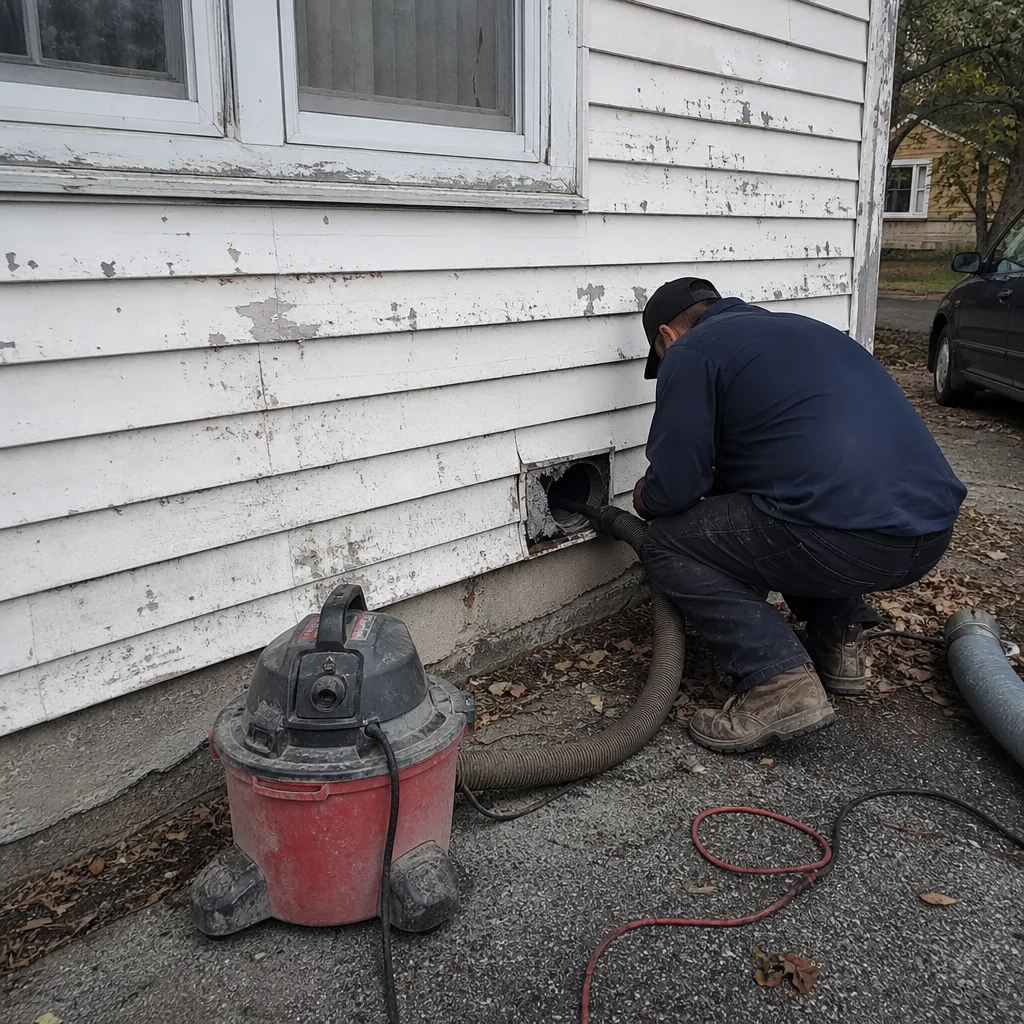 Before
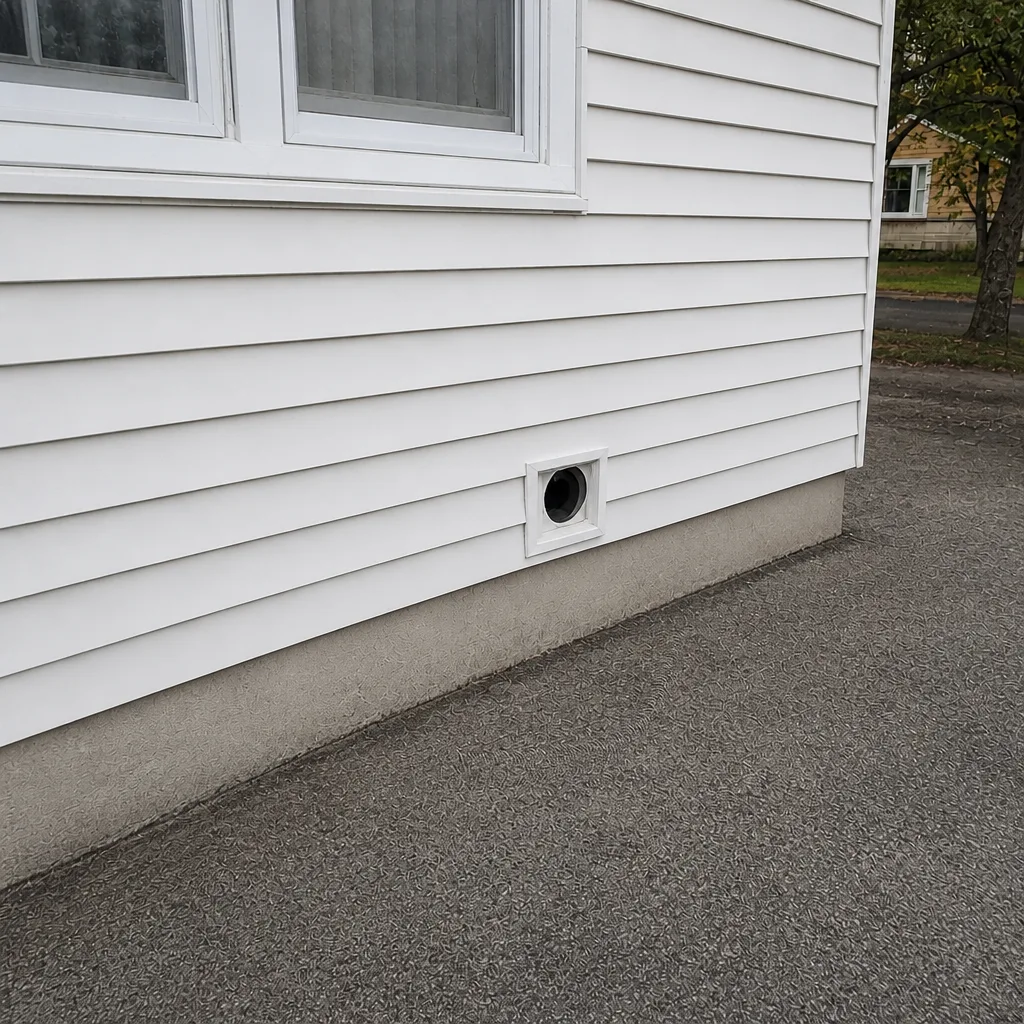 After
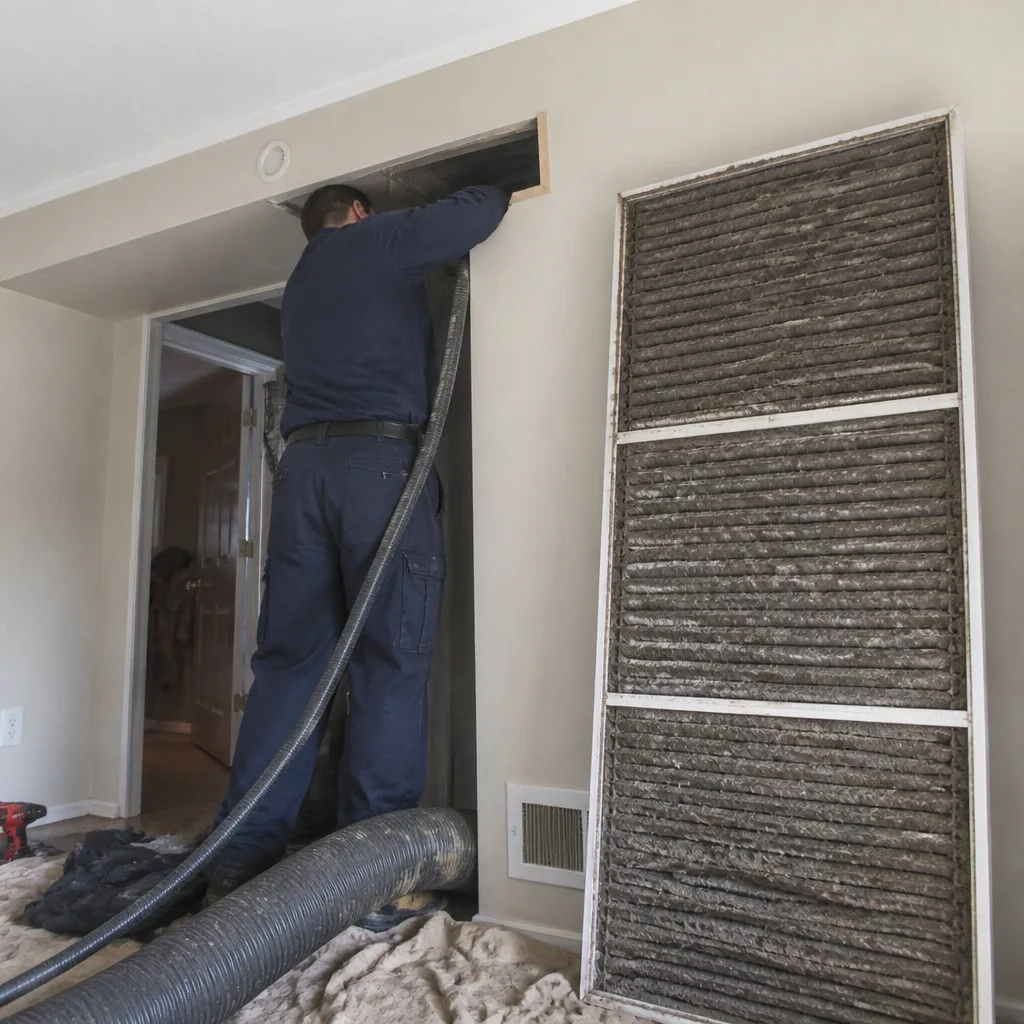 Before
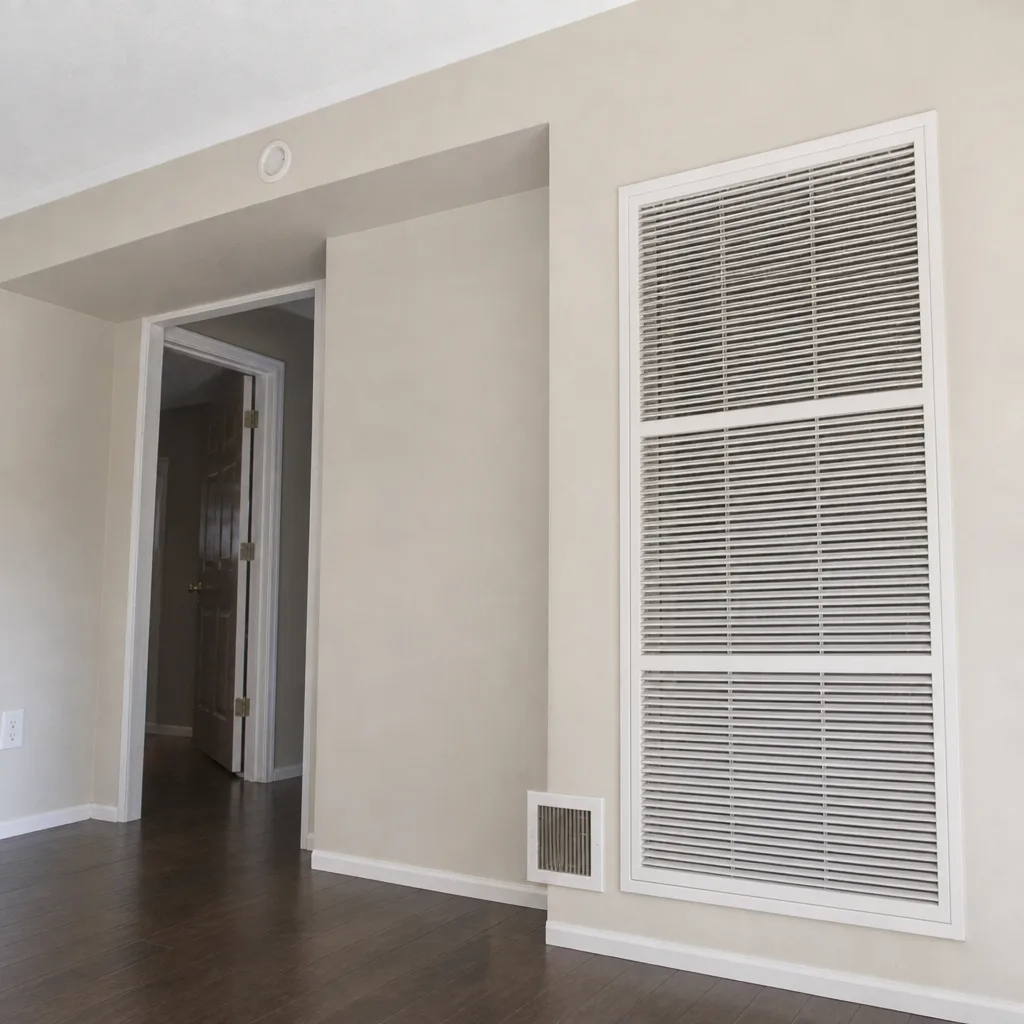 After
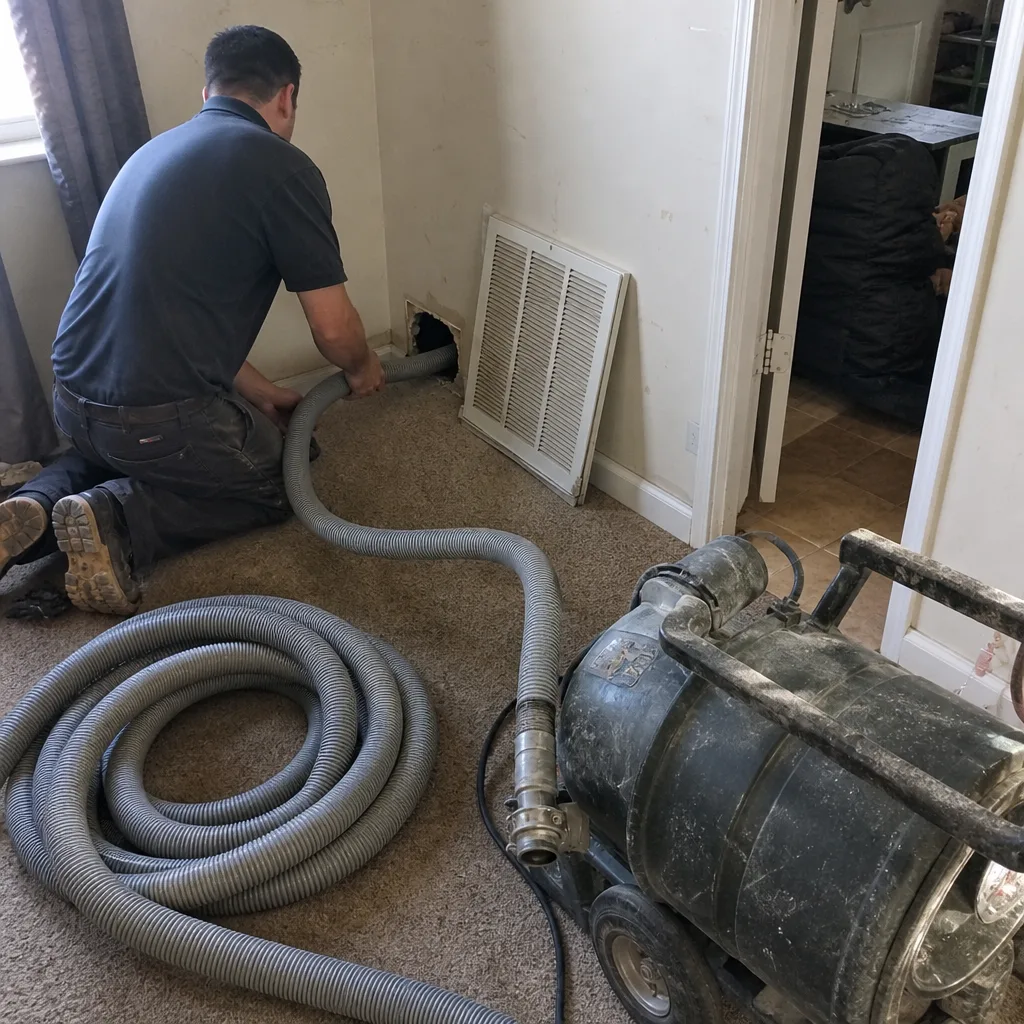 Before
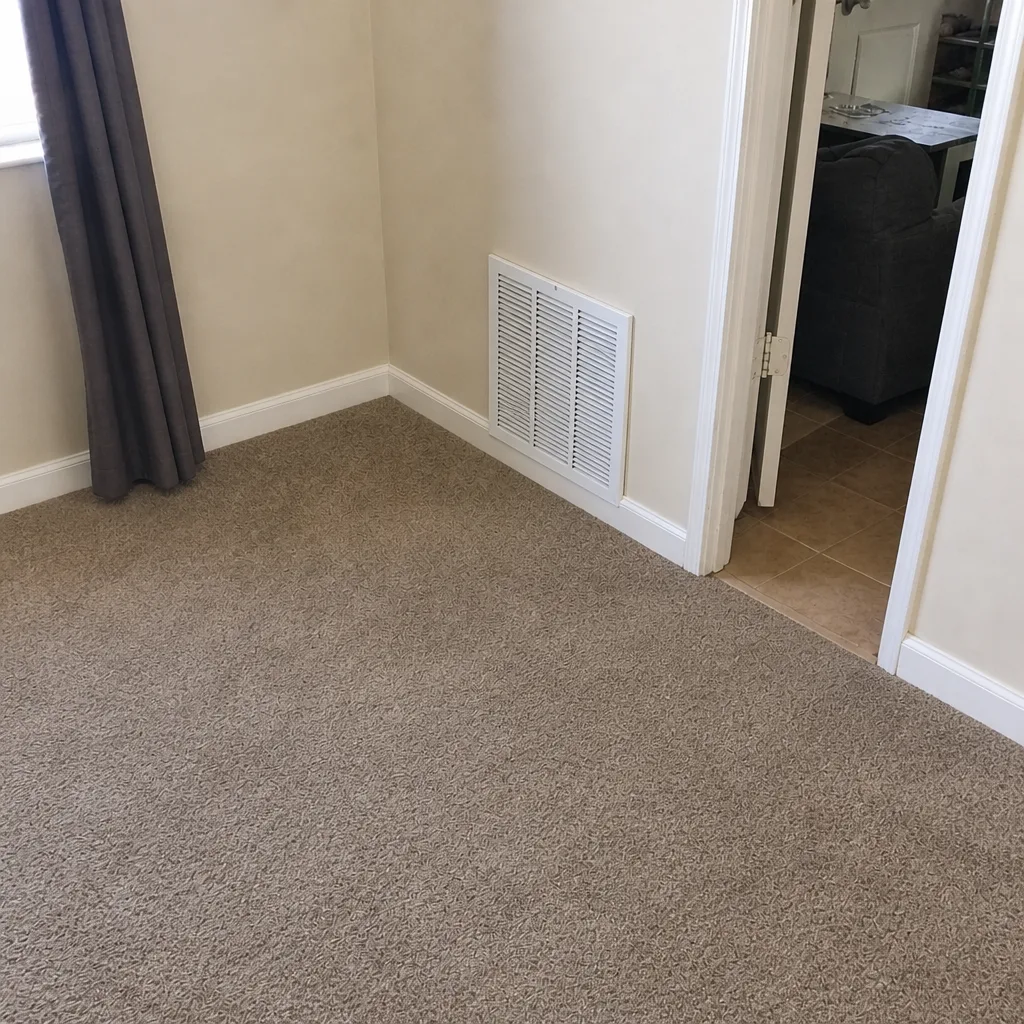 After
When to Call a Professional
Call a professional technician if you’ve done the walkthrough and any of these apply: you’ve found a visible disconnect, kink, or collapsed section in an exposed duct run; the ducts have been cleaned before and dust returns within a few weeks; a persistent musty odor comes back after a cleaning; a room has been hot or cold since you moved in and the filter and dampers check out; or your dryer vent path is long, elbow-heavy, or shows visible lint at the outside hood. Any of these put the job outside what a homeowner should handle themselves. The duct system is sealed for a reason, and the tools that service it properly are not consumer tools.
Duct Cleaning Joliet offers free estimates in Joliet. Call (833) 734-7685. We answer 24/7, and fast dispatch from 7am to 7pm, Sunday through Friday. We’ll walk the system with you, tell you honestly whether the fix is a cleaning, a repair, or both, and give you one flat price agreed before any work begins.
Frequently Asked Questions
Because the cause was probably never dirt. A disconnected joint, crushed flex duct, or torn duct liner acts as a continuous dust draw from a wall cavity or crawl space, and cleaning the duct interiors does nothing to stop that. The fix is a repair to seal the breach, followed by a cleaning if the ducts still need it. If you’ve had this happen, call (833) 734-7685 for a free estimate that includes looking for the breach, not just pricing the cleaning.
If the system has visible buildup at registers or in the plenum, that’s a cleaning. If the system has a disconnected joint, a kinked or collapsed run, or a torn liner, that’s a repair. Most real jobs in Joliet involve both, and the right sequence is inspection first, then repair, then cleaning. Call us and we’ll do the walkthrough before we quote anything.
Because the odor’s source wasn’t in the ducts. Musty smells after a cleaning almost always trace to the evaporator coil, the drain pan, or the interior liner of the plenum, none of which a duct vacuum reaches. The next step is an inspection of those components, not another cleaning. Call (833) 734-7685 if the smell has returned and we’ll look at the right parts this time.
Vacuuming alone removes loose dust from a lightly soiled system. It does not remove adhered material or packed lint from the duct walls. A rotary brush system like Rotobrush paired with a HEPA-rated vacuum removes the film and buildup that simple suction leaves behind, and that’s what most homes with years of accumulation actually need. If a previous cleaning “did nothing,” under-matching the tool to the deposit is the usual reason.
It’s a dryer vent problem, and it’s a separate system with its own safety concern. Lint-clogged vents restrict airflow, cause long dry times, and are a leading cause of residential structure fires. If any of the standard symptoms apply (long dry times, a stuck outside flap, a hot dryer top, a lint smell), get the vent looked at. Call (833) 734-7685 for a free estimate on the vent and we’ll check the whole path.
Probably not on its own. A room that’s been off since the house was built usually has a design or sizing problem, not a cleanliness problem. It may also have a crushed or kinked branch serving it. The right first step is inspection of that specific run, filter, and damper, and a decision about whether a repair makes sense. Free estimates in Joliet, so call and we’ll diagnose it before recommending anything.
The Bottom Line
Let’s sum up. Most duct “problems” homeowners try to solve with another cleaning are mechanical causes: breaches, crushed runs, coil growth, or airflow restriction somewhere other than the ducts themselves. The troubleshooting skill worth keeping is the symptom-to-cause map. Dust that returns in weeks means a breach. Musty odor after cleaning means the coil or liner. Weak airflow everywhere means filter or return. One cold room means a branch run. And the dryer vent, always the dryer vent, is a fire-safety system on its own schedule. When you know which of those you’re dealing with, you can decide whether the job needs a brush, a repair, or both, and you can tell when a quote matches the actual work. That’s the whole game.
Call (833) 734-7685 for a free estimate. We answer 24/7. Fast dispatch from 7am to 7pm, Sunday through Friday.
Written by the team at Duct Cleaning Joliet.