
Last updated November 15, 2026
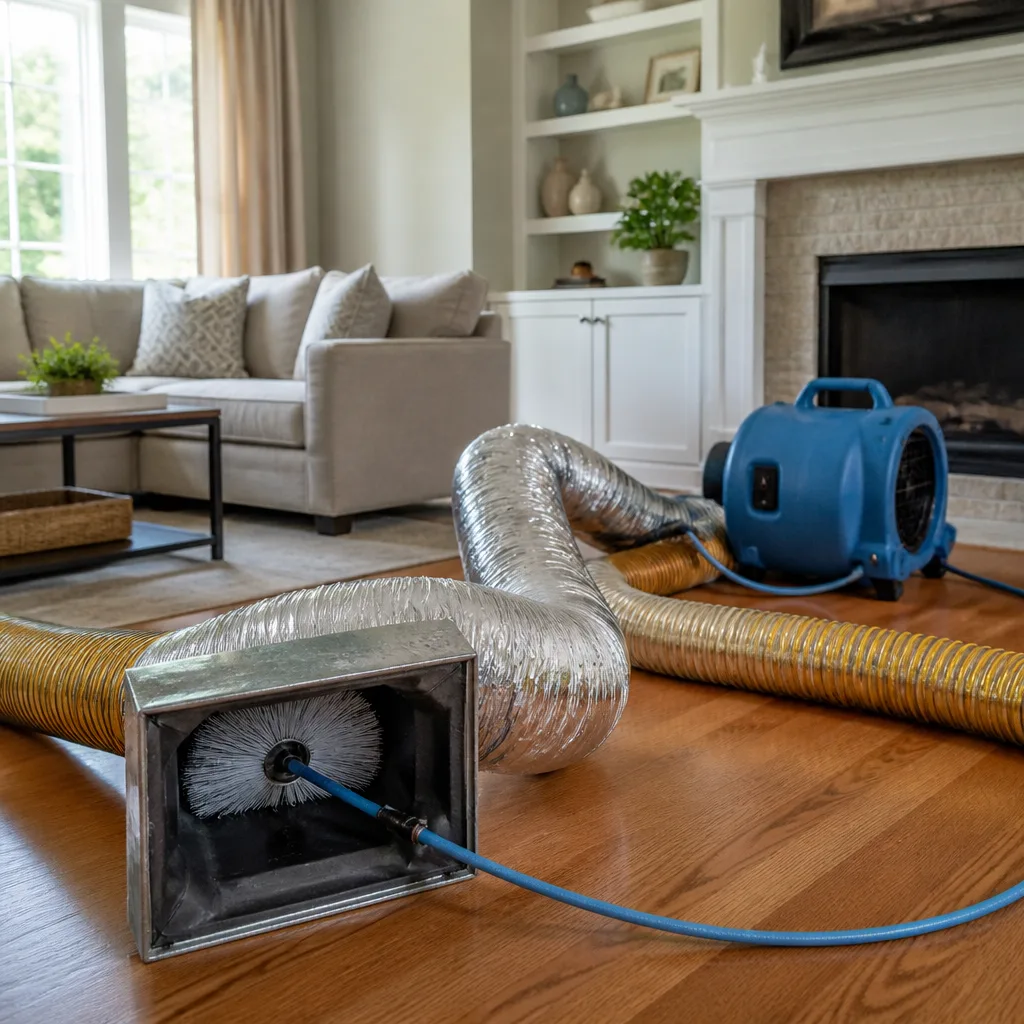 Whole-home duct cleaning
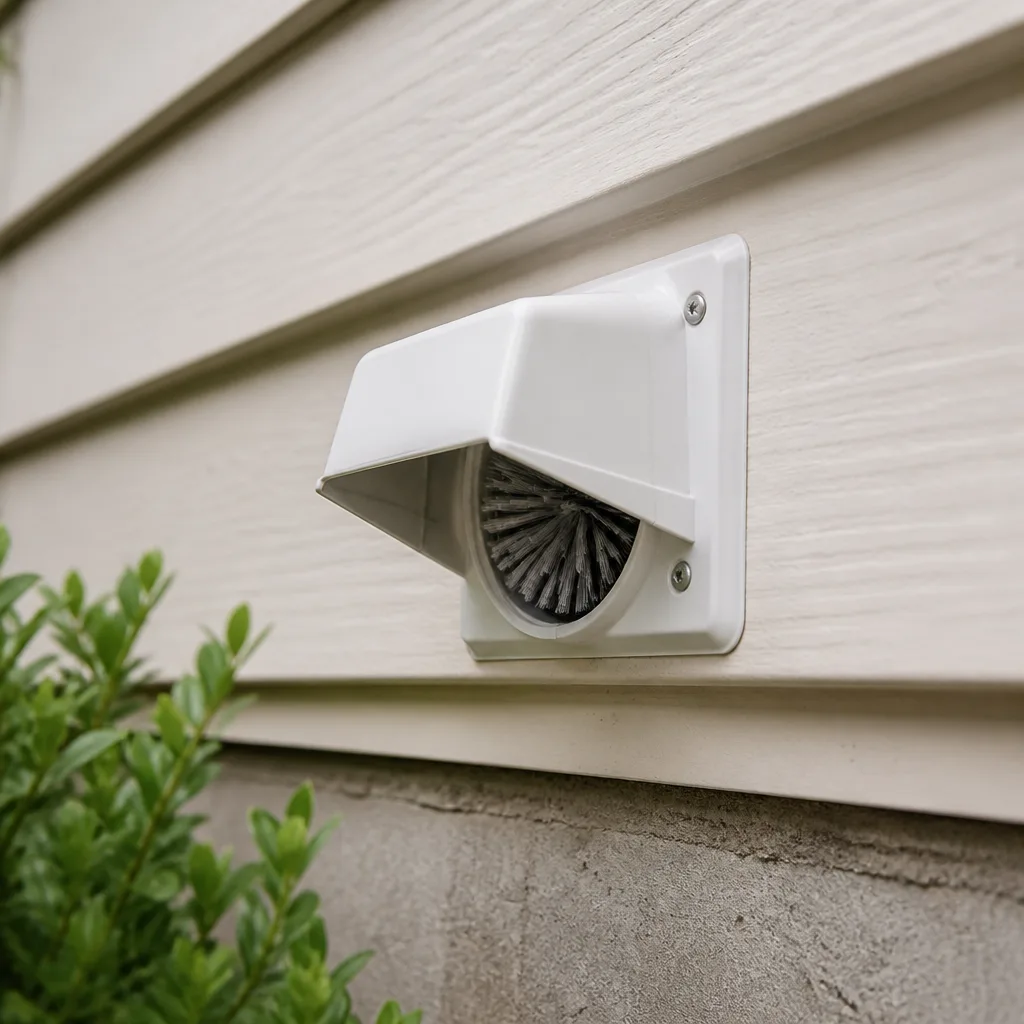 Dryer vent cleaning
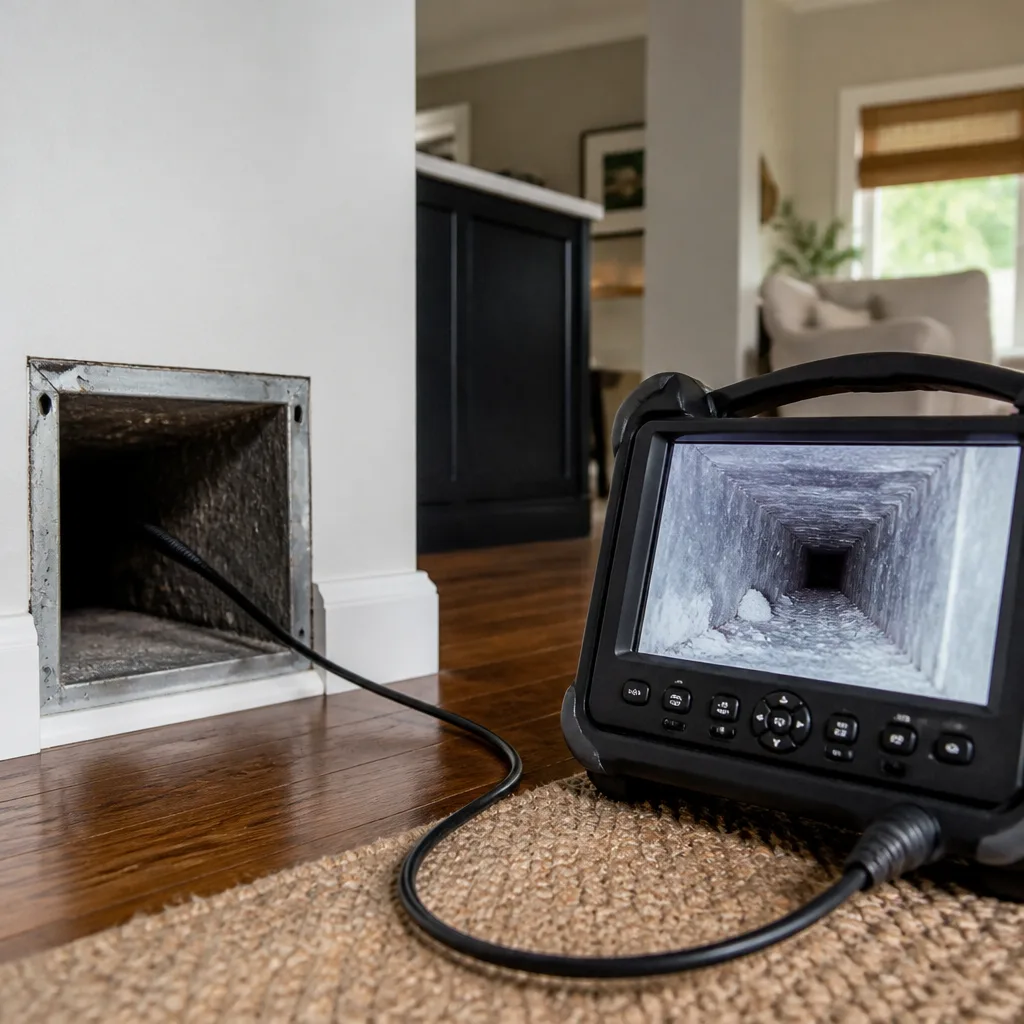 Camera inspection
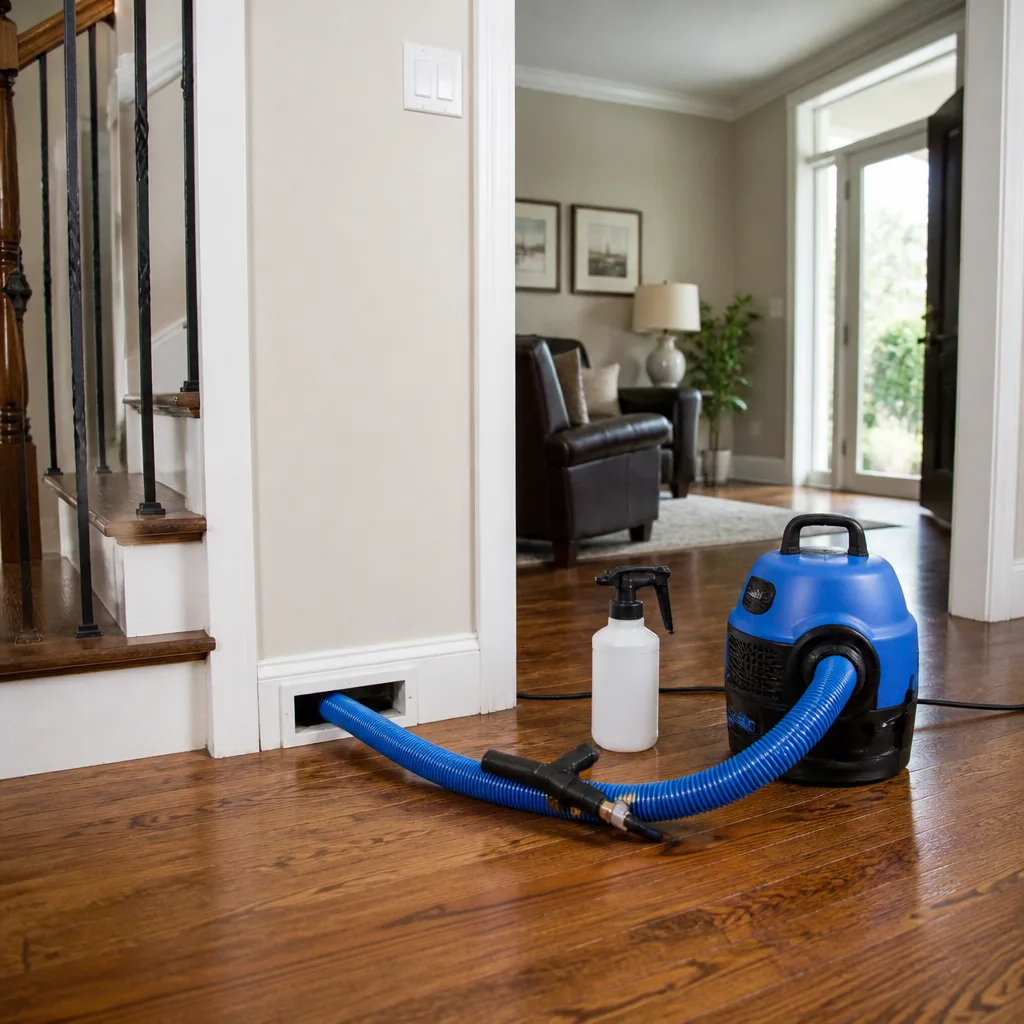 Sanitizing & deodorizing
Whole-system duct and dryer vent check with before-and-after photos - you see exactly what came out of your vents
That "$99 whole-house special" is a bait ad - the real number appears once they are in your hallway, or the "clean" is a shop-vac at the register. We photograph the inside of your ducts before and after instead.
The Complete Guide to Air Duct Cleaning in Joliet
A shop-vac with a spinning brush head is not a duct cleaning system, but that’s what a share of “duct cleaning” vans carry into Joliet homes. The homeowner sees suction at a register, hears the machine run for an hour, pays the invoice, and never learns what was actually removed or whether the whole system was touched. Most people can’t tell a real cleaning from a cosmetic one because nobody ever showed them the difference. This guide fixes that. We’ll walk through the equipment, the access points, the verification steps, and the older-housing quirks specific to Joliet so you can judge for yourself whether a job was done properly.
Quick Answer
A proper air duct cleaning in Joliet means source removal under continuous negative pressure: the entire duct system is put under vacuum while rotary brushes and air whips agitate debris loose from every branch, trunk line, register and return, and that debris is captured in a HEPA-rated filtration unit rather than blown into your rooms. It takes several hours for a typical house, it involves opening access panels and sometimes cutting a few, and it ends with a visual check and photos of your own ducts before and after. A cleaning that skips the vacuum, the access work, or the verification is not the same service, whatever the price.
Styles & brands we work with
- Whole-home duct cleaning
- Dryer vent cleaning
- Camera inspection
- Sanitizing & deodorizing
Table of Contents
- What Source Removal Actually Means
- Rotobrush, Nikro, and Why Equipment Grade Matters
- How Joliet’s Older Housing Stock Changes the Job
- What a Real Cleaning Looks Like, Step by Step
- Register by Register: What You Can Check Yourself
- When Cleaning Isn’t Enough: Repair and Sealing
- Why Dryer Vent Cleaning Belongs in the Same Conversation
- What Air Duct Cleaning Costs in Joliet
What Source Removal Actually Means
Source removal is the method the National Air Duct Cleaners Association (NADCA) recognizes as the standard: you physically dislodge the contaminants where they sit and capture them before they can spread. That sounds obvious until you see how many outfits operate. Pushing a brush through a duct while a small vacuum runs at one end isn’t source removal, because the brush lifts debris into the airstream and the weak vacuum can’t catch it all. Some of it settles downstream. Some of it drifts into the living space through the register you’re standing next to.
Proper source removal depends on two things working together:
- Continuous negative pressure. The whole system is held under vacuum from a single high-capacity unit connected at the main trunk or plenum, so loosened debris moves toward the vacuum, not toward your rooms.
- Mechanical agitation at the source. Rotary brushes, forward air whips and reverse air whips reach the walls of every branch and trunk line to break the bond between debris and metal or flex duct surface. Dust that has sat for years doesn’t release with suction alone.
In Joliet, we’ve seen plenty of systems where the trunk line was never touched because it wasn’t accessible without cutting a panel. A contractor who won’t open the system can’t clean it. That’s the whole point of the method: every surface that air passes over is agitated while the vacuum is running, and the debris leaves the house in a sealed container.
Rotobrush, Nikro, and Why Equipment Grade Matters
The gap between consumer gear and contractor equipment isn’t marketing. It comes down to two measurable things: airflow (measured in cubic feet per minute, or CFM) and agitation capability. A shop vac pulls a small fraction of the CFM a proper negative-pressure unit produces, and a hand drill with a brush attachment can’t generate the torque or coverage a rotary brush system delivers through a full branch run.
Here’s what we bring to a Joliet home:
- Rotobrush rotary brush systems. These are the same platforms commercial duct contractors use. The brush heads are designed to ride the inside of the duct at controlled pressure, so they scrub the walls without tearing flex liner or gouging galvanized metal. The system includes different head types for different duct materials.
- Nikro HEPA-rated vacuum equipment. HEPA-rated filtration captures fine particulate at the vacuum, not just the chunky stuff. That matters in a house with settled dust, pet dander, or any allergen concern, because the exhaust from the vacuum itself stays clean.
- Abatement Technologies equipment. On jobs where containment matters more than usual (allergen sensitivity, visible growth on duct surfaces, heavy contamination), this equipment lets us isolate and capture rather than simply agitate and hope.
- Guardsman accessories. The smaller parts count: whip heads, access tools, sealing components that make the difference between a rough pass and a finished job.
If a company quotes you a low price and shows up with a shop vac, the price makes sense. They’re doing a fraction of the work with a fraction of the equipment. Ask what vacuum and what agitation system they use before you book. A legitimate operator will tell you without hesitation.
How Joliet’s Older Housing Stock Changes the Job
Joliet grew fast in the post-war decades, and the ranch and split-level homes built from the 1950s through the 1980s share a set of characteristics that make duct cleaning more complicated than in a newer subdivision. If your house dates to that era, here’s what a technician is likely dealing with.
Flex duct that has aged out
Early flexible duct was often a thin plastic inner liner wrapped in insulation. Decades of hot summers and cold winters in northern Illinois cause that liner to sag, crack, and separate at the joints. When our rotary brush runs through a compromised section, we can feel the resistance change. That’s a signal the duct needs repair, not just cleaning. A crew that ignores it will leave you with a cleaning that pushes air into a wall cavity instead of your bedroom.
Trunk lines you can’t reach
Split-levels and ranches often run the main trunk through a soffit, a chase, or between floors, with no factory access panel. Reaching it means cutting an access point, cleaning through it, and sealing it back with a proper cover. This is normal work for a contractor-grade job and it’s one reason a “no cutting, no mess” promise usually means the trunk was skipped.
Plenum wrap on older furnaces
Older furnace plenums in Joliet homes sometimes carry a wrap or insulation that may contain asbestos on pre-1980 equipment. We do not disturb suspect material. If a plenum looks like it may be wrapped in something questionable, the safe path is to have it assessed by a licensed abatement professional before any cleaning proceeds. Don’t let anyone tell you it’s fine to brush through it.
Basement and crawl space duct runs
Many Joliet homes have ductwork in a basement or crawl space, and that ducting picks up moisture and ground-level dust differently than ducts inside a conditioned space. Those runs deserve a close look on every job, especially after a wet spring.
What a Real Cleaning Looks Like, Step by Step
You should be able to follow along with what a technician does in your home. Here’s the sequence a proper job follows, start to finish. Notice that the vacuum runs before, during and after the agitation, not instead of it.
- Walkthrough and system mapping. The technician counts every register and return, notes duct material (galvanized, flex, duct board), locates the air handler and plenum, and finds or creates the access points needed to reach the trunk.
- Protect the living space. Floor coverings go down on the path, and the register covers go on before any machine starts.
- Connect the negative-pressure unit. A high-capacity vacuum ties into the main trunk or plenum and runs continuously. This is the step that keeps debris moving toward the machine, not into the room.
- Clean each branch and register from the inside out. A rotary brush head runs down each branch from the trunk; forward and reverse air whips clear the corners a brush can’t reach. Every supply branch gets its own pass.
- Clean the returns and the air handler cabinet. Return ducts and the blower compartment collect the most dust. The cabinet is cleaned by hand, not just vacuumed at the register.
- Seal access points back up. Cut panels get proper covers, and any gaps at joints discovered along the way are sealed.
- Visual verification and photos. The technician inspects a sample of the ducts with a camera and provides before-and-after photos of the homeowner’s own system. A cleaning without a final check isn’t finished.
- Repair findings. If sections of flex duct, joints, or connections are damaged, the repair happens on the same visit, not as a second appointment with another outfit.
We run that sequence on every home, and the order matters. Skipping the continuous negative pressure, cutting corners on the returns, or substituting a hand vacuum for a Nikro unit all shorten the job. They also lower the price. Knowing the steps lets you ask the right questions before you book.
Register by Register: What You Can Check Yourself
You don’t need to watch every minute of the job, but these checks will tell you whether the service was real. Walk through the house at the start, during the work, and at the end. If any of the following is missing, ask why.
- Register covers come off. A crew that cleans through the cover with a short hose is not cleaning the boots. The boot is where debris collects most heavily, and it needs to be cleaned while the vacuum holds the system.
- Every return is opened separately. Returns are usually the dirtiest part of the system and often the most skipped. Ask which returns were cleaned and how.
- Access panels are visible. If your trunk line isn’t accessible from a factory panel, you should see the new access point. It’s usually a small cover, screwed in place, near the plenum or on the trunk.
- The vacuum is running the whole time. Suction at the register should be constant while the brush is working. If the machine is off while the technician brushes, run.
- Before-and-after photos of your system. Not stock images. Your ducts. A camera inspection at the end is standard for any competent operation.
- No per-vent pricing. If the quote is built around a per-register number, it’s usually a bait price with a longer invoice behind it. A written estimate for the whole system, agreed before work starts, is the honest version.
- Air handler cabinet is clean. Open the blower compartment and look. Dust and debris around the blower wheels means the cabinet wasn’t cleaned.
Every one of these steps can be verified in a few minutes without special tools. The point isn’t to police the technician. It’s to make sure the money you spend buys the service you researched.
When Cleaning Isn’t Enough: Repair and Sealing
In our experience in Joliet, the most common follow-up to a cleaning is repair. A duct system that has been running for decades often has sections where the flex liner has torn, a joint has pulled apart, or the metal has crushed under a floor. Cleaning passes through those areas without fixing them. Air takes the path of least resistance, so a torn duct in a wall cavity means conditioned air goes into the wall instead of your living room.
We keep repair on the service menu for that reason. If a cleaning uncovers a tear or a disconnected joint, we can fix it the same visit rather than handing you a phone number for another contractor. The repair conversation usually covers:
- Reconnecting and resealing joints. Mastic and proper mechanical fasteners at connections where tape has failed.
- Replacing compromised flex sections. Torn liner and crushed sections are cut out and replaced with new flex rated for the application.
- Sealing the plenum and trunk transitions. Often the biggest source of air loss in an older system.
- Adding proper access panels at points where future cleaning or inspection needs a way in.
We also work with whole-home filtration systems, including Honeywell and Aprilaire designs. If your house has one of those units, the cleaning and any repair has to be built to work with that system, not around it. A filtration unit and duct system are one machine from the standpoint of airflow, and treating them separately is a common source of pressure problems.
Why Dryer Vent Cleaning Belongs in the Same Conversation
Lint accumulation in dryer vents is a leading cause of residential structure fires. That’s not a talking point we add to sell an extra service. It’s the reason we treat dryer vent cleaning as a fire-safety service every time we talk to a homeowner, whether or not we’re cleaning ducts on the same visit. A dryer vent that has lost half its airflow is a dryer that runs hot, takes twice as long to dry a load, and builds up lint in places you can’t see from the outside.
What that means practically:
- Every duct cleaning visit includes a look at the dryer vent. If we’re already in the house with the equipment, the vent is five minutes to inspect and worth the trip.
- A clogged vent is a safety issue, not an efficiency nuisance. If the vent is restricted, we clear it completely on the same visit rather than booking a second appointment.
- The routing matters. Long runs, multiple elbows, and crushed flex behind the dryer are common in Joliet homes and shorten the length of time before a vent needs cleaning again.
When the ducts and the dryer vent are handled by one crew on one visit, nothing falls through the handoff. That’s the practical argument for the three-service model: air duct cleaning, dryer vent cleaning, and air duct repair with one provider.
What Air Duct Cleaning Costs in Joliet
Pricing depends on the size and layout of the system, the number of registers and returns, access difficulty, and whether any repair is needed. The figures below are typical estimates for the Joliet market based on system size. Every job we quote gets a written estimate that sets the final price.
Typical estimated ranges by system size:
- Small home, up to about 10 registers: $350 to $500
- Mid-size home, roughly 11 to 15 registers: $450 to $650
- Larger home, roughly 16 to 20 registers: $550 to $800
- Multi-level or split-level with hard-to-reach trunk lines: $650 to $900
- Dryer vent cleaning as a standalone visit: $120 to $200
- Minor duct repair or resealing found during cleaning: $150 to $400 per section
The one flat price per system. We quote a single price for the whole system after walking the house, and that’s what you pay. Not per vent, not a teaser number on a coupon, not a price that grows once the technician is inside. The final number is set by the written estimate and agreed before work begins.
Why some quotes are much cheaper. A price half of what everyone else charges usually reflects half the job: no negative-pressure vacuum, one pass with a brush, no return cleaning, no photos, no access panels. The cost of that price cut shows up later, when you pay a second contractor to fix what the first one left behind. When you compare quotes, compare what’s actually being done, not just the number at the bottom. Call us for a free estimate and we’ll show you what the full job looks like on your system.
Common Mistakes to Avoid
- Hiring on price alone. The cheapest quote in Joliet is almost always the one that skips the vacuum, the returns, or the access work. Ask what equipment they run before you compare numbers.
- Accepting “we clean through the registers.” That means no access to the trunk and no negative pressure at the source. It’s not a cleaning, it’s a dusting of the boot.
- Skipping the returns. Returns collect the most dust because they pull from every room. If a crew doesn’t open the returns, they haven’t done the job.
- Ignoring the air handler cabinet. A clean duct system feeding a dirty blower compartment is a dust source that will recontaminate the ducts within weeks.
- Trusting a price that’s built per vent. Per-vent pricing has a way of growing once the technician is in the house. A flat, whole-system price agreed in writing is the reliable version.
- Treating dryer vent cleaning as optional. Lint-clogged dryer vents are a fire risk. If the ducts are being cleaned, have the dryer vent checked on the same visit.
- Never asking for photos. Before-and-after photos of your own ducts are the simplest way to verify what happened. A company with nothing to show isn’t finished.
See the difference
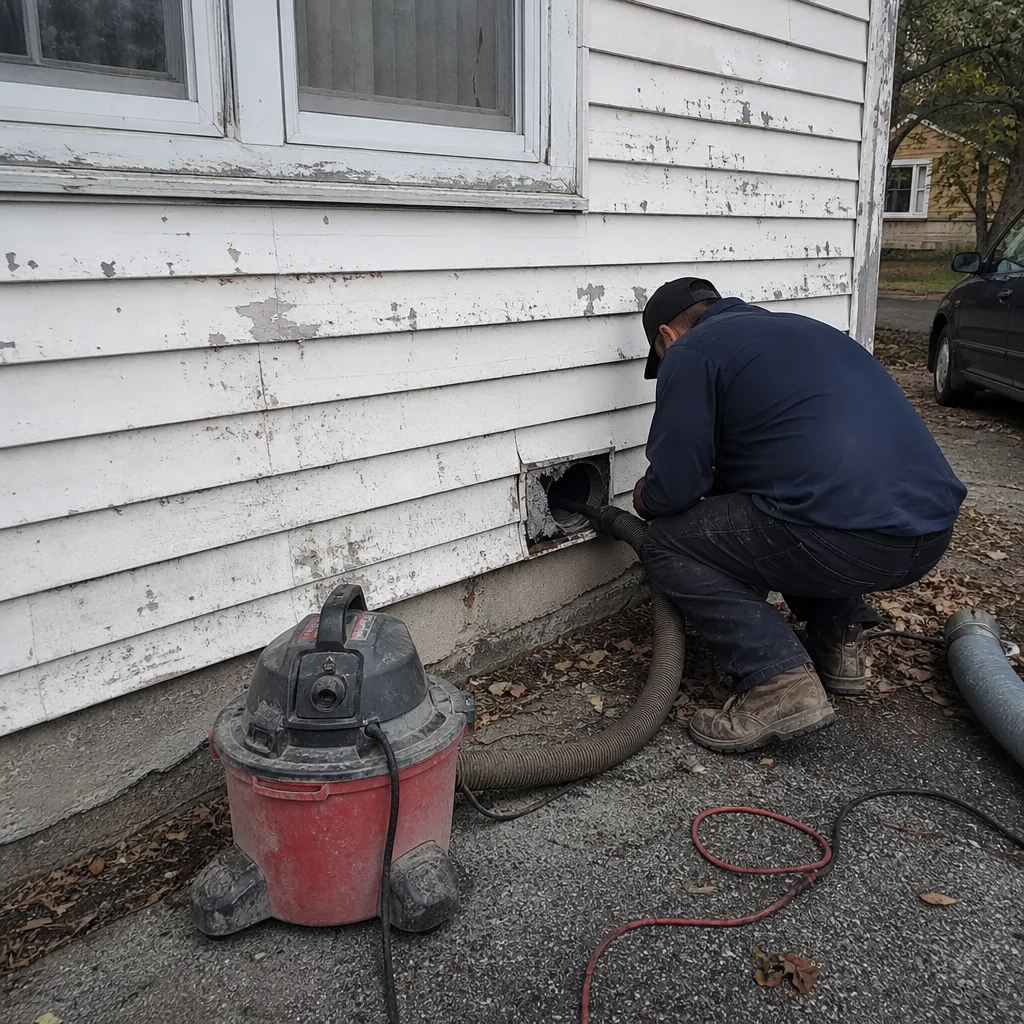 Before
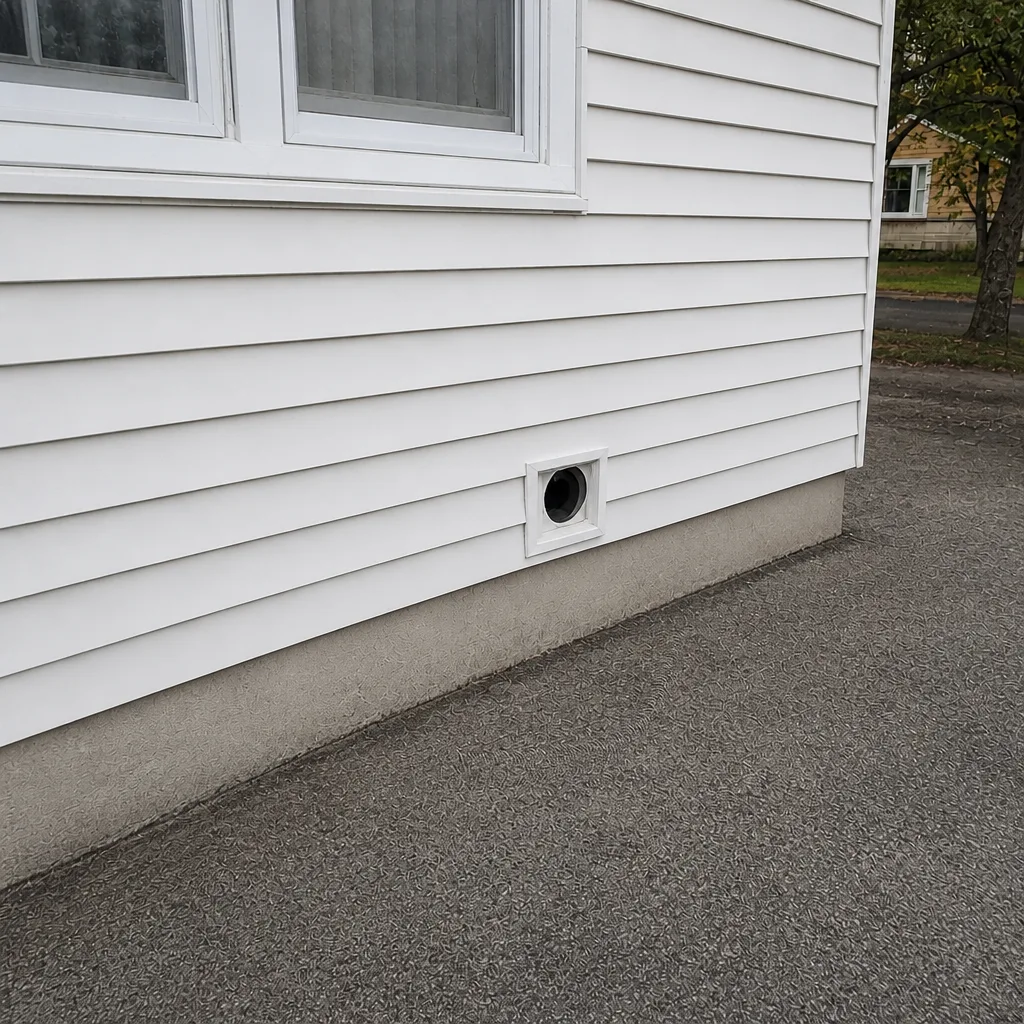 After
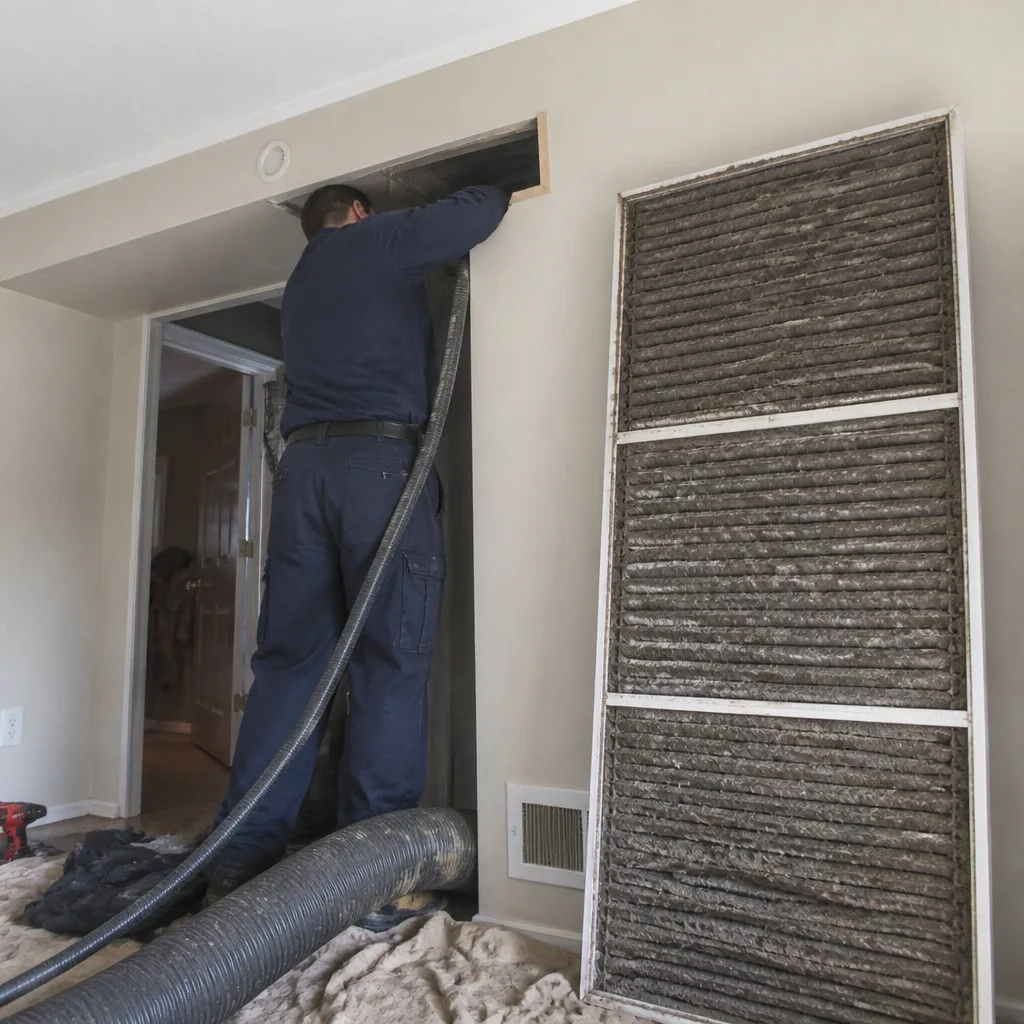 Before
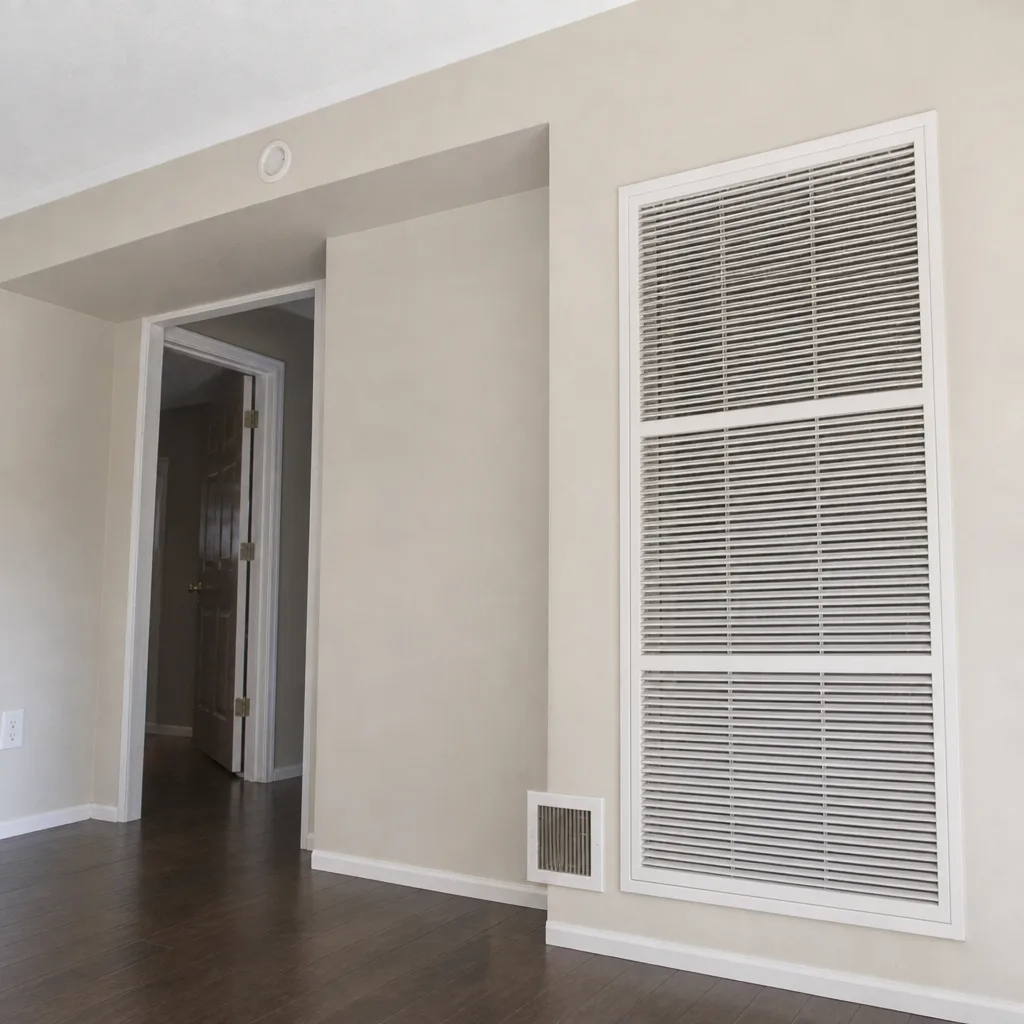 After
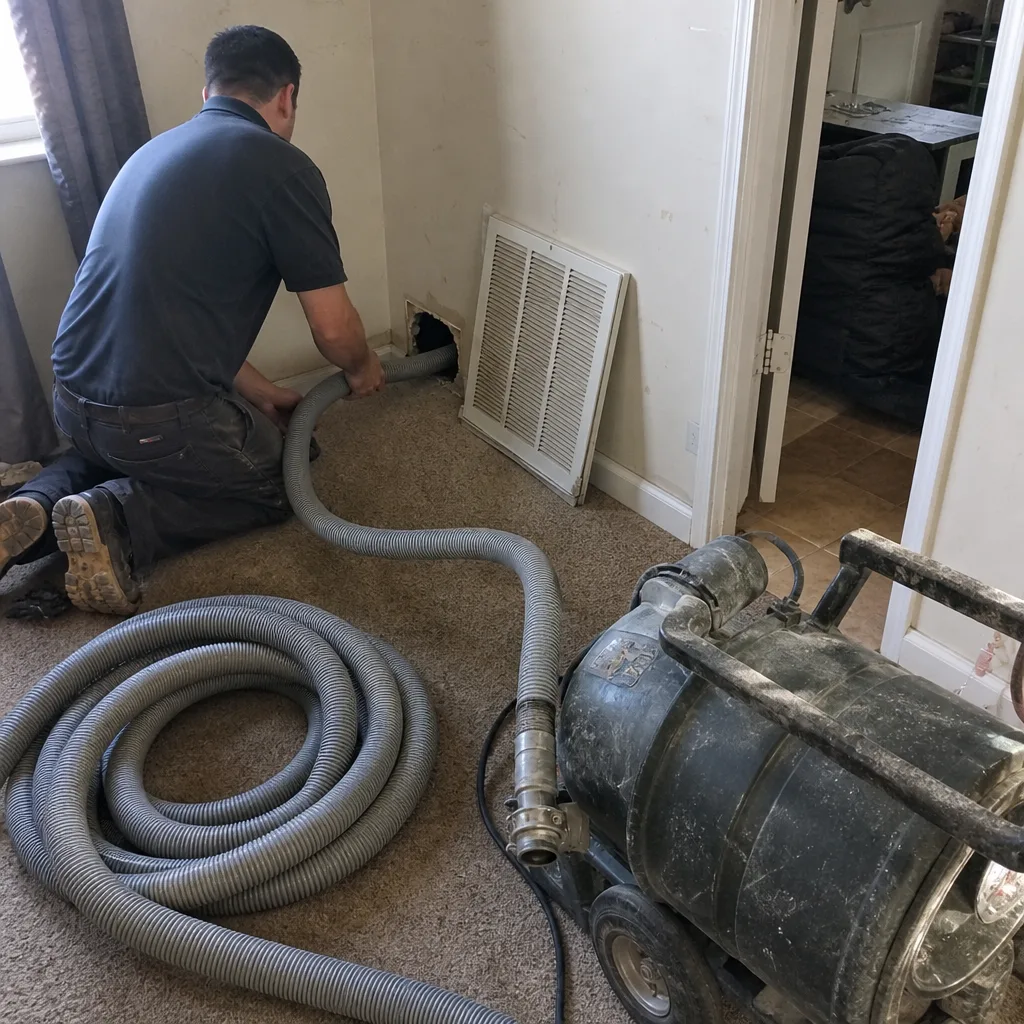 Before
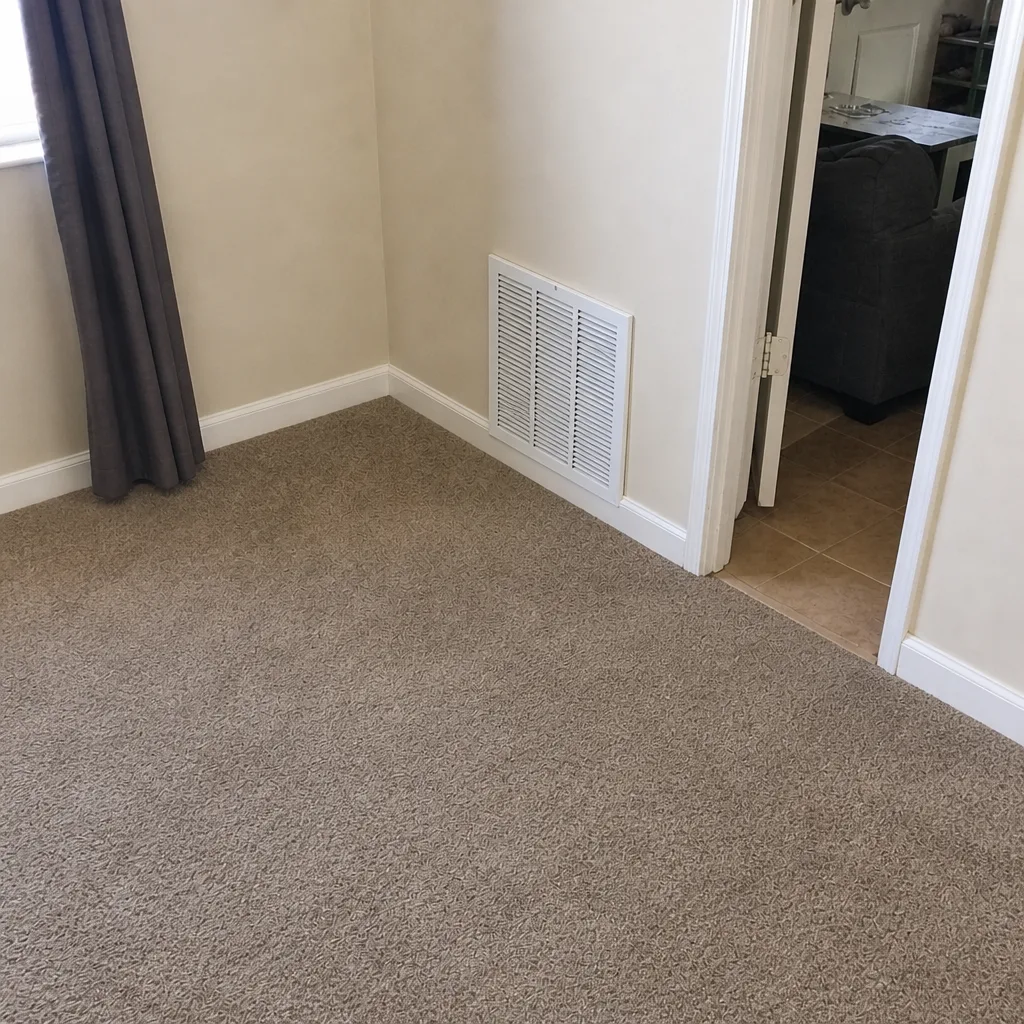 After
When to Call a Professional
If you see visible dust buildup around the register covers, notice a musty smell that follows the HVAC cycle, or you’re facing a renovation or move-in where unknown years of prior occupancy are on the system, it’s worth a full cleaning. Allergy or asthma concerns, a new pet, or a recent flood in a Joliet basement are worth the same conversation. Repair calls are another category: a register that won’t hold a screw, a tear visible in a flex run, or a drop in airflow to one room usually means the duct is compromised, not dirty. And dryer vents that take two cycles to dry a load should be checked without waiting. Duct Cleaning Joliet offers free estimates in Joliet, call (833) 734-7685. We answer 24/7. Fast dispatch from 7am to 7pm, Sunday through Friday.
Frequently Asked Questions
Most Joliet homes fall between $350 and $900 for a full-system cleaning, depending on the number of registers, system layout, and access difficulty. Standalone dryer vent cleaning typically runs $120 to $200, and any repair found during the cleaning adds to that based on the section. The written estimate sets the final price, and the estimate is free. Call (833) 734-7685 for an exact quote, estimates are free.
Because the work is different. A low quote usually means no continuous negative-pressure vacuum, no return cleaning, no access panel work on the trunk, and no verification photos. Those are the steps that make it a real duct cleaning, so cutting them cuts the price. Call (833) 734-7685 and ask what the full job includes, then compare the two quotes side by side.
Ask three questions: was the system under vacuum the whole time, were the returns opened and cleaned, and can I see before-and-after photos of my own ducts. A competent technician answers all three without hesitation and has the photos ready. Call (833) 734-7685 to book a job that ends with those photos in your hand.
For most Joliet homes, every three to five years is a reasonable starting point, and more often if you’ve had a renovation, a pet, a basement moisture issue, or someone in the home with allergies. Homes with heavy daily use or significant carpet may warrant more frequent checks. Call (833) 734-7685 and we’ll tell you honestly whether your system is due.
Sometimes, yes. Reaching the trunk line in older Joliet ranches and split-levels often means cutting a small access point, cleaning through it, and sealing it back with a proper cover. This is standard work, and cut and sealed access panels are not damage, they’re part of doing the job correctly. Call (833) 734-7685 if you’d like to know in advance whether your layout needs one.
Yes. Cleaning, dryer vent work, and air duct repair are the three services we run, and they can be done on the same visit. If the cleaning uncovers a torn flex run or a disconnected joint, we fix it while we’re there. That’s the advantage of a specialist who carries repair on the menu. Call (833) 734-7685 to book.
The Bottom Line
A duct cleaning you can verify has four visible signatures: continuous negative pressure at the trunk, mechanical agitation with contractor-grade rotary equipment, every register and return opened and cleaned, and before-and-after photos of your own system. Equipment matters more than the price on the coupon, because the low equipment is what makes the low price possible. In Joliet’s older ranches and split-levels, expect a contractor to cut and seal at least one access panel if the trunk isn’t reachable, and to flag any wrapping that could contain asbestos rather than brushing through it. If the cleaning turns up torn flex or open joints, repair is on the same visit. Start with a free estimate and a clear written price for the whole system. Read more about duct cleaning in Joliet when you’re ready.
To book, call (833) 734-7685 for a free estimate. We answer 24/7. Fast dispatch from 7am to 7pm, Sunday through Friday.
Written by the team at Duct Cleaning Joliet.