
Last updated November 15, 2026
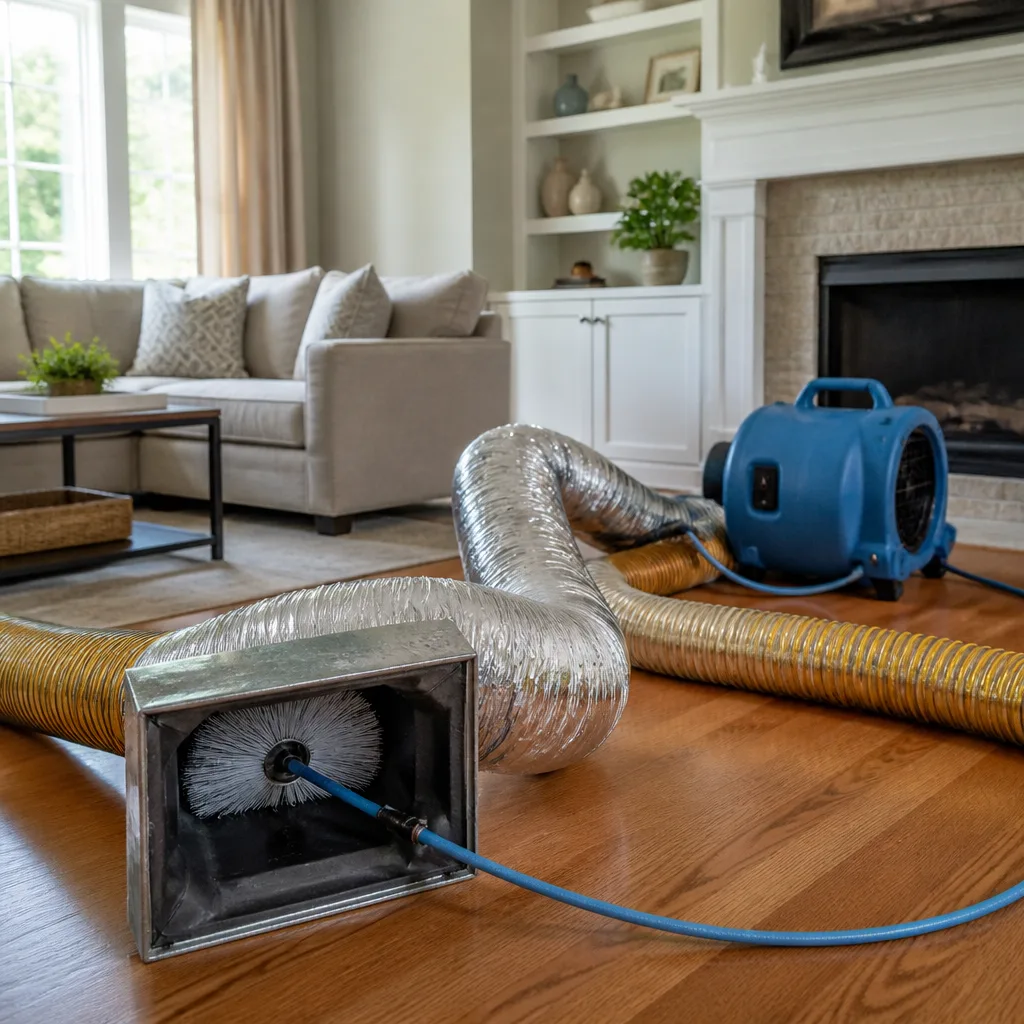 Whole-home duct cleaning
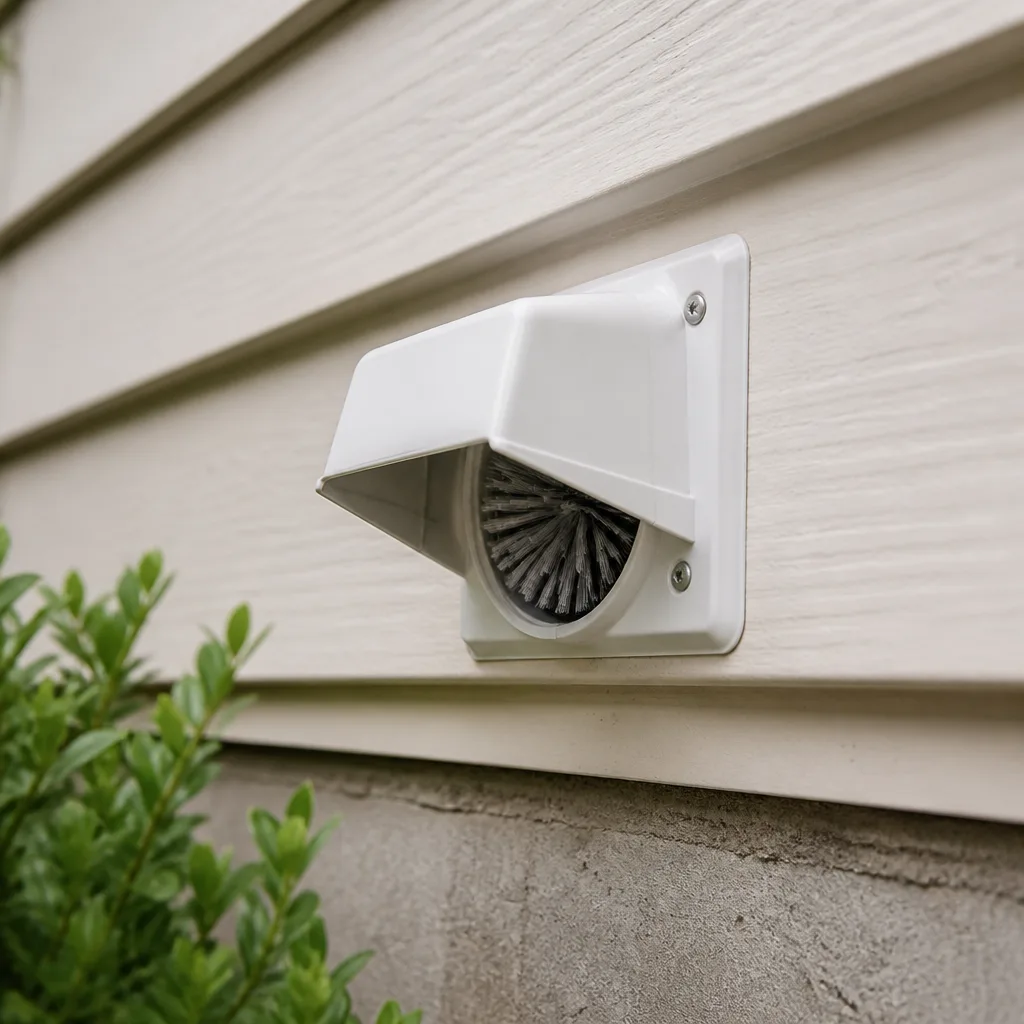 Dryer vent cleaning
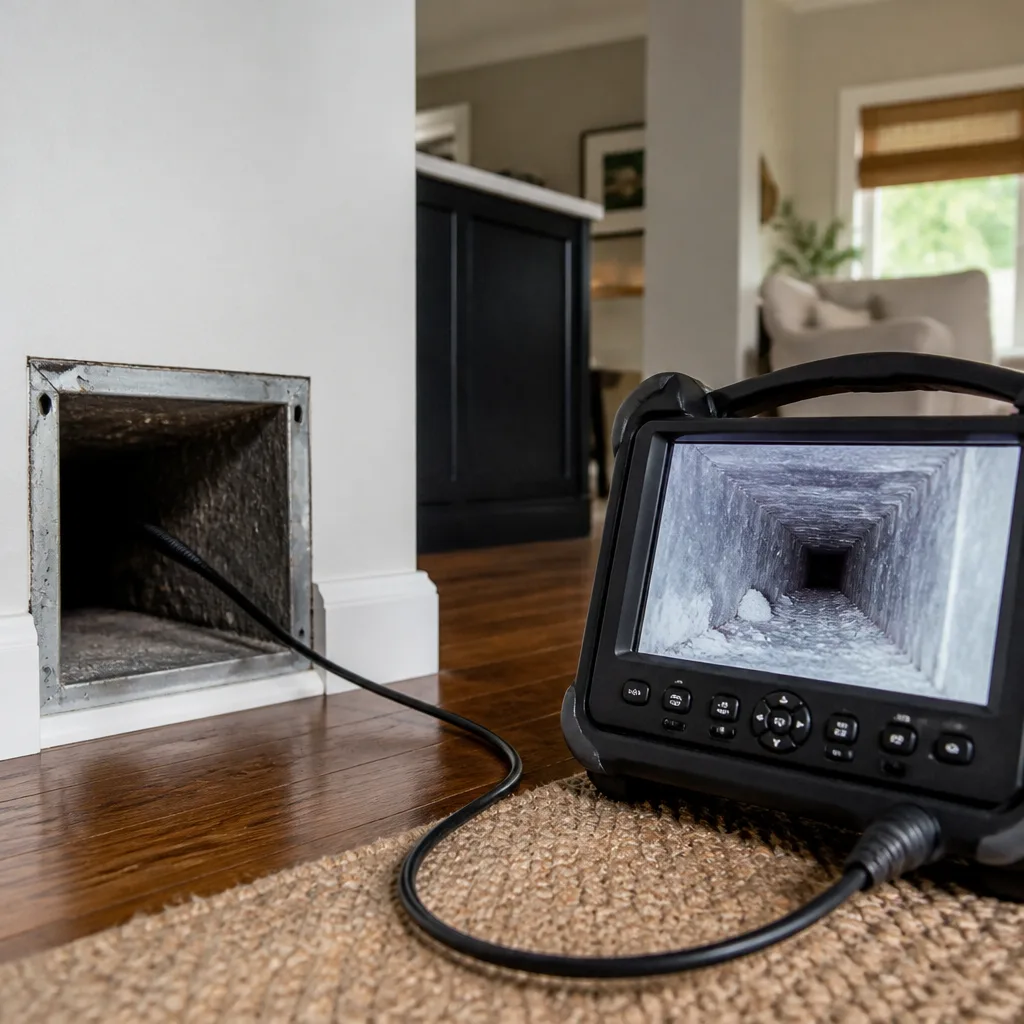 Camera inspection
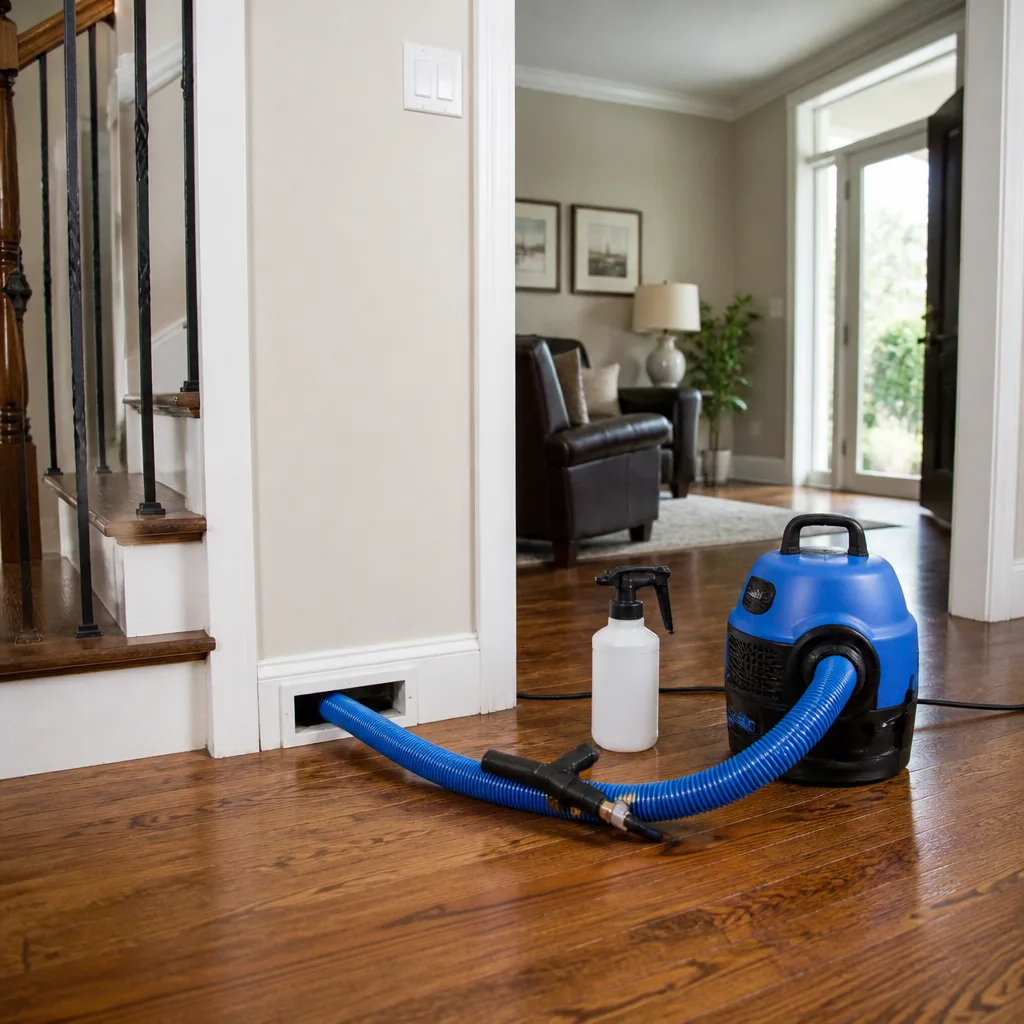 Sanitizing & deodorizing
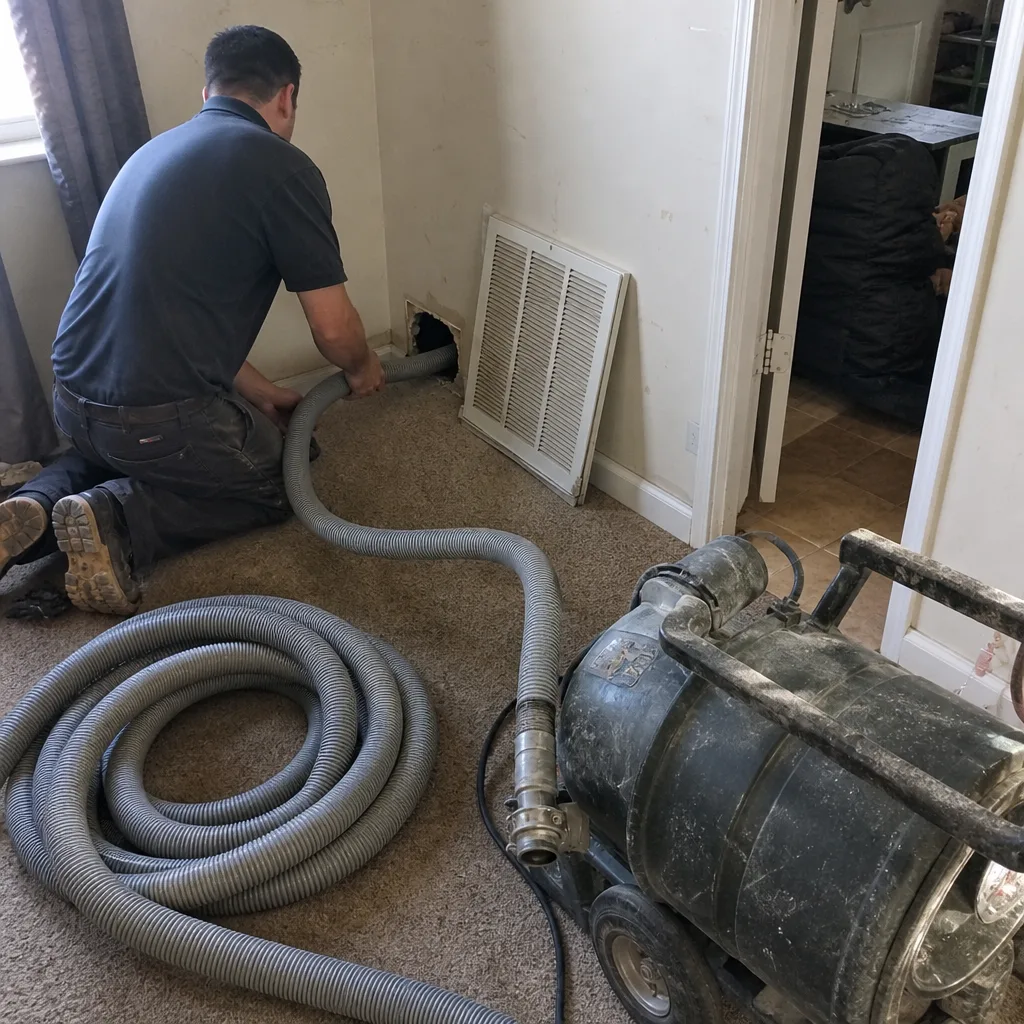
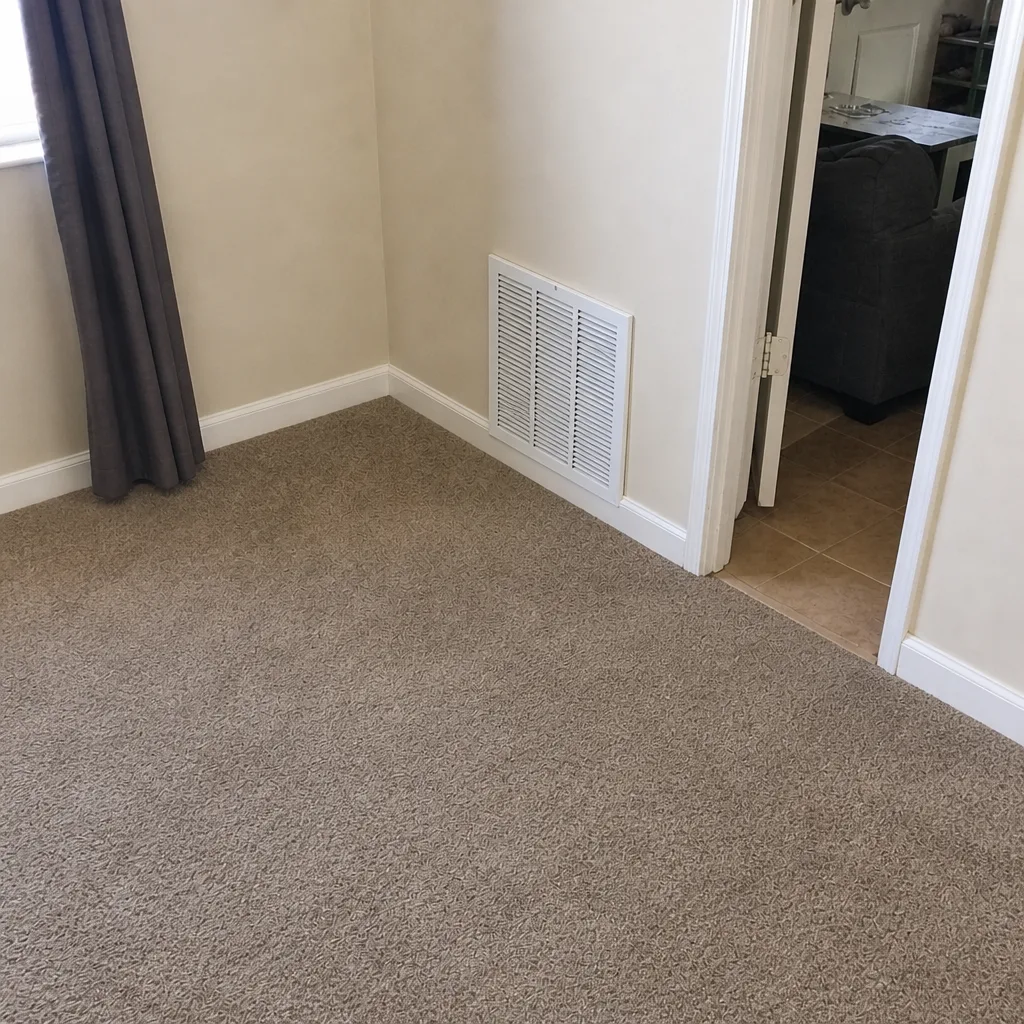
Whole-system duct and dryer vent check with before-and-after photos - you see exactly what came out of your vents
That "$99 whole-house special" is a bait ad - the real number appears once they are in your hallway, or the "clean" is a shop-vac at the register. We photograph the inside of your ducts before and after instead.
How to Hire an Air Duct Cleaning Contractor in Joliet: A Step-by-Step Guide
The $49 duct cleaning ad isn’t a deal. It’s a door-opener. The low price gets a van to your curb, and the real invoice gets built in your basement once the crew is already inside, usually through an upsell for “mold treatment” or “sanitizer” that nobody quoted in writing. What most homeowners don’t realize is that a cut-rate operator with an underpowered vacuum literally cannot clean a duct system correctly, so the visit becomes a sales call instead of a service call. This guide gives you a vetting framework built on equipment, process, and verifiable credentials, so you can tell the difference before anyone touches your vents in Joliet.
Styles & brands we work with
- Whole-home duct cleaning
- Dryer vent cleaning
- Camera inspection
- Sanitizing & deodorizing
Quick Answer
To hire an air duct cleaning contractor in Joliet, ask four equipment questions on the phone, confirm whether the company holds NADCA membership versus individual NADCA certification, insist on whole-system pricing rather than per-vent, and require before-and-after documentation with a written service summary. A legitimate contractor answers all of it without hesitation, and the written estimate sets the final price before work starts.
Table of Contents
- Why Duct Cleaning Hiring Is Different in Joliet
- The Four Equipment Questions to Ask on the Phone
- NADCA Membership vs. NADCA Certification: What to Actually Ask For
- How to Read a Duct Cleaning Quote Line by Line
- Red Flags Specific to the Joliet Market
- What Legitimate Post-Service Verification Looks Like
- When Cleaning Uncovers Damage: Why Repair Matters in the Same Visit
- Common Mistakes to Avoid
- When to Call a Professional
Why Duct Cleaning Hiring Is Different in Joliet
Joliet sits at the middle of a housing stock that ranges from pre-war bungalows on the near east side to large two-story builds out toward the Ridge Road corridor. That spread matters for duct cleaning because a house built in the 1940s often has a different duct layout, duct material, and register count than a house built in 2005. A contractor who quotes you a flat number across the phone without knowing which part of Joliet you live in, how many square feet you’re heating and cooling, or how many registers you have is guessing. Guessing is not a quote.
Northern Illinois climate adds another wrinkle. Long heating seasons mean dust, pet hair, and construction debris settle in the supply and return plenums and get baked into place by months of warm dry air. Then the cooling season ramps up and that same system pushes cool, sometimes humid air through ducts that have been sitting all winter. The cycle repeats every year, which is why so many Joliet homeowners notice the problem in the spring rather than in January. You are not imagining that your registers look worse after a hard winter.
What makes the Joliet market tricky is the mix of operators. Some are local, some are regional, and some drive in from well outside the area and never come back. The vetting you do on the phone needs to filter for the operator who can actually do the job with equipment capable of doing it. Let’s get into how.
The Four Equipment Questions to Ask on the Phone
Equipment is the great dividing line in duct cleaning, and it’s the conversation most contractors would rather you didn’t start. A legitimate operation with proper tools will tell you exactly what they run because the answer is a sales pitch in their favor. An operator with a consumer-grade shop vac and a long hose will get vague fast.
Ask these four questions in this order:
- “What vacuum system do you run?” A real answer names a specific contractor-grade brand. We use Nikro HEPA-rated vacuum equipment, which is designed to capture the particulate that comes loose during cleaning instead of redepositing it into the room. If the answer is “a very powerful vacuum” or “the van-mounted one,” ask for the brand. Evasion here is the single strongest signal that the equipment isn’t what it should be.
- “Are you using rotary brushes or just air?” Air alone loosens surface dust. Rotary brushes physically agitate debris off duct walls so the vacuum can pull it out. We run Rotobrush rotary brush systems, the same platform used by many commercial duct contractors. Ask what brand they use. “We agitate it” without naming a system is not an answer.
- “Do you have HEPA filtration on the vacuum?” This matters most in older homes where the dust load is heavier. HEPA-rated filtration is what separates a real duct cleaning from a dust redistribution event. If the operator doesn’t know whether the vacuum is HEPA-rated, they don’t know their own equipment, and that’s a red flag.
- “What’s your process for containment?” A serious operation has a plan for keeping the loose material inside the system during cleaning, not drifting into your living room. We keep Abatement Technologies equipment in our kit specifically for containment on jobs with heavier contamination, allergen, or mold-adjacent concerns. The answer you want is specific, not “we’re careful.”
If you get clear, brand-level answers to all four, you’re talking to a professional. If you get two evasive answers in a row, move on. The phone call is free and it saves you the invoice.
NADCA Membership vs. NADCA Certification: What to Actually Ask For
Most homeowners ask “Are you NADCA certified?” because it’s the phrase they’ve seen. The problem is that NADCA, the National Air Duct Cleaners Association, offers two very different things, and only one of them is an individual credential. Membership is an affiliation for the company. Certification is an earned credential held by an individual who has passed the association’s Air Systems Cleaning Specialist exam and maintained continuing education.
Why the distinction matters: a company can hold membership and still send a technician who has never sat an exam. When you’re vetting, ask both questions:
- “Is the company a NADCA member?” The answer tells you the outfit has agreed to follow the association’s code of ethics, which includes not using scare tactics or bait-and-switch pricing.
- “Do you have a NADCA-certified Air Systems Cleaning Specialist on staff, and will that person be on my job?” This is the harder question, and it’s the one that reveals whether the certification is real or a sticker on the van.
Neither credential replaces good equipment. A certified specialist with a shop vac is still under-equipped, and contractor-grade tools in the hands of an untrained crew can be just as bad. What you’re looking for is the combination: credentials plus equipment. Also ask whether the company follows the ACR, the NADCA Assessment, Cleaning, and Restoration standard. A crew that knows the standard by name is a crew that has thought about what a complete job actually is.
For a town the size of Joliet, the market is small enough that the small number of operators answering these questions straight will stand out. That’s the shortlist you want.
How to Read a Duct Cleaning Quote Line by Line
The two quote structures you’ll see quoted in Joliet are per-vent and whole-system, and they are not the same product. Understanding the difference is the single most important protection you have against an inflated final invoice.
| Quote Structure | What It Actually Means | Risk to You |
|---|---|---|
| Per-vent (“$X per register”) | The quote is built by counting the registers in your home. The price rises with the count. Nothing about the main trunk line, plenum, or return is specified. | A technician can count more vents on-site than were counted on the phone. The bill goes up after the work starts. |
| Whole-system (one flat price) | A single price for the entire system: supply, return, main trunk lines, plenum, and register boots. The number is agreed before anyone starts. | Lowest, because the number can’t move once the work begins. |
We charge one flat price per system, agreed before work starts. That means no per-vent upcharge on arrival and no surprise additions. When you compare quotes, put the whole-system quotes side by side and read the fine print on each line. Here’s what to look for in any written estimate:
- A named scope, not a list of activities. Any written estimate should specify which parts of the system are cleaned: supply registers, return registers, main trunk line, plenum, and the furnace-side connections.
- Equipment named in the quote. If the operator can’t put the vacuum brand and brush brand in writing, the equipment described on the phone probably doesn’t match what shows up.
- A statement of the final price. The estimate should say explicitly whether the price can change. “Estimate” is fine; “starting at” is not.
- No coupon-based bait pricing. If the quote starts with a teaser number and relies on an upsell for mold treatment or sanitizer to reach a real price, that’s the pattern that gives this trade a bad name.
- Documentation promised in writing. Before-and-after photos of your ducts and a written service summary should be part of the quote, not an afterthought.
If a quote doesn’t pass all five, ask for a revised one. Any serious operator will issue a clean, whole-system quote without the coupon come-on.
Red Flags Specific to the Joliet Market
The bait-and-switch problem in this trade has a few recognizable signatures. Some of these are universal, and some are shaped by what Joliet’s market looks like, where local and out-of-area operators compete on the same street.
Out-of-area contractors with no local review history. A company based two hours away with a Joliet address on its website and no reviews that mention a Joliet neighborhood is a company that will hand you a phone number and a promise. Ask where the company is based and do a quick review search for local mentions. If the operator can’t name which part of Joliet they work most often, that’s a signal.
Quote without asking house square footage or duct count. Any quote that arrives before the operator knows how large the home is, how many registers it has, and roughly how old the ductwork is, is a guess. Legitimate quotes include a short phone assessment, and the technician will confirmations on arrival. A number delivered without a single question is a teaser, not a quote.
“Free” mold inspection that ends in a treatment offer. Mold treatment can be a legitimate scope when there’s a real bio-growth problem, but it is not something detected via a free inspection that magically appears five minutes into the visit. If the “treatment” price isn’t in the original written quote, decline it and ask for it in writing on a separate visit after you’ve had a chance to think.
Pressure to decide today. A price that vanishes unless you sign on the spot is a price that was never real. Contractor-grade operators don’t need that move.
No written service summary promised. If the operator can’t describe what the document will contain, they don’t have one, and you have no record of the work.
What Legitimate Post-Service Verification Looks Like
Most of the dissatisfaction in this trade comes from jobs where the homeowner has no way to verify what actually happened. The work was done, the crew left, and there’s no record. A proper cleanup ends with three things you can hold in your hand and check.
- Before-and-after photos of your own ducts. A legitimate operator takes photos of the registers, plenum, and trunk line before cleaning and after, and shares them with you. You should be able to see the difference in the actual ductwork inside your house, not a stock photo of somebody else’s system. We take photos on every job for exactly this reason.
- A register-by-register airflow check. After cleaning, the technician should confirm that air is moving at each register. A stuck damper or an obstruction left in the branch line shows up here. This check catches problems that a visual inspection alone won’t.
- A written service summary. The summary should state which parts of the system were cleaned, what equipment was used, what was observed during the job, and whether any damage was found. If something needs repair, it should be listed with a separate written price, not left to a phone call later.
Ask for all three before the crew leaves. If the operator suggests “we’ll send it by email later,” that’s fine as long as the photos were taken and the summary is agreed. What you don’t want is a follow-up where nothing gets sent because nothing exists.
When Cleaning Uncovers Damage: Why Repair Matters in the Same Visit
The conversation most cleaning contractors don’t want to have is about what happens when the technician finds physical damage during the cleaning. Disconnected flex runs, crushed sections behind a wall, torn duct liner, and joints that were taped once and have since failed are all common in older Joliet housing stock. When a crew is only set up to vacuum, that damage gets noted, and the homeowner is left to find a second contractor for the repair.
Our service menu includes air duct repair for exactly this reason. If we find damage, we repair it in the same visit, so you don’t have two contractors in your basement in two separate weeks. The quote for the repair is written and agreed before we start it, and the cleaning summary documents what was repaired and where. This matters more in a house built before the 1980s where duct runs were often retrofitted and the connections were never quite right.
One thing repair does not cover: if the equipment that heats and cools the house is compromised in a way that involves gas lines or the electrical panel, that’s a licensed trade’s work. We flag it and refer it out. Nobody should be tracing gas piping off the back of a furnace as part of a duct cleaning job, and any operator who offers to is telling you something about how they operate.
If the cleaning reveals a dryer vent problem at the same time, we handle that too. Lint-clogged dryer vents are a fire risk, and clearing them completely is part of dryer vent cleaning we treat as a safety service. It’s not an air quality add-on; it’s the reason the service exists as its own line item.
Common Mistakes to Avoid
- Hiring on the lowest advertised number. The $49 ad is a door-opener, not a price. Any quote built from a coupon figure is a quote built to rise once the crew is on-site and the “mold treatment” offer comes out.
- Not asking about equipment. Renters and homeowners in Joliet both do this. If you don’t ask whether the vacuum is HEPA-rated and whether the crew runs a rotary brush system like Rotobrush, you won’t know until after the visit whether the job was done properly.
- Skipping the phone assessment. Any operator willing to quote without knowing your square footage, register count, and approximate duct age is guessing. Guesses get corrected on arrival, usually upward.
- Confusing NADCA membership with NADCA certification. Members are companies. Certified Air Systems Cleaning Specialists are individuals. Ask whether a certified specialist will be on the job.
- Accepting a quote with no written scope. A price without a scope of work isn’t a quote, it’s a number. Get the plenum, trunk lines, and register boots listed in writing.
- Not asking for before-and-after photos. Photos of your own ducts are the only verifiable record that the work was done. If the operator doesn’t take photos, you have nothing to check.
- Forgetting the dryer vent. The dryer vent is a fire risk separate from air quality and is often lumped in as an “add-on.” Treat it as its own safety service and ask whether it’s part of the same visit.
When to Call a Professional
You should call a professional for duct cleaning in Joliet when you can see visible dust streaking out of the registers, when you notice a musty smell that gets stronger when the system kicks on, when the return grille is visibly clogged, or when remodeling work has left drywall dust in the system. You should also call when the system hasn’t been serviced in years and you’re moving into a home whose last owner wasn’t diligent about it. Filter changes don’t reach the plenum, the trunk line, or the register boots, and that’s where the accumulation lives. Duct Cleaning Joliet offers free estimates in Joliet – call (833) 734-7685. We answer 24/7, and dispatch runs 7am to 7pm, Sunday through Friday.
Frequently Asked Questions
Air duct cleaning in Joliet is quoted as one flat price per system, agreed in writing before work starts, rather than a per-vent rate or an advertised teaser number. The estimate is free, and the written estimate sets the final price. Call (833) 734-7685 for an exact quote – estimates are free.
Cheap quotes are usually built on an advertised coupon price that rises on arrival, often through mold treatment or sanitizer upsells that were never in the written scope. They also often reflect consumer-grade vacuums and crews without contractor-grade rotary brush systems. If you compare equipment, scope, and documentation side by side, the price gaps make sense.
You know it was done when you have before-and-after photos of your own ducts, a register-by-register airflow check, and a written service summary listing what was cleaned and what was observed. Ask for all three before the crew leaves. If they can’t produce them, the job didn’t happen the way it should have.
NADCA membership is a company-level affiliation; NADCA certification is an individual credential earned by a technician who passed the Air Systems Cleaning Specialist exam and maintains continuing education. Ask both questions: whether the company is a member, and whether a certified specialist will be on your job. The second answer is the one that tells you more.
Most Joliet homes benefit from cleaning every few years, with the exact interval depending on pets, filters, recent remodeling, and the age of the ductwork. Homes with pets, allergies, or recent renovation need it more often. A proper inspection with photographs will tell you what your specific system needs.
Either can work if the equipment and credentials check out, but a local operator with reviews that mention Joliet neighborhoods is easier to verify after the job. Out-of-area crews with no local history give you no way to follow up if something is missed. Ask where the operator is based and check recent local mentions.
If damage is found, an operator with air duct repair on the menu can fix it in the same visit with a separate written price agreed before work starts. If the operator can only vacuum, you’re looking at a second contractor and a second visit. Ask up front which one you’re hiring.
The Bottom Line
Hiring a duct cleaning contractor in Joliet comes down to four checks: equipment, credentials, quote structure, and documentation. Ask the four equipment questions on the phone and expect brand-level answers. Distinguish NADCA membership from certification and ask who will actually be on the job. Insist on a whole-system quote with a written scope and one flat price, not per-vent or a teaser coupon figure. Require before-and-after photos, a register-by-register airflow check, and a written service summary. An operator who clears all four is worth hiring even if their quote isn’t the lowest. An operator who dodges two is worth skipping regardless of price.
For a closer look at what our own air duct cleaning service includes, or to check our Joliet service area, follow the links. Our technicians have up to 15 years of experience, and we run contractor-grade equipment that includes Rotobrush rotary brush systems and Nikro HEPA-rated vacuum equipment. Ready to get an exact quote? Call (833) 734-7685. We answer 24/7. Fast dispatch from 7am to 7pm, Sunday through Friday.
Written by the team at Duct Cleaning Joliet.
See the difference
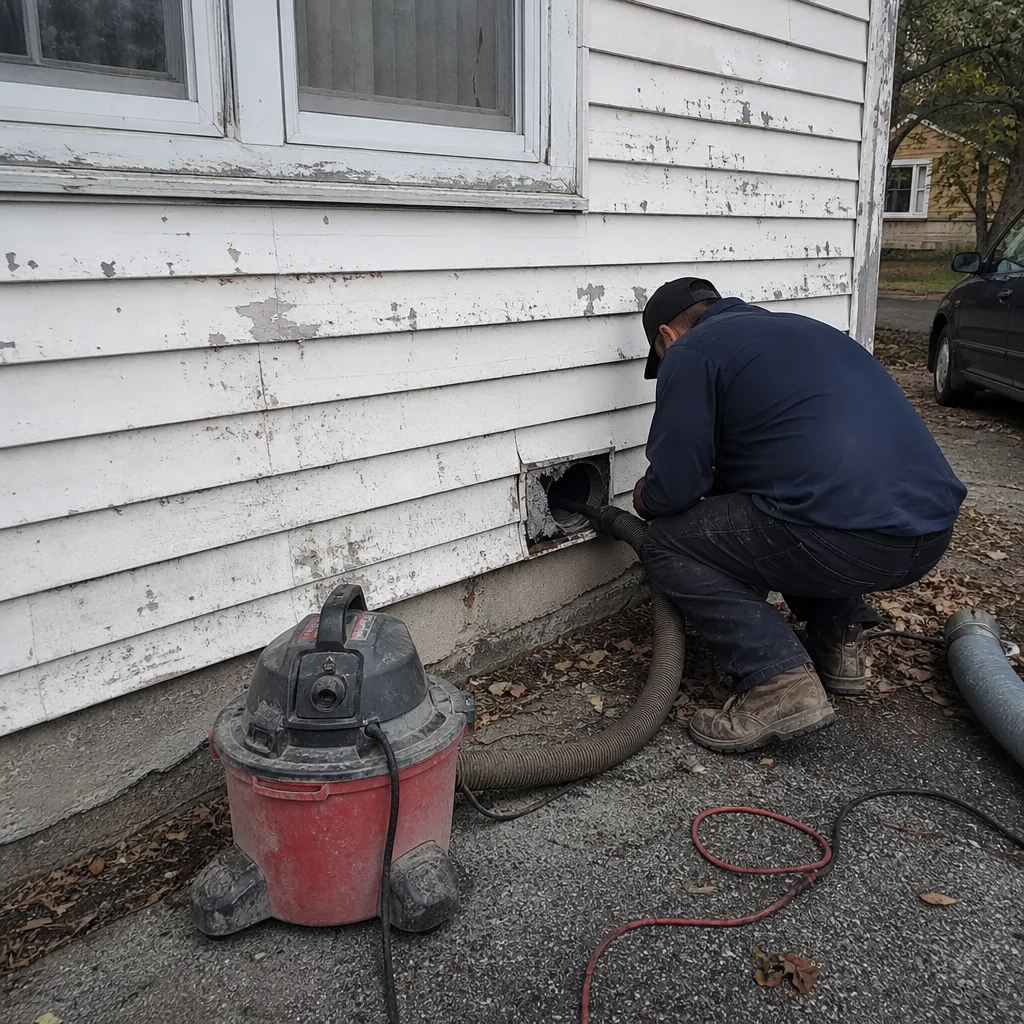 Before
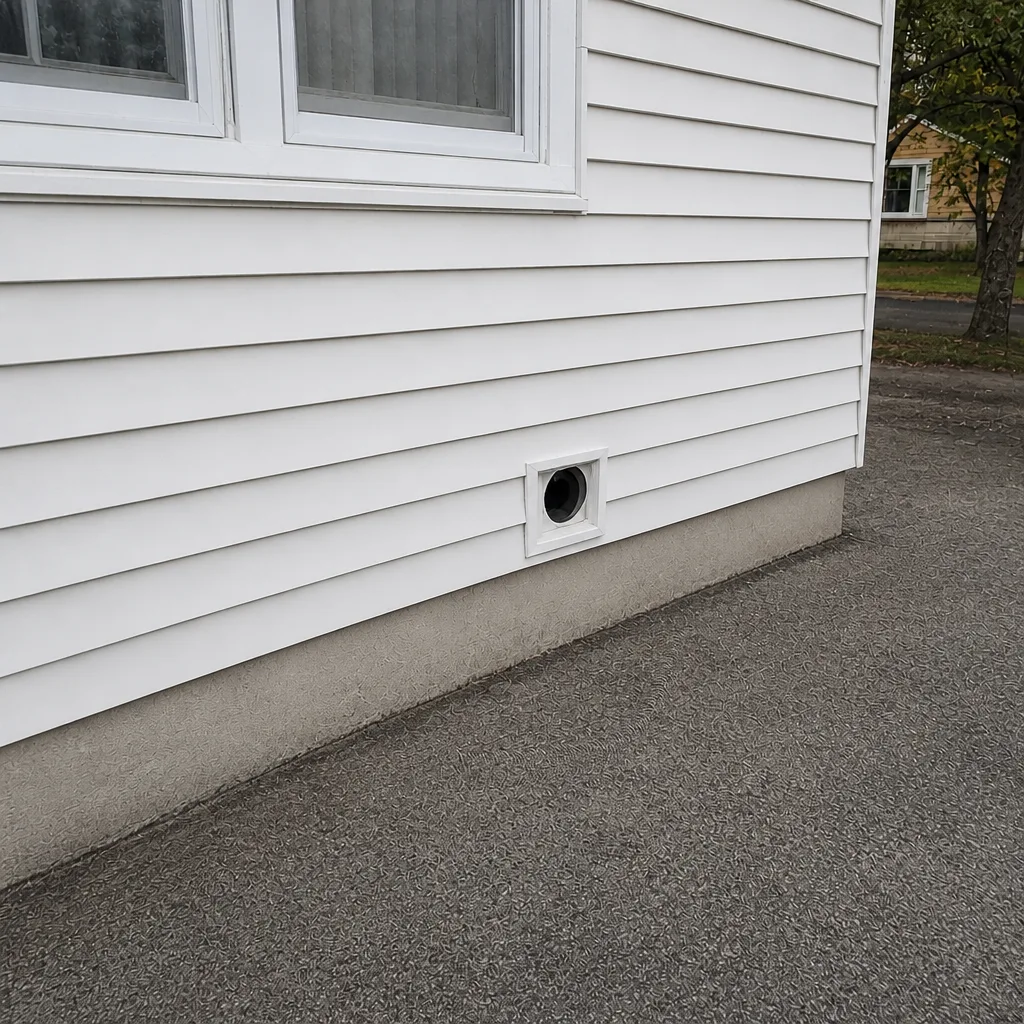 After
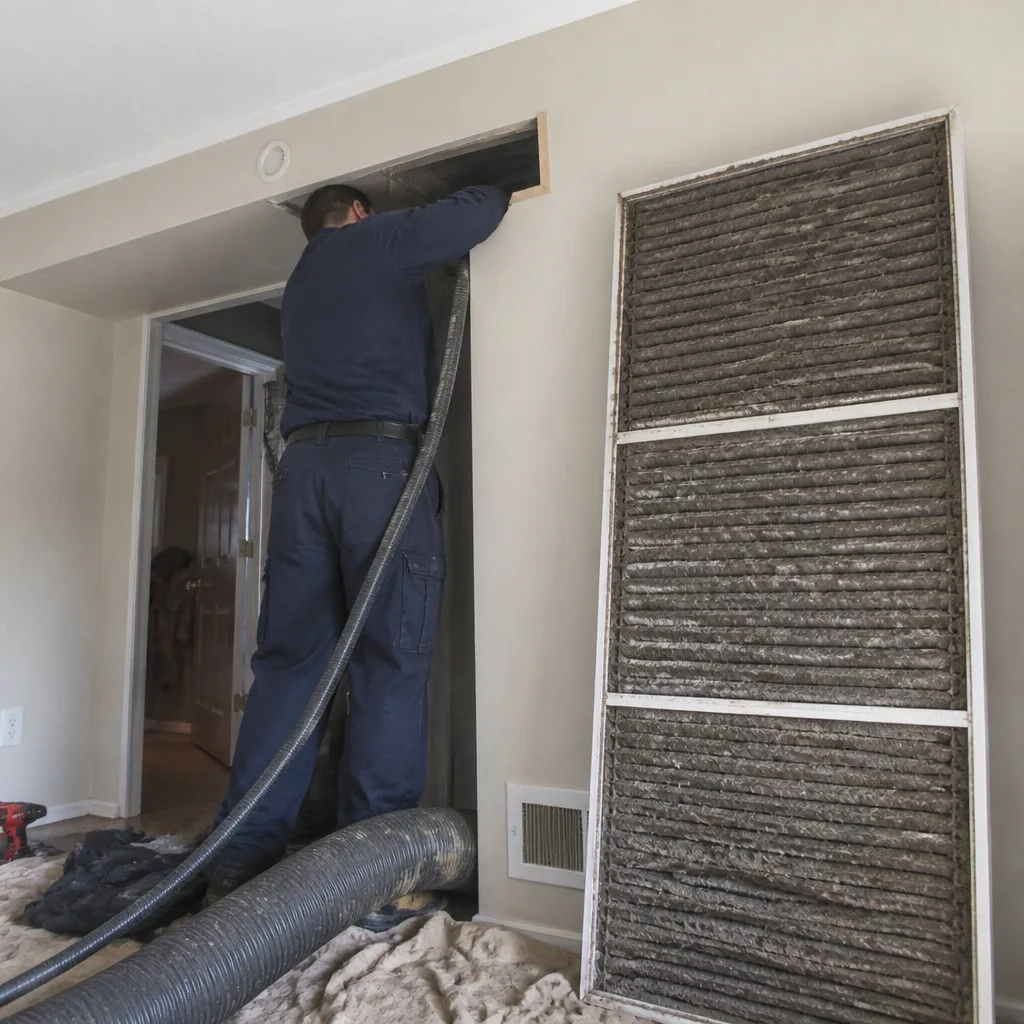 Before
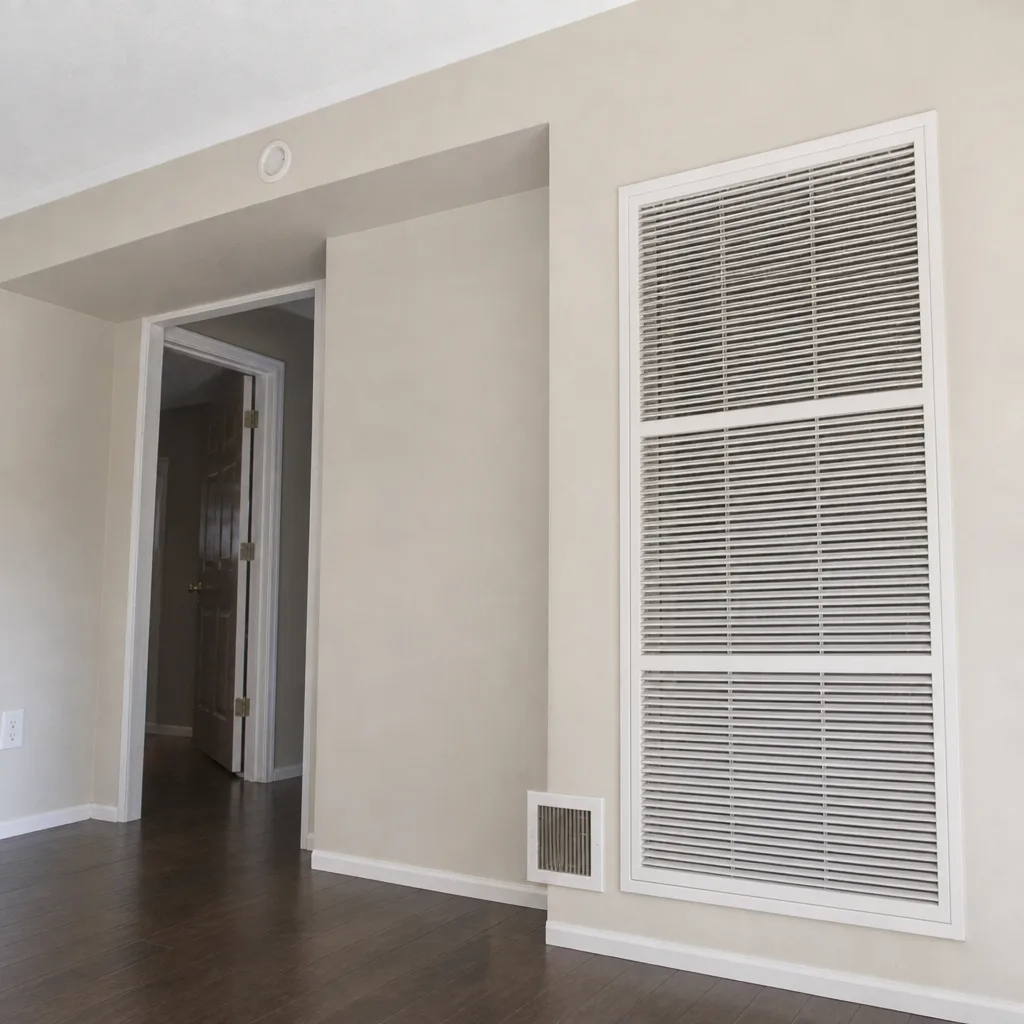 After
 Before
 After