
Last updated November 15, 2026
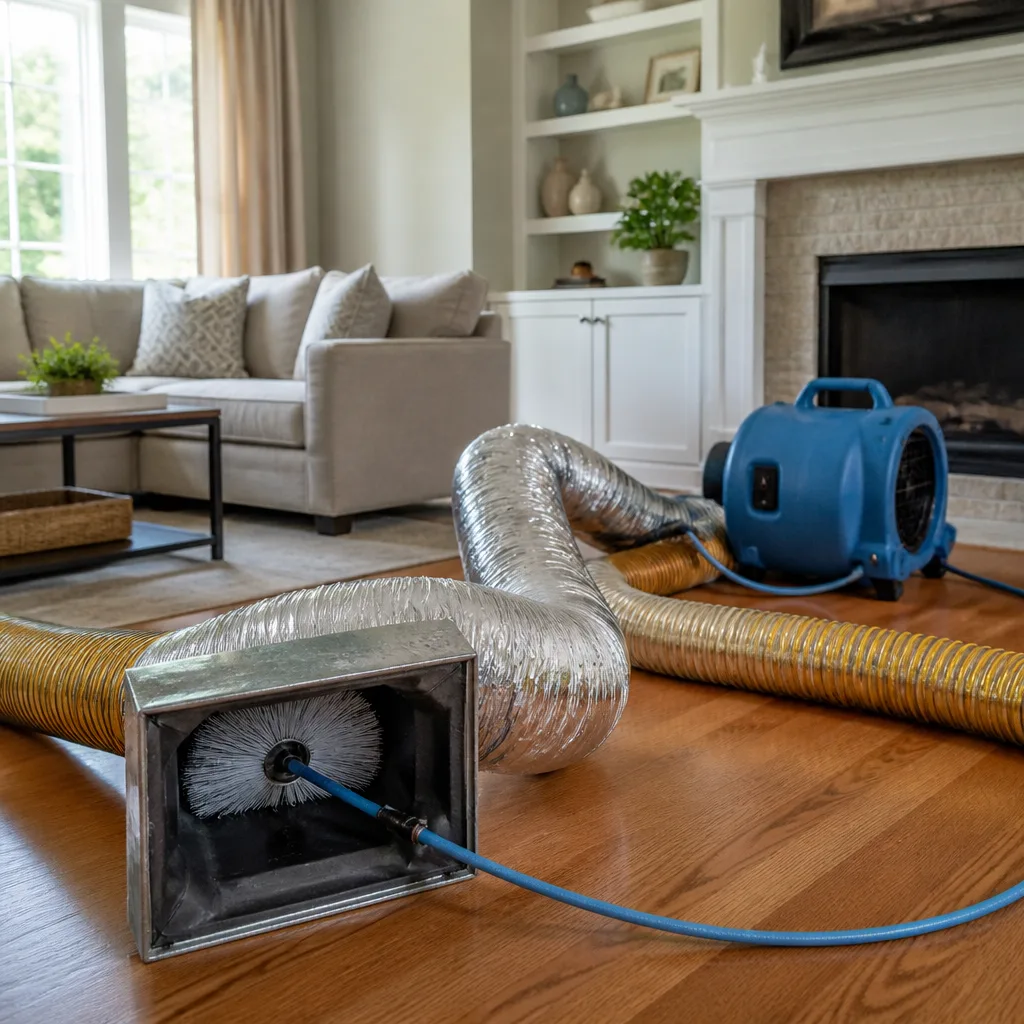 Whole-home duct cleaning
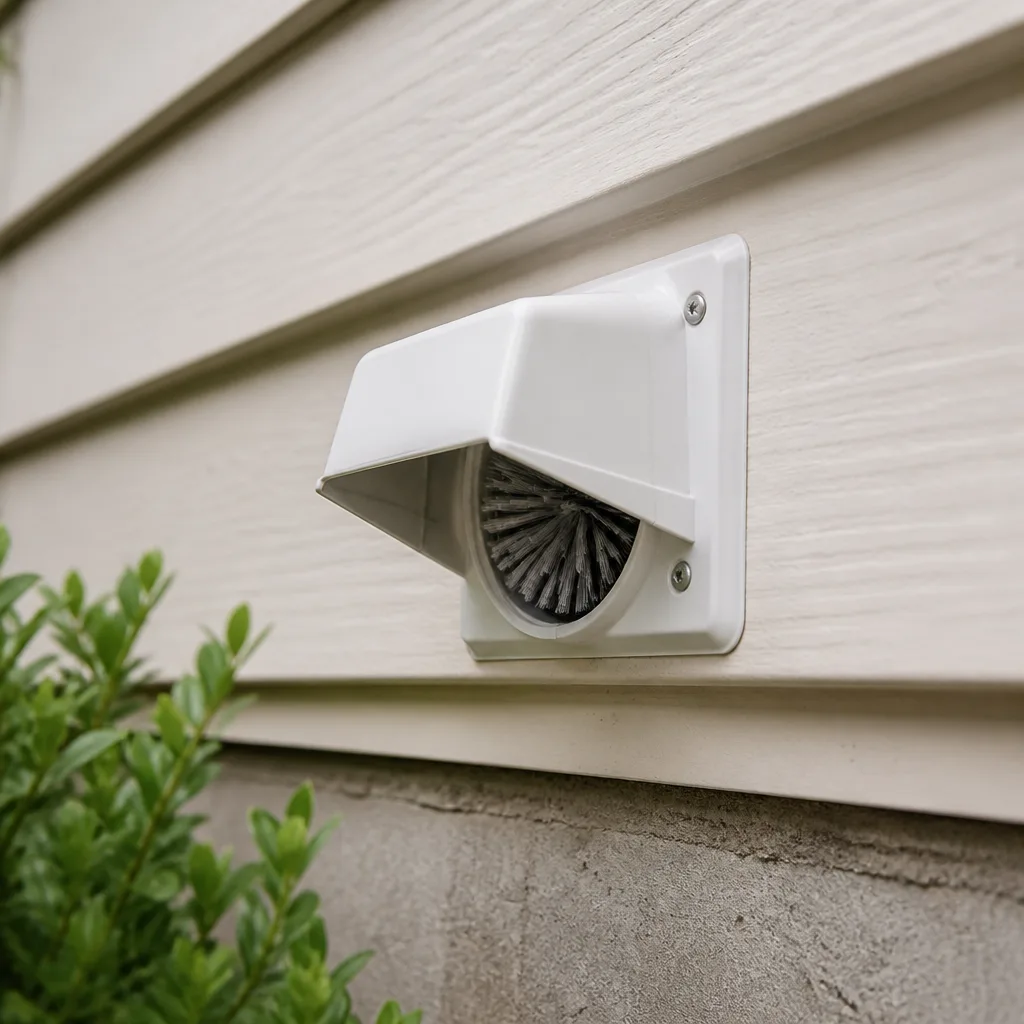 Dryer vent cleaning
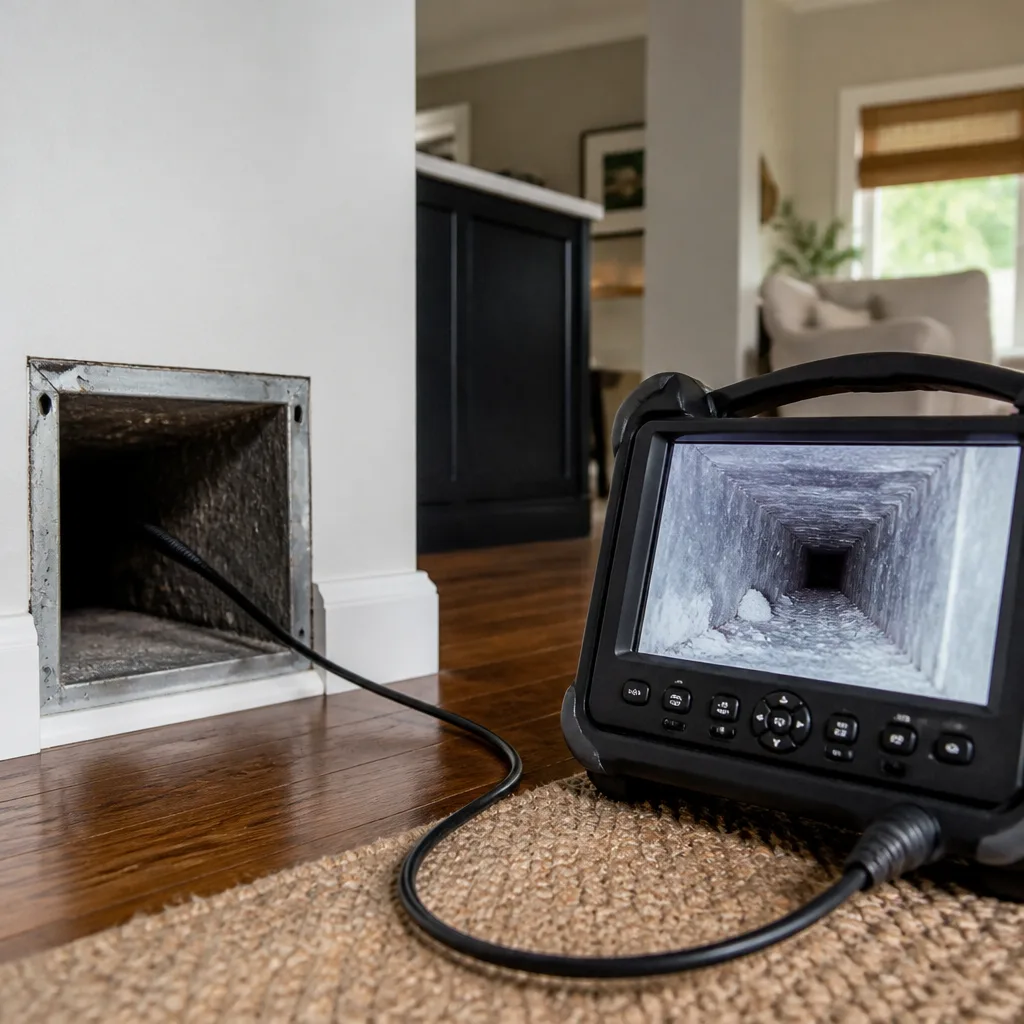 Camera inspection
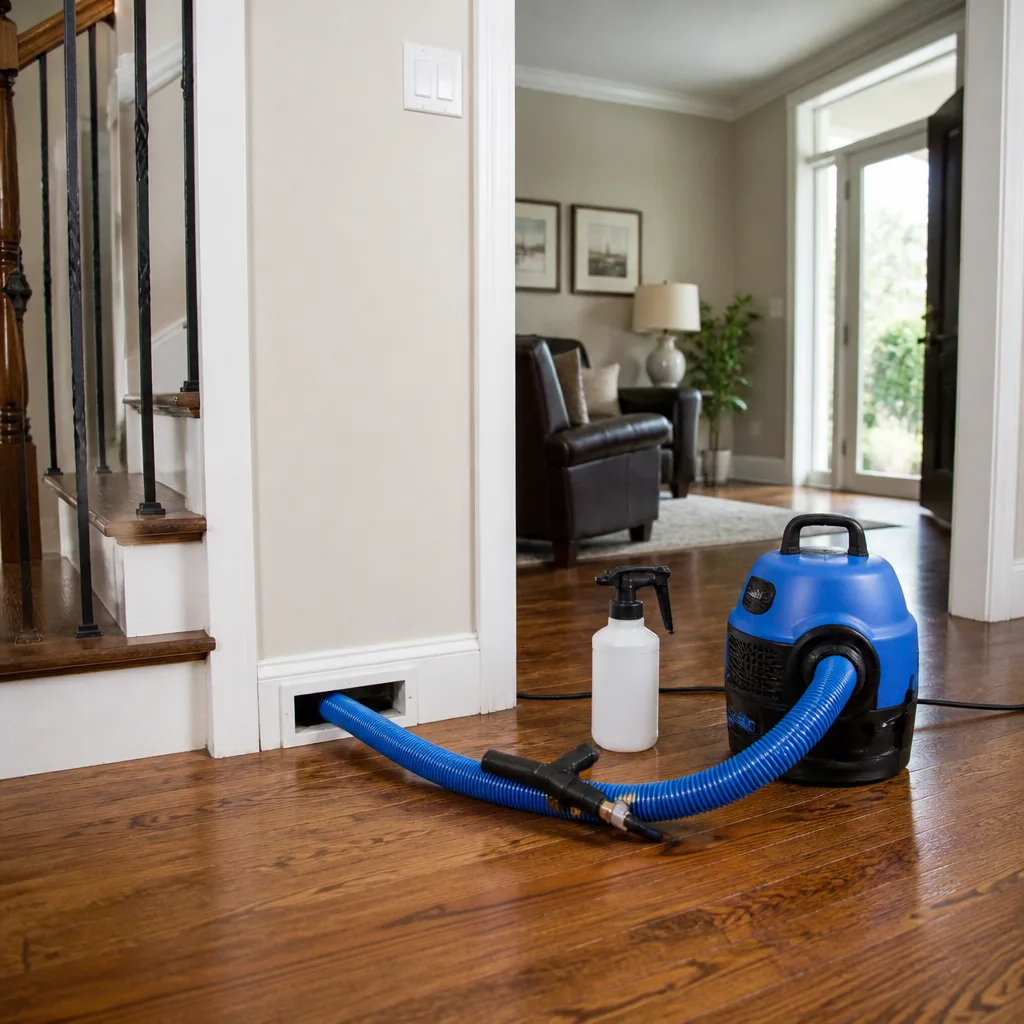 Sanitizing & deodorizing
Whole-system duct and dryer vent check with before-and-after photos - you see exactly what came out of your vents
That "$99 whole-house special" is a bait ad - the real number appears once they are in your hallway, or the "clean" is a shop-vac at the register. We photograph the inside of your ducts before and after instead.
DIY vs Professional Air Duct Cleaning: The Joliet Homeowner’s Decision Guide
Running a drill brush through your registers without a negative-pressure vacuum pulling on the system is not duct cleaning. It’s dust redistribution with extra steps. That distinction matters more than any tool list or coupon you’ll find online, because the entire DIY-versus-pro question gets framed as a capability issue when it’s really an equipment question. We’re not going to tell you a homeowner can’t touch their ducts, because there are several jobs around the vents where doing it yourself genuinely pays off. What we will do is draw a clear line: here’s what DIY handles well in a Joliet home, here’s where it quietly makes things worse, and here’s how to tell which side of that line your job sits on.
Quick Answer
DIY duct work is worth doing for register cleaning, filter changes, dryer lint trap upkeep, and inspecting exterior caps. It is not worth doing for cleaning inside the duct runs themselves, because without a negative-pressure collection system, agitating debris just pushes it into your living space. Professional cleaning brings the rotary brush and HEPA vacuum needed to actually remove material from the system, and in Joliet that difference shows up fast given how much the local housing stock varies.
Styles & brands we work with
- Whole-home duct cleaning
- Dryer vent cleaning
- Camera inspection
- Sanitizing & deodorizing
Table of Contents
- What DIY Duct Work Can Actually Handle
- The Physics Behind Negative Pressure
- Why a Shop-Vac at One Register Doesn’t Work
- Where DIY Makes the Professional Job Harder
- A Real Cost Comparison
- The Hybrid Approach That Makes Sense
- What Contractor-Grade Equipment Actually Does
- Common Mistakes to Avoid
- When to Call a Professional
- Frequently Asked Questions
What DIY Duct Work Can Actually Handle
Start with the tasks where doing it yourself genuinely adds value, because that list is longer than most cleaning companies will admit. Register and grille cleaning is a homeowner job. The faceplate and the visible boot behind it collect dust, pet hair, and cooking film, and wiping them down does real good without touching the sealed system. Pull a grille, wash it in the sink, let it dry, put it back. Same with filter swaps. If your filter is on a monthly or quarterly change schedule, that’s yours to own and it’s the single highest-return maintenance task in the whole system.
The dryer vent lint trap is another one that belongs to the homeowner. Emptying the trap after every load is basic fire-safety habit, not a professional service. Lint-clogged dryer vents are a fire risk, and the trap is the first line of defense. Clearing the trap costs nothing and takes seconds.
Exterior cap inspection rounds out the legitimate DIY list. Walk the outside of the house and look at where the dryer vent and any fresh-air intakes terminate. You’re checking that the flapper opens and closes, that no bird has built a nest in the cap, and that the screen (if there is one) isn’t matted solid. A blocked exterior cap is a cheap fix and an easy catch when you look for it.
Here’s what those four tasks share: they all live on the accessible side of the system. Nothing is sealed behind drywall, nothing requires a vacuum pulling on the whole run. In a Joliet home, that accessible side is where the homeowner can be genuinely effective. The moment you go past the boot into the trunk line, the rules change.
The Physics Behind Negative Pressure
Here’s the part that online DIY guides tend to skip. Duct cleaning is not about scrubbing surfaces. It’s about source removal – getting the material out of the system entirely, not stirring it up so it settles somewhere else. The physics of that requires a specific condition: the duct run needs to be under negative pressure so that anything loosened by a brush is drawn toward a collection point instead of blowing into the room.
Think of it this way. A loose coating of dust sticks to the inside of a galvanized duct. Something has to break that dust free (agitation) and something has to catch it before it escapes (collection). Those are two separate jobs, and both have to happen at once. Agitation without collection is a fan. Collection without agitation leaves the bonded layer in place. The only setup that does both is a rotary brush running the length of the run while a HEPA-rated vacuum holds the whole system under suction.
A Rotobrush rotary brush system paired with Nikro HEPA-rated vacuum equipment is the configuration commercial duct contractors rely on for exactly this reason. The brush travels the run and loosens the bonded material; the vacuum holds negative pressure on the system and captures the airborne particles before they leave the duct. If either half is missing, you don’t get cleaning – you get partial disruption.
The other piece of the physics is particulate size. Dust, dander, and the fine material that settles on top of duct insulation act like a cloud when they’re disturbed. A HEPA-rated capture system traps those particles at the filter instead of returning them to the air in your living room. Sub-HEPA or unfiltered setups just relocate the problem. On a Joliet job, that matters because the local climate swings – cold winters and warm, humid summers – mean duct systems here cycle through more expansion, contraction, and condensation than systems in a more moderate climate. Loose material collects, dries, and re-suspends more readily.
Why a Shop-Vac at One Register Doesn’t Work
This is the most common DIY setup we hear about: a shop-vac parked at one register, a brush pushed through a different register, and the hope that suction will pull everything through. It doesn’t work, and the reason is mechanical, not a matter of patience or effort. A shop-vac’s airflow is limited to a small, local pull at the register mouth. It cannot create negative pressure across a whole duct run. Duct geometry – elbows, drops, takeoffs to individual rooms – resists airflow, and a shop-vac doesn’t have the static pressure to overcome that resistance.
The result is that when you agitate debris at register A while a shop-vac sits at register B, most of the loosened material drifts into the room at register A rather than traveling toward B. Here’s what actually happens to that material:
- Loose dust and dander re-suspend into the room air, raising the particulate count in the living space.
- Some material settles back onto the duct walls downstream of the brush, just in a looser, more mobile state.
- Some collects in the elbows and takeoffs where airflow is weakest – the exact places that were already the dirtiest.
- Insulation lining (where present) gets disturbed without being captured, which is a separate problem covered below.
The net effect is that a homeowner has spent an afternoon, added to the room’s dust load, and left the duct system in a more distributed state than they found it. In a Joliet home with a whole-home filtration system from Honeywell or Aprilaire, that looseness gets picked up by the filter faster, so the filter loads early – but the source material is still in the duct, not removed.
Where DIY Makes the Professional Job Harder
We’ve seen this pattern often enough that it’s worth spelling out. A homeowner attempts a duct clean, doesn’t get the result they wanted, and then calls a professional. The professional job is now more involved than it would have been. Here are the specific ways that happens:
Compressed Debris
When a brush is pushed through a duct without enough suction behind it, loose material can get packed into corners, elbows, and the low points of horizontal runs. Compacted material is harder to lift than the loose layer it started as. A rotary brush system can break it up, but it takes longer, and the vacuum has to work harder because the material is denser and heavier.
Disturbed Insulation Lining
Some duct runs, especially older flex duct and insulated trunk sections, have a foil or plastic-lined interior. An aggressive brush or a scraper-style attachment pushed by hand can tear or wrinkle that lining. Once it’s disturbed, the interior surface has openings where fibrous material can shed into the airstream. A professional cleaning of a healthy duct doesn’t cause this; a homeowner working blind on an unfamiliar run can. If the lining is already compromised, an air duct repair visit becomes part of the conversation, and on a Joliet job that’s often the same day as the cleaning when the right service provider is on hand.
Broken Access Screws and Stripped Grilles
Grilles and registers are usually held with small screws into thin sheet metal or MDF. Homeowners working with a screwdriver and no depth feel regularly strip those holes. Then the grille won’t seat cleanly again, and the loose fit becomes a leak point that lets conditioned air escape into the wall cavity. Small thing, real consequence, especially when it happens on multiple registers.
Disturbed Asbestos or Older Materials
Homes in older Joliet neighborhoods – the historic blocks near the downtown core, the established streets on the east and west sides – can contain duct materials that a homeowner shouldn’t touch without knowing what they’re working with. Disturbing a compromised duct run that was fine before is the worst-case version of a DIY attempt.
The pattern in each of these is the same: the DIY attempt adds cost or complexity to the professional job that follows. That’s not a reason to never touch your registers. It is a reason to be honest about where the line sits.
A Real Cost Comparison
Let’s put numbers on the table, because the DIY argument usually rests on cost and the honest comparison is more interesting than either side usually admits. A homeowner considering a DIY duct clean needs to buy or borrow the inputs first:
- Rotary brush kit with flexible rods: a consumer-grade kit runs $60-$150. Cheap ones strip or bind in elbows. A decent kit that survives one job is on the higher end.
- Shop-vac with a HEPA filter cartridge: $100-$200 for a unit with a real HEPA cartridge. Standard paper filters don’t capture fine particulate.
- Time: a full day for a typical single-family home, often more on a two-story with long trunk runs.
- The missed material: an honest DIY attempt by a careful homeowner removes maybe the loose surface layer in the runs they can reach. The bonded layer, the elbows, and the takeoffs to individual rooms stay dirty.
Professional cleaning on a Joliet home runs on a whole-system price, quoted before work starts, not per vent and not a teaser number that grows once the technician is on site. That pricing structure matters because it’s the antidote to the bait-and-switch reputation the trade carries. One flat price per system, agreed before work begins. The written estimate sets the final number, and before-and-after photos of your own ducts document the outcome.
What you’re paying for in a professional job isn’t just the cleaning – it’s contractor-grade equipment brought to your front door and the ability to repair what the cleaning uncovers. If a run is torn, a joint is disconnected, or a section of flex has collapsed, the same visit can include an air duct repair instead of a second contractor coming out. That’s the difference between a one-day job and a three-vendor project.
Read the comparison honestly. If your ducts are lightly dusty and you’re mainly chasing a musty smell from the register diffusers, DIY may be enough to address half the problem. If you’ve lived in the home for years without a cleaning, if you’ve done a renovation, or if the home is older, the DIY math stops working because the material a homeowner can’t reach is the material that matters.
The Hybrid Approach That Makes Sense
In our experience, the most sensible relationship a Joliet homeowner has with their ducts isn’t all-DIY or all-professional. It’s a scheduled split. Here’s how that usually looks:
- Quarterly, homeowner: empty the dryer lint trap after every load, and check the full run of the dryer vent once a quarter for surface lint buildup at the transition points. Clear the lint trap housing with a vacuum wand and check that the exterior flapper opens and closes freely.
- Quarterly, homeowner: swap or clean air filters – monthly if the filter is thin, quarterly if it’s a thicker pleated model. If your home runs a Honeywell or Aprilaire whole-home filtration system, follow the manufacturer’s filter schedule for that system.
- Yearly, homeowner: pull and wash the supply and return register grilles, check the visible boot behind each register, and walk the exterior again to confirm vent caps are clear and intact.
- Every 3-5 years, professional: full duct system cleaning with rotary brush and HEPA vacuum, plus inspection for lining damage, disconnected joints, or collapsed sections. Long enough for material to build up; short enough to catch issues before they become repair work.
- On detection, professional: if you notice musty odor, visible debris at a register, or uneven airflow between rooms, don’t wait for the 3-5 year cycle. Book an inspection, because those signals usually trace back to something inside the run.
The hybrid approach has the advantage of keeping the cheap, high-value tasks in-house while reserving the equipment-heavy work for when it actually needs to happen. It also means the professional job is smaller and cheaper because the accessible side of the system has been maintained.
The dryer vent side of this deserves its own attention. Dryer vent cleaning is a fire-safety service, not just an air quality add-on. Lint accumulation is a leading cause of residential structure fires, and the part of the vent you can reach from the trap is the smallest part of the run. The section behind the dryer and the run to the exterior cap is where lint actually builds up, and clearing it completely is a different job than emptying the trap. Most Joliet homeowners should have a professional clear the full run every year or two, and the schedule tightens for high-use households.
What Contractor-Grade Equipment Actually Does
The difference between consumer gear and contractor-grade gear shows up in three places: agitation reach, capture capability, and containment readiness. Each one matters for a different type of job, and the combination is why a full professional cleaning produces a result a homeowner can’t reproduce with a shop-vac.
Agitation reach. A Rotobrush rotary brush system uses flexible rods and a spinning brush head that travels the length of the run and scrubs the full circumference. Consumer kits struggle on elbows, on long trunk runs, and on the softer flex duct common in some Joliet additions and retrofits. The rotary system handles those. The same platform is used by commercial duct contractors, which is a reasonable bar to measure against.
Capture capability. Nikro HEPA-rated vacuum equipment holds the entire duct system under negative pressure and captures fine particulate at the filter. That’s the difference between source removal and redistribution. Watch what happens during a real cleaning: the vacuum holds the run under suction the entire time the brush is moving, so anything the brush breaks loose goes into the collection canister instead of into the room. Nothing about that process is possible with a single shop-vac at one register.
Containment readiness. Some jobs go past routine dust – mold in a duct run, allergen buildup after a water event, or contamination that needs to be contained rather than just removed. Abatement Technologies equipment is what contractor pros use when the job calls for that level of containment. It’s the difference between a cleaning and a remediation, and it’s relevant in a Joliet climate where humid summers and the occasional basement moisture issue can leave a system with more than dust to address.
There’s a fourth piece worth naming: ecosystem compatibility. If your home runs a Honeywell or Aprilaire whole-home air filtration system, the cleaning job needs to work with that system, not around it. The filter housing, the bypass ducting, and the pressure relationships in the system all matter, and cleaning that ignores them can leave the filtration system working against itself. Being set up to work within those systems is part of what makes a professional cleaning different from a shop-vac sweep.
If you want to see how any of that connects to your own home, we walk through it on our guide to air duct cleaning and what the process actually involves.
See the difference
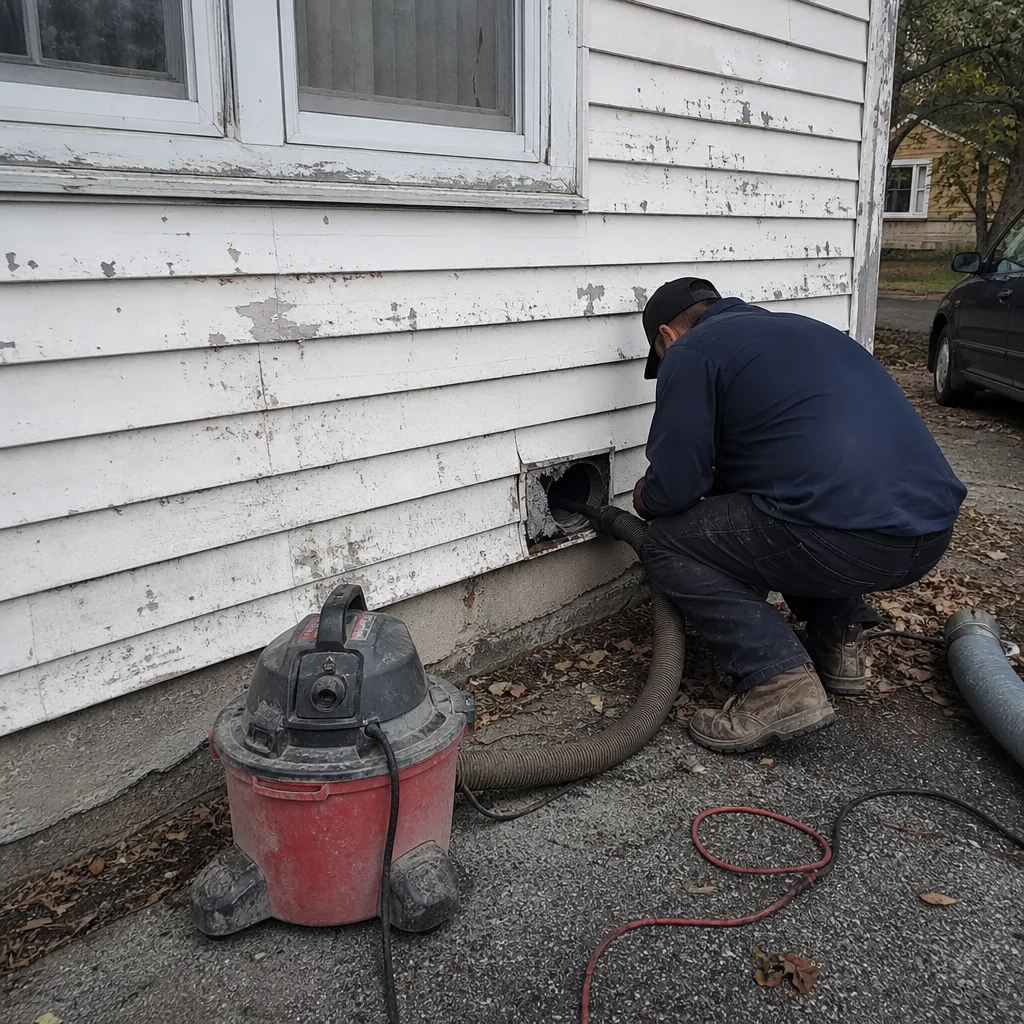 Before
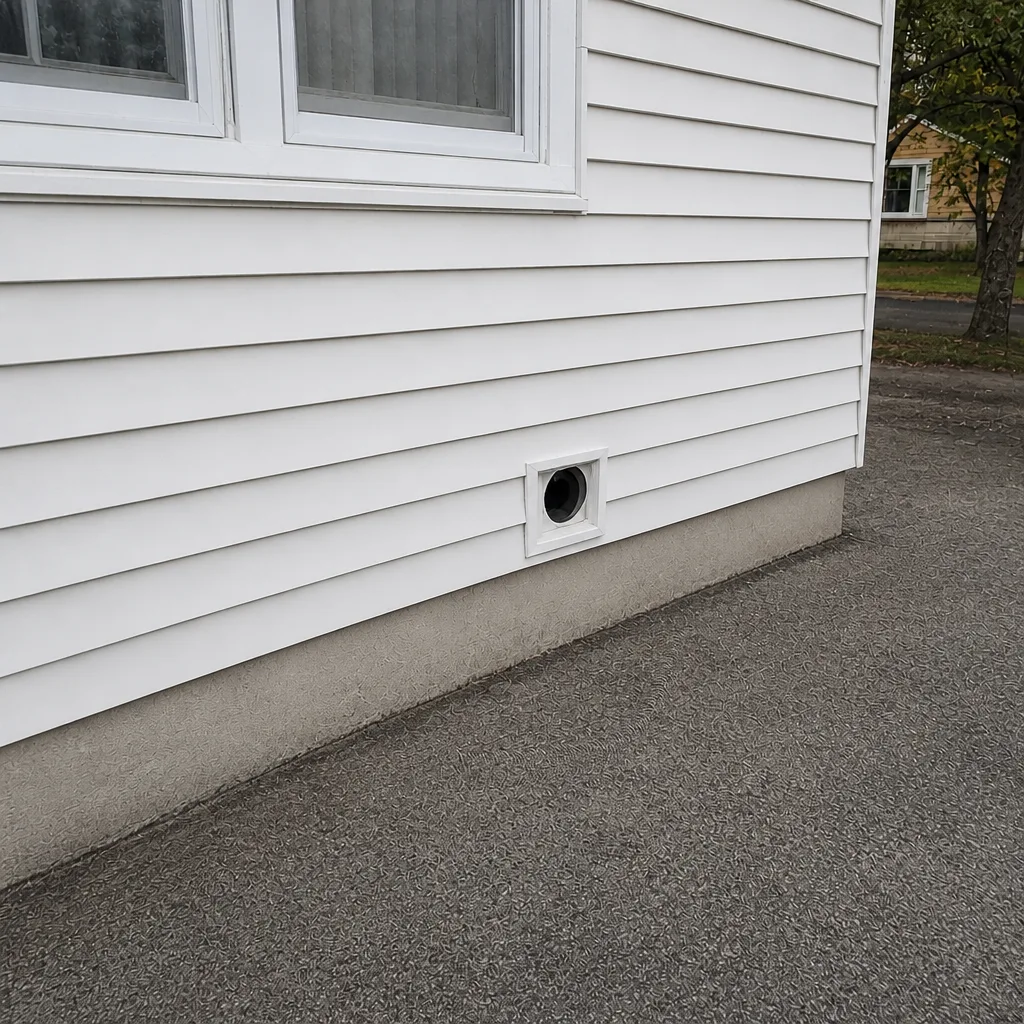 After
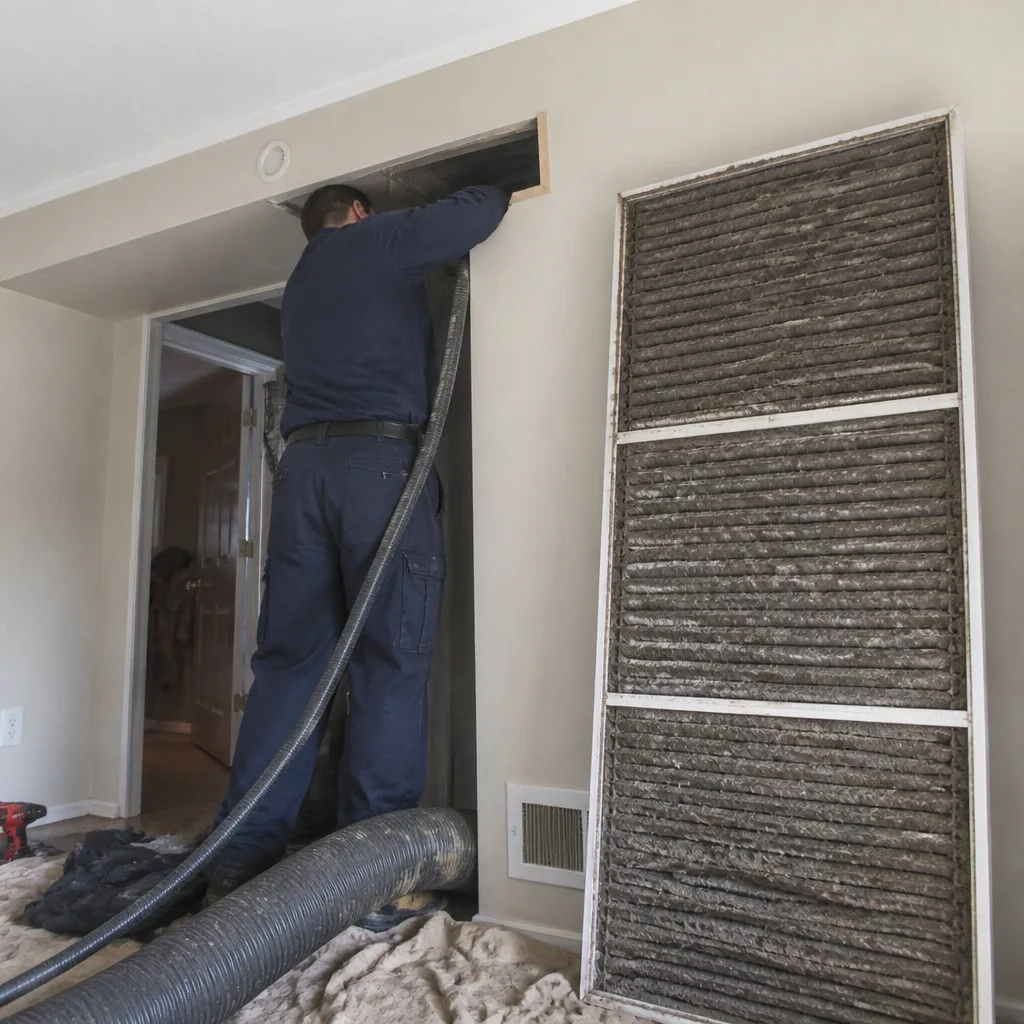 Before
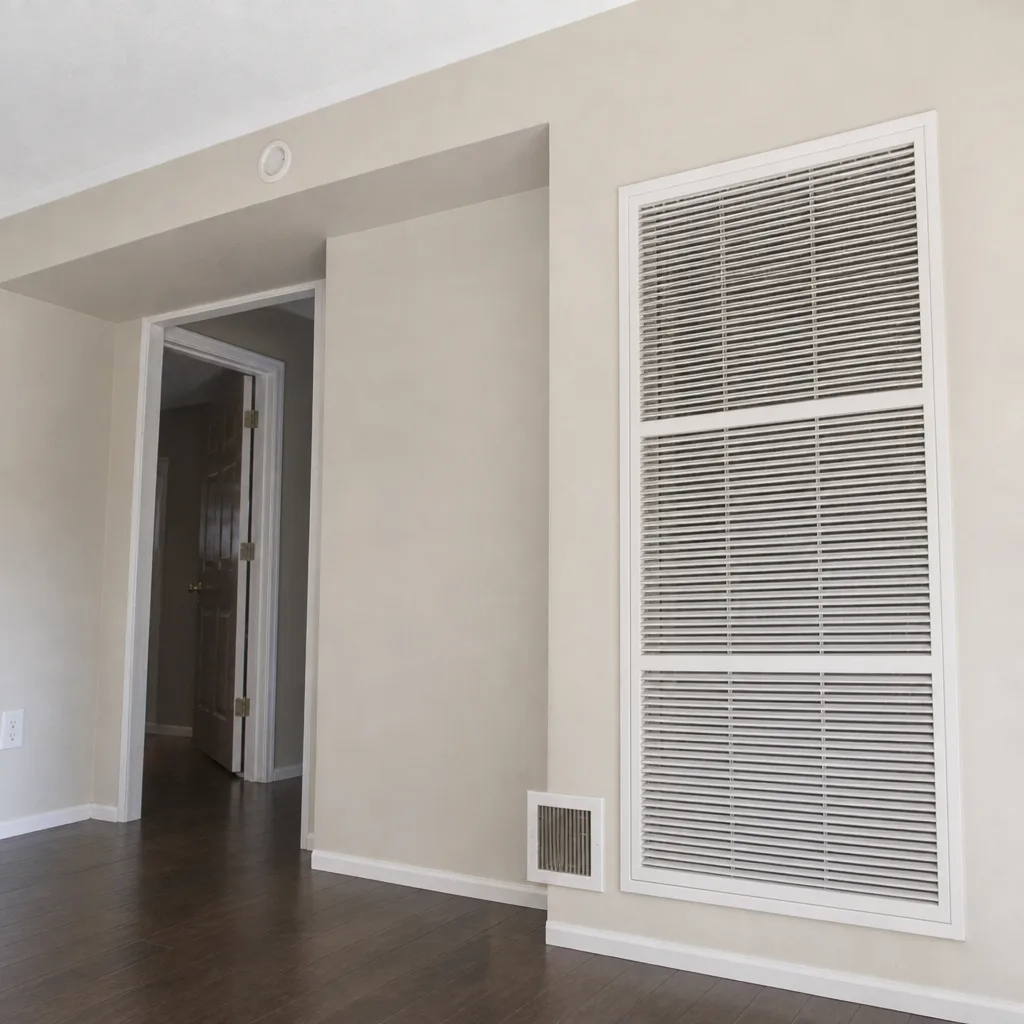 After
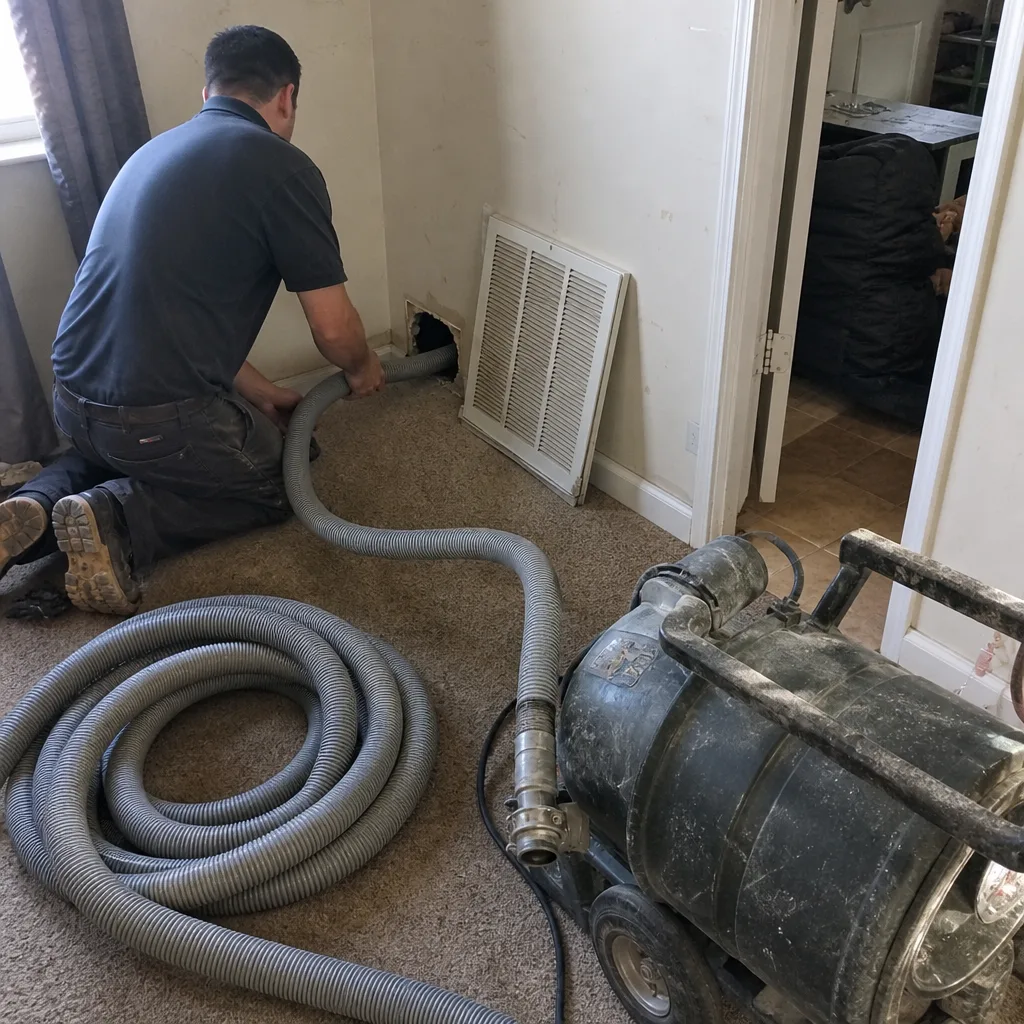 Before
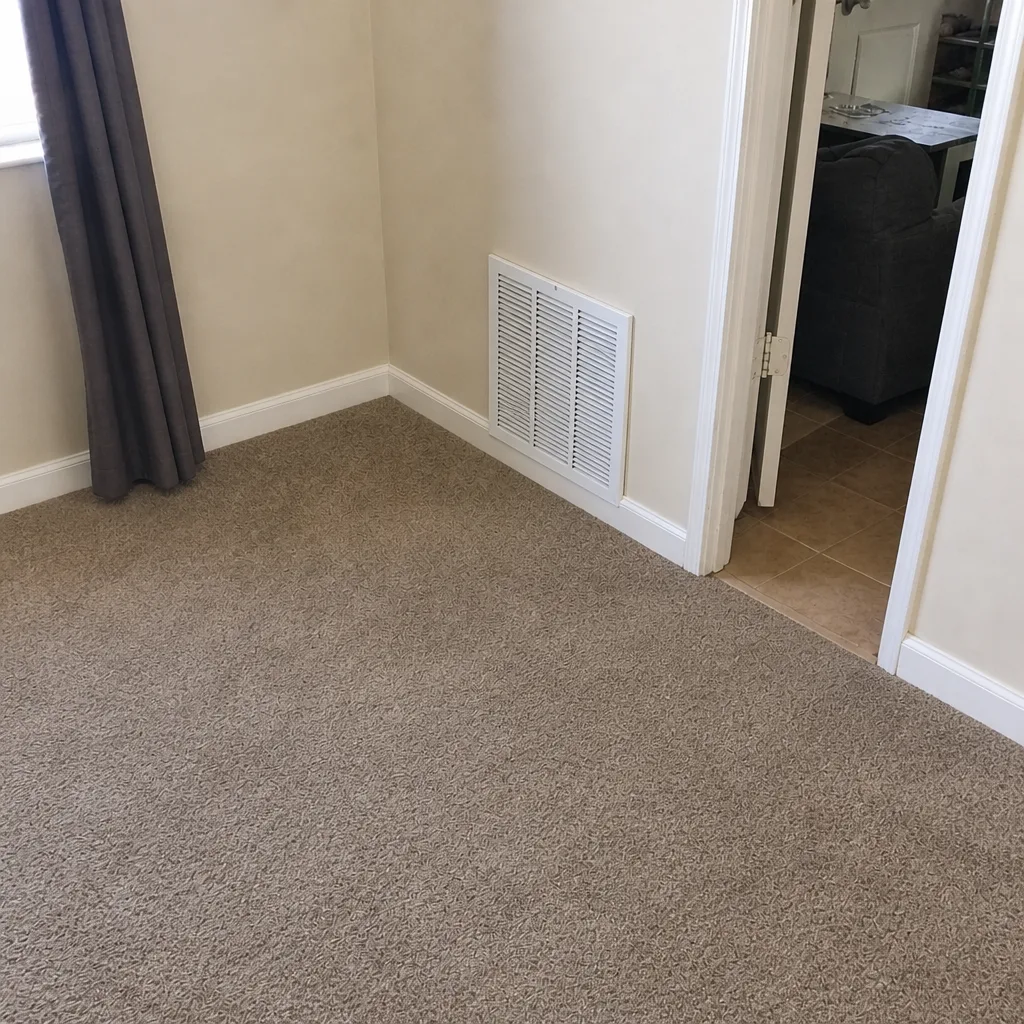 After
Common Mistakes to Avoid
- Running a brush without suction behind it. The most common DIY mistake, and the one that produces the worst result. Agitation without negative pressure redistributes dust into the living space rather than removing it.
- Assuming all shop-vacs have HEPA filtration. Most don’t. A standard cartridge filter in a shop-vac captures coarse material and passes fine particulate back into the room. Look for a true HEPA cartridge, not a “HEPA-style” one.
- Pushing a brush into flex duct with too much force. Flex duct in Joliet homes, especially on retrofits and additions, has a foil or plastic interior lining. A sharp rod end or a metal brush scrapes and tears it. If you’re not sure of the duct material, don’t push a brush through it.
- Blaming the filter for a bigger problem. Homeowners who change the filter every month and still get dust at the registers are usually looking at a duct system problem, not a filter problem. The filter is doing its job; the source is upstream.
- Skipping the dryer vent because the trap is empty. The trap only catches the lint that reaches it. The run behind the dryer and the length to the exterior cap builds up lint independently, and clearing the trap doesn’t touch that section.
- Over-tightening register screws into marginal material. Thin sheet metal and MDF both strip easily. Once the hole is loose, the grille stays loose, and every cycle of conditioned air leaks at the gap.
- Assuming cleaning is the whole fix. If a run is disconnected, sagging, or crushed, cleaning won’t solve the problem. The right call is an air duct repair, and it makes sense to pick a provider who handles both.
When to Call a Professional
Call a professional when the system has gone more than 3-5 years without a cleaning, when you’ve recently finished a renovation, when you’ve noticed musty odor or visible debris at registers, or when the home is older and you’re not sure what’s in the duct runs. Also call when you’re selling a Joliet home and need documented cleaning, or when you rent out a property and need a solid record of maintenance. Our technicians have up to 15 years of experience on jobs like these, and the ones on the dryer vent side – see dryer vent cleaning – are treated as fire-safety calls, not air quality extras. If your ducts have visible damage, an air duct repair visit is worth scheduling alongside the cleaning rather than after it. Duct Cleaning Joliet offers free estimates in Joliet – call (833) 734-7685. We answer 24/7. Fast dispatch from 7am to 7pm, Sunday through Friday.
Frequently Asked Questions
Not effectively. A shop-vac creates a small local pull at the register mouth but cannot hold the whole duct system under negative pressure. When you agitate debris at one register while a shop-vac pulls at another, most of the loosened material drifts into the room instead of being captured. Shop-vacs are fine for surface dust around a register but not for cleaning the inside of the run. Call (833) 734-7685 for an exact quote – estimates are free.
Professional duct cleaning is quoted per system, not per vent, and the written estimate sets the final number. That structure exists because per-vent pricing is where bait-and-switch lives – a low teaser number that grows once the technician is on site. Ask for a whole-system price in writing before work starts, and ask whether before-and-after photos of your ducts are included. Call (833) 734-7685 for an exact quote – estimates are free.
Cost usually tracks equipment. A low quote often means a low-powered vacuum or a shop-vac-style setup that can’t hold the system under negative pressure, and a job that redistributes debris instead of removing it. Ask what equipment the provider uses – a contractor-grade setup like a Rotobrush rotary brush paired with Nikro HEPA-rated vacuum is a reasonable standard to look for. Anything less and you’re paying for agitation, not cleaning. Call (833) 734-7685 for an exact quote – estimates are free.
Insist on before-and-after photos of your own ducts. Not stock photos, not another home’s photos – the actual runs in your system, taken before and after. Ask the technician to show you the collection canister at the end so you can see what came out. Also ask whether the price is per system and agreed in writing, which removes the incentive to pad the invoice once the work has started. Call (833) 734-7685 for an exact quote – estimates are free.
Most Joliet homes are fine on a 3-5 year cycle for full duct cleaning, paired with quarterly filter swaps and yearly register cleaning done by the homeowner. Shorter intervals make sense after renovations, in homes with pets, in older housing stock, or when musty odors or visible register debris show up before the cycle is due. Dryer vent cleaning runs on its own tighter schedule – every year or two for most households.
Mostly ineffective, occasionally worse. The dangerous part is smaller than the ineffective part – if you don’t know what material the duct run is made of and you insert an aggressive brush, you can tear foil-lined flex duct, disturb lining, or kick up material that shouldn’t be airborne. The larger risk is doing real damage that a professional then has to repair. A trained professional visits the run with the right equipment and knows what to look for before the brush goes in.
The Bottom Line
The honest split on DIY versus professional duct cleaning comes down to equipment, not capability. Registers, filters, dryer lint traps, and exterior caps are homeowner tasks and worth doing well. The inside of the duct runs is a negative-pressure job, and a shop-vac at one register with a brush at another cannot do it. If you want the source material removed from the system, you need contractor-grade agitation and HEPA-rated capture working together. The hybrid approach – homeowner maintenance plus a professional full-system clean every 3-5 years – is the arrangement that gets the most out of both. In Joliet, that means periodic cleaning with a provider who runs the right equipment, can repair what the cleaning uncovers, and prices the job per system in writing.
If you’re planning a cleaning for your home, or you want to know whether a DIY attempt has already left things in a state that needs a closer look, our Duct Cleaning Joliet page covers how the process works, and the Joliet page is a good place to start on local service details. Call (833) 734-7685 for a free estimate. We answer 24/7. Fast dispatch from 7am to 7pm, Sunday through Friday. Licensed and insured, one flat price per system agreed before work starts, before-and-after photos of your own ducts included.
Written by the team at Duct Cleaning Joliet.