
Last updated November 15, 2026
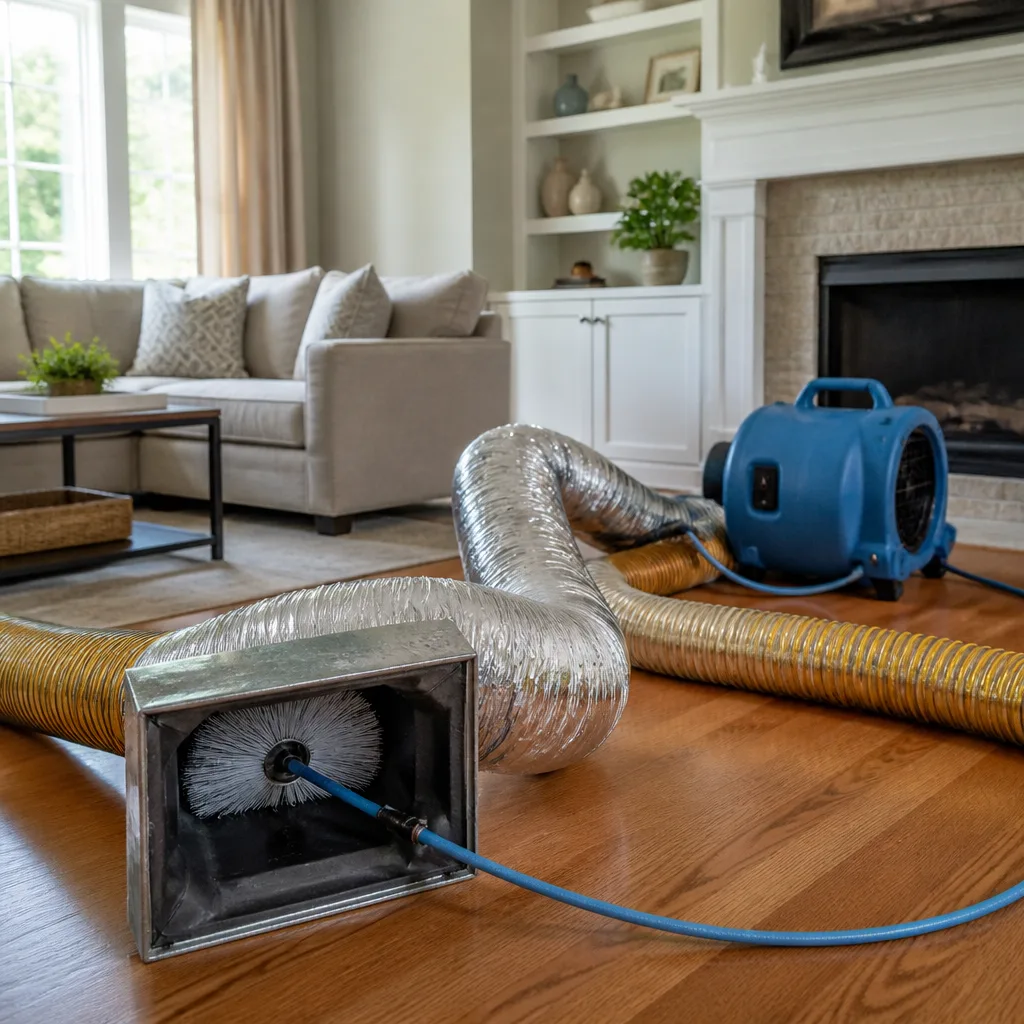 Whole-home duct cleaning
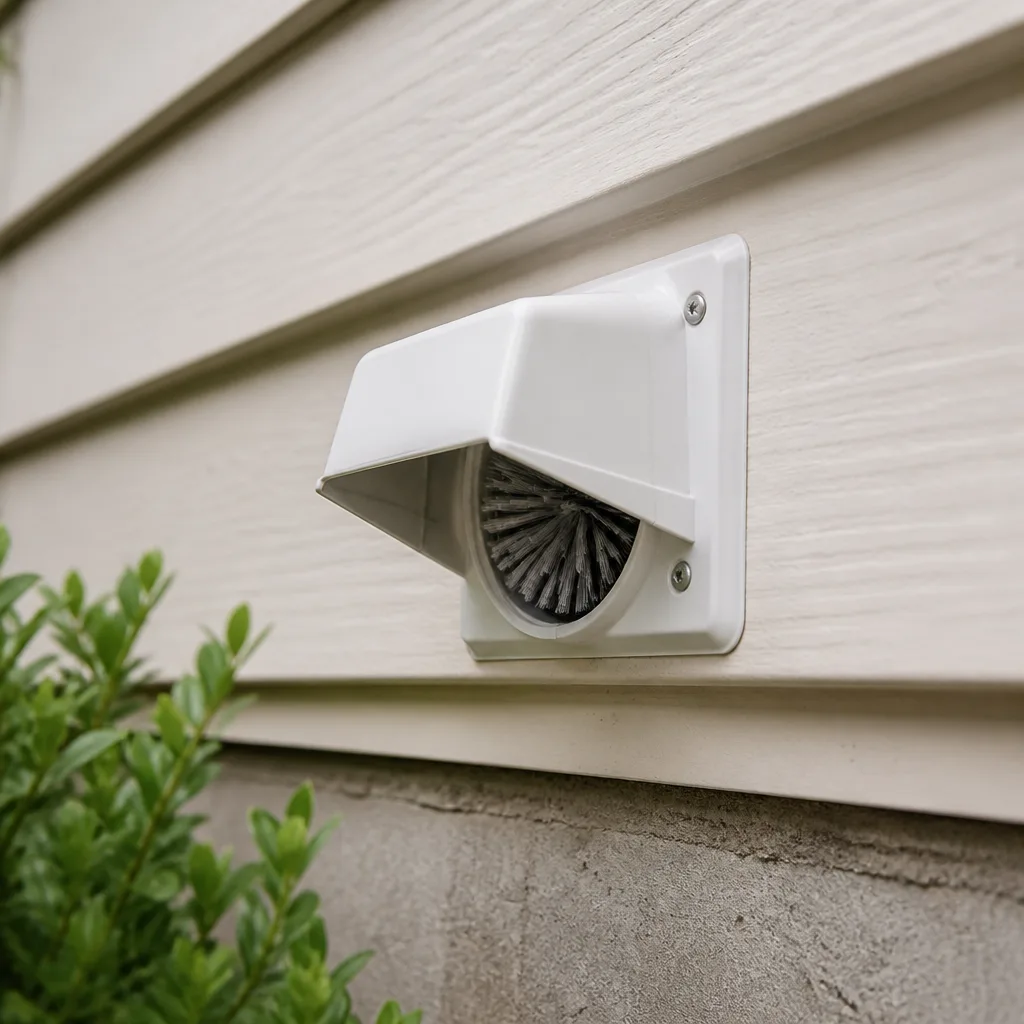 Dryer vent cleaning
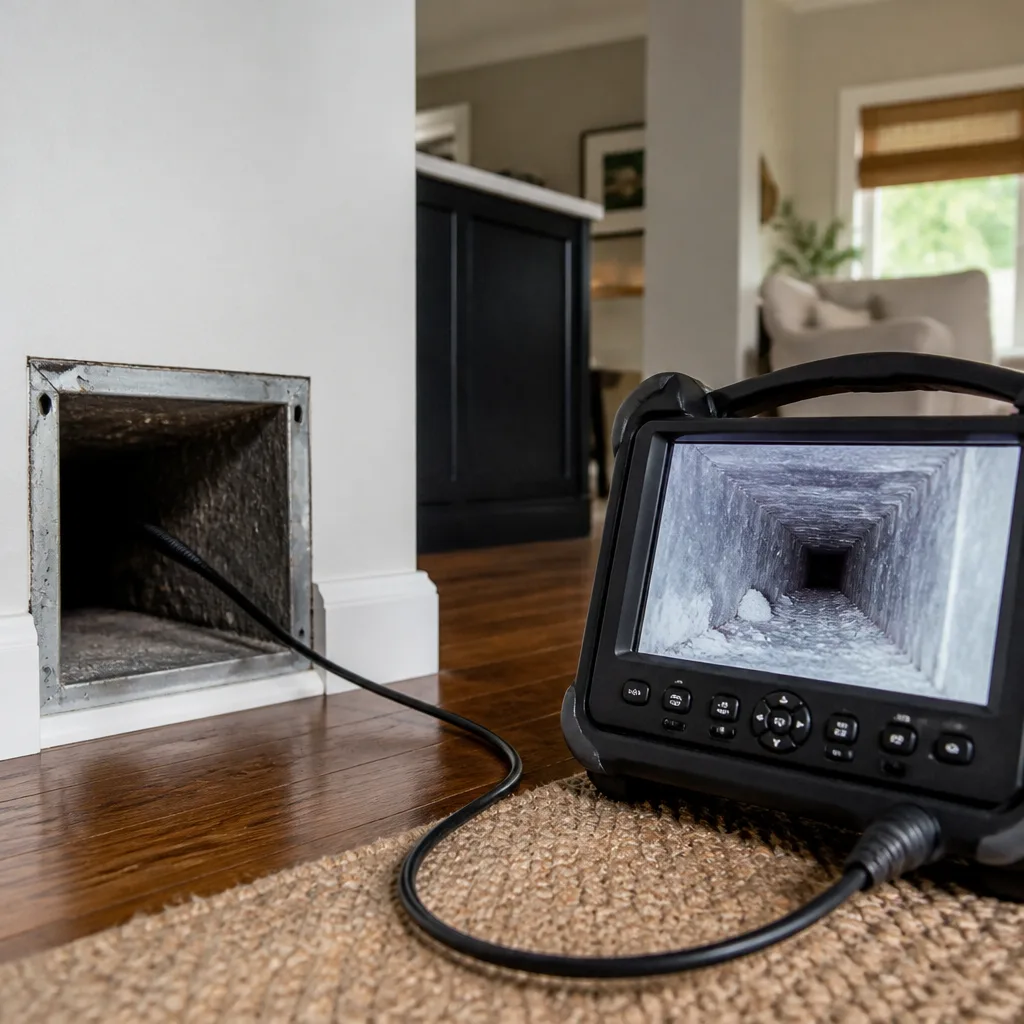 Camera inspection
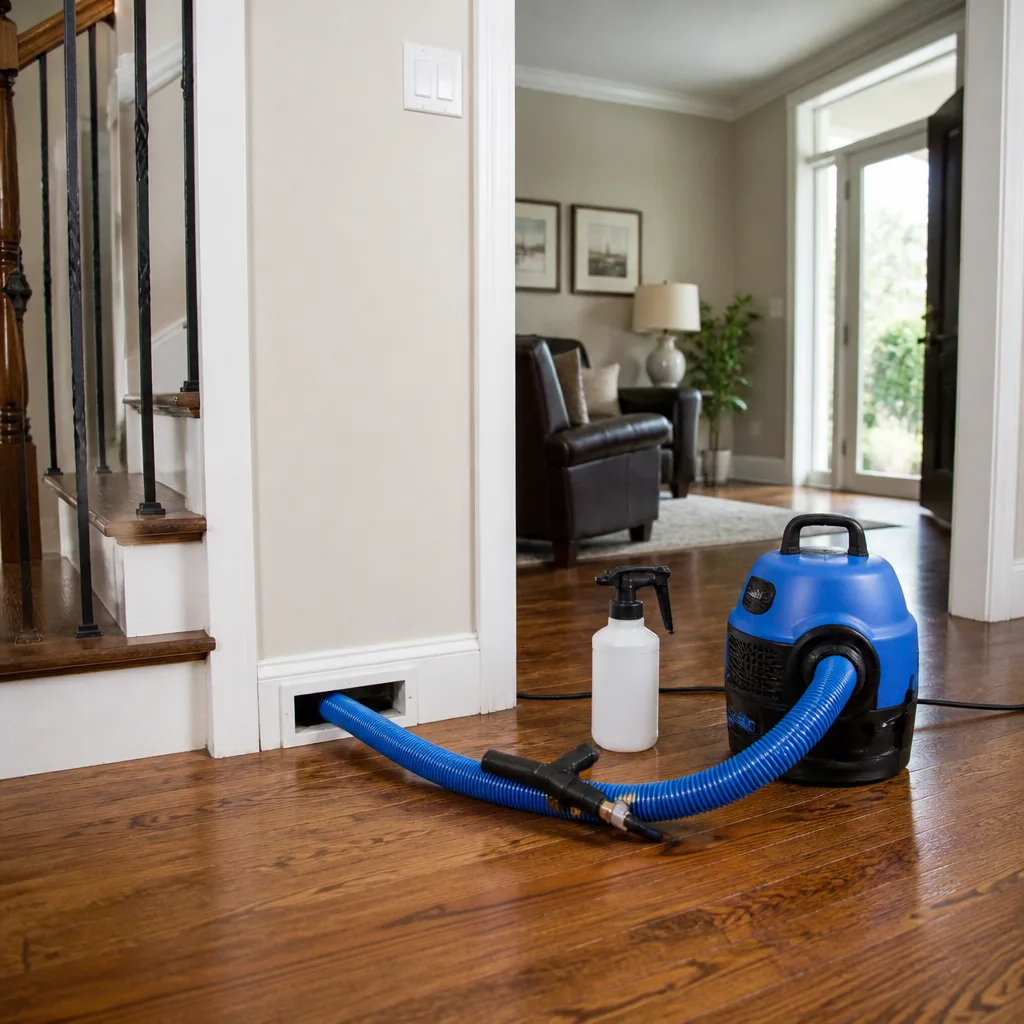 Sanitizing & deodorizing
Whole-system duct and dryer vent check with before-and-after photos - you see exactly what came out of your vents
That "$99 whole-house special" is a bait ad - the real number appears once they are in your hallway, or the "clean" is a shop-vac at the register. We photograph the inside of your ducts before and after instead.
Air Duct Cleaning Maintenance Checklist for Joliet Homeowners
Replacing a $12 filter on schedule while ignoring a disconnected trunk line is a lot like changing your oil and ignoring a coolant leak. The visible task gets done, and the bigger problem quietly gets worse. Most air duct checklists floating around online blur two different things: duct cleaning, which is a periodic event, and duct maintenance, which is a continuous process. Confuse them and you’ll either pay for cleanings you don’t need or miss the early signals that something’s actually wrong. This guide separates what you can inspect yourself from what needs a contractor, with clear thresholds so you know when to act. It’s written for Joliet homeowners dealing with real seasons and real housing stock.
Quick Answer
A solid air duct maintenance routine for a Joliet home means checking your filter monthly, inspecting registers and return grilles every six months, and scheduling a professional cleaning every three to five years – sooner after a renovation, a flooded basement, or any sign of rodent activity. Between those points, watch for uneven airflow, musty odors, and visible dust streaks near vents. Duct maintenance is a repeating habit, not a one-time purchase.
Styles & brands we work with
- Whole-home duct cleaning
- Dryer vent cleaning
- Camera inspection
- Sanitizing & deodorizing
Table of Contents
- Monthly: What to Check in Ten Minutes
- Twice a Year: The Deeper Walkthrough
- Every Three to Five Years: The Professional Interval
- How to Do a Return-Air Static Check Without Tools
- Joliet Triggers That Accelerate the Cleaning Cycle
- Filter MERV Ratings and Duct Age
- What to Document Between Professional Visits
- When Duct Maintenance Turns Into Duct Repair
Monthly: What to Check in Ten Minutes
The monthly pass is about catching change early, not deep cleaning. Ten minutes a month keeps you ahead of most problems that would otherwise turn into a service call. Duct maintenance at this interval is mostly observing and recording, and it’s the interval most homeowners skip entirely.
Here’s what a monthly check covers:
- The filter. Hold it up to a light. If you can’t see light through most of the surface, it’s spent, no matter what the packaging says about its rated life.
- Supply registers. Run your hand over each one with the system on. Weak airflow where it used to be strong points to a restriction or a leak upstream.
- Return grilles. Look for dust buildup, hair, or pet fur collecting on the face. A return that’s clogged at the grille is starving the whole system.
- Visible dust streaks. Dark lines around a vent frame mean air is escaping at the seam instead of traveling through the duct.
- Odor. A musty or stale smell when the fan kicks on is worth a note, not panic. Track whether it’s getting stronger.
- Condensate and moisture. In a Joliet basement, look for damp spots near the air handler or along duct runs. Moisture in the system is a maintenance flag.
Write two lines in a notebook after each check: what you saw, and the date. That log will be the most useful thing you hand a technician later. If you want a baseline professional assessment to anchor that log, start with a proper air duct cleaning evaluation so you know what “normal” looks like for your home.
Twice a Year: The Deeper Walkthrough
The semi-annual walkthrough is where you go looking for problems the monthly check can’t see. In Joliet, spring and fall are the natural times for this, right before the cooling season ramps up and again before the furnace takes over. Our technicians have up to 15 years of experience, and the biggest failures we encounter start as something a homeowner could have spotted at this interval.
Do these checks at each semi-annual pass:
- Accessible duct runs. In an unfinished basement or crawlspace, trace the visible ducts. Look for disconnected sections, crushed flex, or tape that’s peeling away at the joints.
- Flex duct sagging. Flexible duct that’s lost its support and now droops creates a low spot where dust and moisture settle. It’s worth noting now before it becomes a restriction.
- Register dampers. Confirm every supply register is open to roughly the same position unless you deliberately closed a room off. A single closed register can unbalance the whole system.
- Air handler cabinet. Look at the seams where the ductwork meets the unit. Gaps here leak a surprising amount of conditioned air into the basement.
- Dryer vent. This belongs on the same walkthrough. Lint-clogged dryer vents are a fire risk, and the half-year point is the right cadence to clear them. That’s dryer vent cleaning territory, not something to eyeball and hope about.
- Outdoor intake and exhaust. Clear any screens or terminations of debris, wasp nests, and rodent blockage.
Take a photo of the register faces and filter before you swap it out at each pass. Those photos build a visual record of how the system is behaving over time, and they show a technician exactly what you found and where.
Every Three to Five Years: The Professional Interval
The three-to-five-year professional cleaning is a broad rule, not a law of physics. It fits a typical Joliet home with a standard filter change habit, no pets, and no recent construction. Move that interval forward if any of the trigger conditions in a later section apply. The point of the long interval is to separate the periodic professional cleaning from the routine maintenance you do yourself.
What a professional cleaning actually addresses that a homeowner can’t:
- The full duct interior. A rotary brush system like Rotobrush reaches the inside walls of the duct where dust and debris accumulate out of sight.
- Contaminant capture. Nikro HEPA-rated vacuum equipment pulls particulate out of the air rather than pushing it around the room.
- The plenum and trunk lines. The main trunks behind the air handler collect a disproportionate share of buildup and rarely get attention from a homeowner.
- Containment. Abatement Technologies equipment comes into play for jobs where allergen, mold, or contaminant containment is part of the picture.
A general contractor-grade cleaning is not the same thing as running a consumer vacuum into a register. If you want to understand what a proper job looks like before you book one, the team at Duct Cleaning Joliet can walk you through what’s included.
How to Do a Return-Air Static Check Without Tools
A return-air static check tells you where your system is pulling air from – and, more usefully, where it’s pulling air it shouldn’t. You can get a solid read on leakage points with nothing more than a tissue or a stick of incense. It’s the single highest-value thing on this checklist that costs nothing.
Here’s the process:
- Turn the fan to “on” at the thermostat so the blower runs continuously while you work. A system at rest won’t show you anything.
- Start at the return grille. Hold a tissue near the grille face. Strong, even pull is good. Weak or patchy pull is a sign of leakage somewhere upstream.
- Walk the return path. In a basement or crawlspace, hold the tissue – or a lit incense stick – near joints, seams, and the connection to the air handler cabinet. Watch the smoke. Pulled toward a seam means that seam is leaking.
- Check the supply side. Hold the tissue near duct joints with the system running. A tissue that flutters toward a joint is telling you air is escaping.
- Note every leak point by location – “return joint near furnace,” “supply trunk above water heater,” and so on. A technician can find them faster with your notes.
You’re not sealing ducts on your own here. You’re mapping them. If smoke gets pulled toward a joint you can’t safely reach, that’s a job for a professional duct inspection, not a tube of sealant and a Saturday.
Joliet Triggers That Accelerate the Cleaning Cycle
Joliet sits in a climate with real seasonal swings – cold winters, humid summers, and a good deal of spring rain. That means your duct system sees more varied conditions than a home in a mild climate would. Certain events push the cleaning interval up regardless of the calendar. Ignoring them is how a duct maintenance habit turns into a duct repair bill.
Accelerate the cleaning cycle after any of these:
- Renovation or drywall dust. Construction dust is fine particulate that settles deep in duct runs. If you’ve had drywall work, a kitchen remodel, or an addition, get the ducts cleaned once the dust has settled – typically soon after the work wraps.
- Rodent intrusion. Mice and other rodents get into duct runs and leave behind droppings and nesting material. This is a containment job, not a routine vacuuming, which is exactly where Abatement Technologies equipment matters.
- Flooded basement. Joliet homes with basements see water intrusion in heavy rain years. Any flooded or soaked basement means checking duct runs for moisture and potential mold growth.
- New-to-you home. You don’t know the previous owner’s maintenance history. A cleaning and inspection gives you a fresh baseline.
- Persistent musty odor or allergy symptoms that track with the HVAC running. Both are worth an inspection rather than a wait-and-see.
Matching a Honeywell or Aprilaire whole-home filtration system matters here too. If you’ve got one of those installed, a standard cleaning may not be enough – ask for a specialist who knows how filtration systems interact with the rest of the ductwork.
Filter MERV Ratings and Duct Age
Higher MERV isn’t automatically better, and it’s especially not better in an older duct system. This is where a lot of Joliet homeowners get into trouble. Filter MERV ratings are governed by how much resistance they add to airflow, and older galvanized ductwork can’t always handle a high-restriction filter without damaging static pressure across the system.
The tradeoff looks like this:
- MERV 8 and below. Low restriction, protects the equipment, standard choice for older duct systems and for most homes. It catches the larger dust and debris without choking airflow.
- MERV 11 to 13. Better particle capture, higher restriction. Usually fine on a well-sealed system with a blower sized to handle it. Worth verifying with a professional before committing, especially in an older home.
- MERV 14 and up. High restriction, generally meant for hospital-grade or specialty setups. Putting one of these in an older residential system is a common way to choke the blower and starve the whole home of airflow.
The practical rule: older galvanized ducts and standard blowers lean toward the lower end of the MERV range. If someone installed a high-MERV filter in an older Joliet home without checking the static pressure, that filter change alone could explain weak airflow. Don’t solve a static pressure problem with a bigger filter. Diagnose it first. Our technicians can check what your system’s actually built for, and we work with Honeywell and Aprilaire filtration setups rather than around them.
What to Document Between Professional Visits
The gap between professional cleanings is where good documentation pays off. A technician arriving at a home with a clear record of what’s changed can diagnose in minutes rather than starting from scratch. In our experience, the homeowners who keep records are the ones who catch problems before they turn expensive.
What’s worth keeping:
- Photo of every register face at each filter change. Dust streaks and grille buildup show up in photos before they’re obvious in person.
- Filter condition log. Date installed, MERV rating, date replaced. A short list. If your filter clogs faster than expected, that pattern is a diagnostic clue.
- Notes on airflow changes. Any room that got weaker or stronger since the last check.
- Incident notes. Renovation, rodent sighting, water intrusion, new furnace, new thermostat – all useful context.
- Previous service records. When the last professional cleaning happened and what was done. This sets the interval for the next one.
This is the part of duct maintenance that separates a homeowner who’s in control from one who calls when something breaks. A folder on your phone, a magnet on the fridge, anywhere you’ll actually look. If your documentation flags something concerning before the next scheduled cleaning, Joliet homeowners can call for a professional inspection rather than guessing.
When Duct Maintenance Turns Into Duct Repair
Not every problem is a maintenance problem. Some are repair problems that a cleaning alone can’t fix. Knowing the difference keeps you from paying twice. This is where we separate the work: we clean it, and if we find damage, we repair it – same visit.
Signs you’re past maintenance and into repair territory:
- A disconnected duct section. Flex duct that’s come loose from a boot or trunk is dumping conditioned air into the basement and starving the room it’s meant to heat.
- A crushed or kinked flex run. The duct is still attached but no longer moving air.
- Visible mold growth inside the duct or at the plenum. Cleaning removes the debris, but the underlying moisture source has to be addressed or it comes back.
- Creosote-like or adhesive residue. Occasionally we find duct liner or joint tape breaking down. Guardsman products come into play for certain sealing and repair work when duct connections have failed.
- Rusted or collapsed ductwork. A duct run that’s got structural problems needs replacement, not cleaning.
Because Air Duct Repair is on our service menu, a specialist can assess damage at the same visit and confirm what needs fixing before scheduling a return. That eliminates the handoff gap that comes from hiring one vendor for cleaning and another for repairs.
Common Mistakes to Avoid
- Treating duct cleaning as maintenance. It’s a periodic service. The maintenance is the check between cleanings. Skipping the check because “we cleaned it last year” is how problems grow unchecked.
- Chasing a high MERV filter without checking the system. Joliet has plenty of older homes with ductwork that can’t handle the restriction. Match the filter to the system, not the marketing.
- Ignoring a disconnected duct because airflow “still seems fine.” A disconnected duct often doesn’t change what you feel at the registers until it does. It can silently vent conditioned air into an unfinished basement for months.
- Using a shop vac or consumer vacuum on duct interiors. It doesn’t reach the duct walls and pushes fine particulate back into the living space. Contractor-grade gear exists for a reason.
- Forgetting the dryer vent. Yes, it’s a different duct. It’s still on the safety checklist, and lint-clogged dryer vents are a fire risk.
- Not writing anything down. The most common mistake of all. Without a log, every professional visit starts from zero.
- Delaying a post-renovation cleaning. Drywall dust doesn’t just settle on the floor. It goes where the air goes.
See the difference
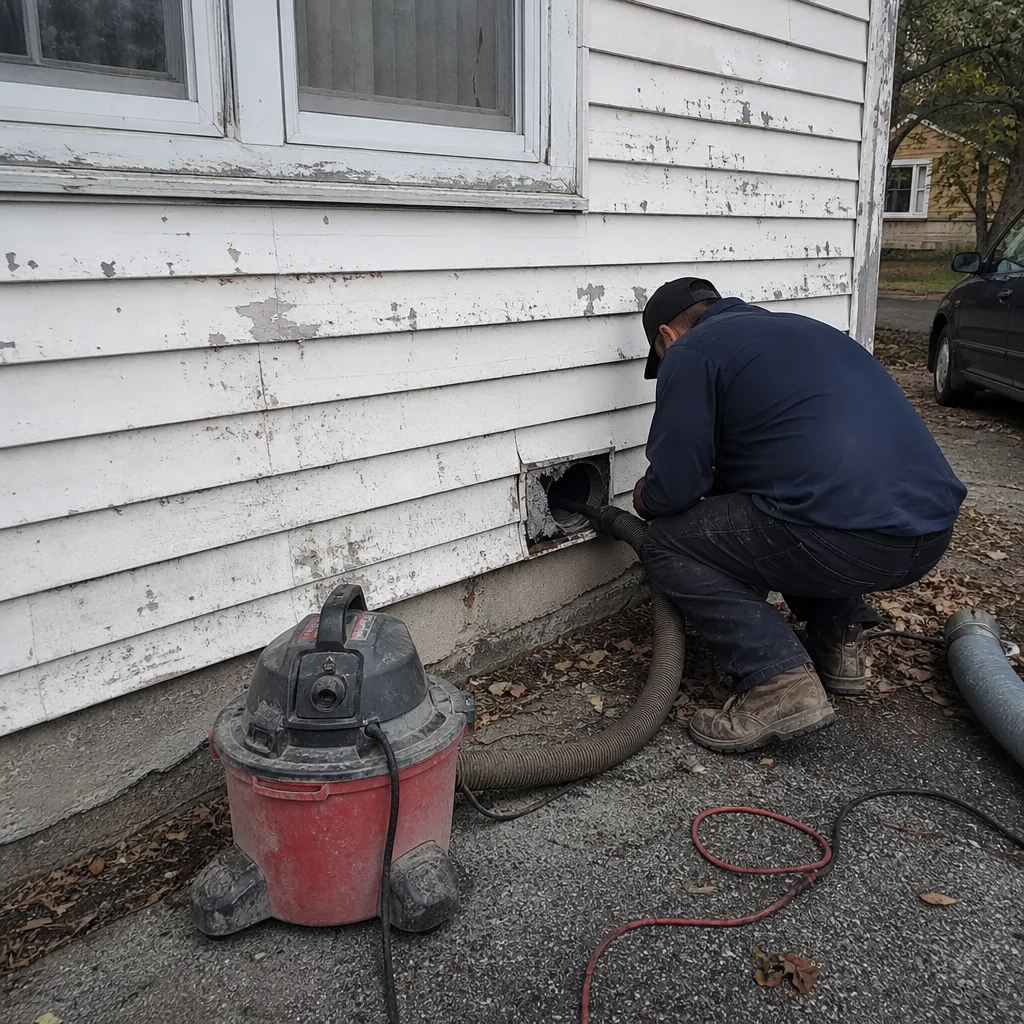 Before
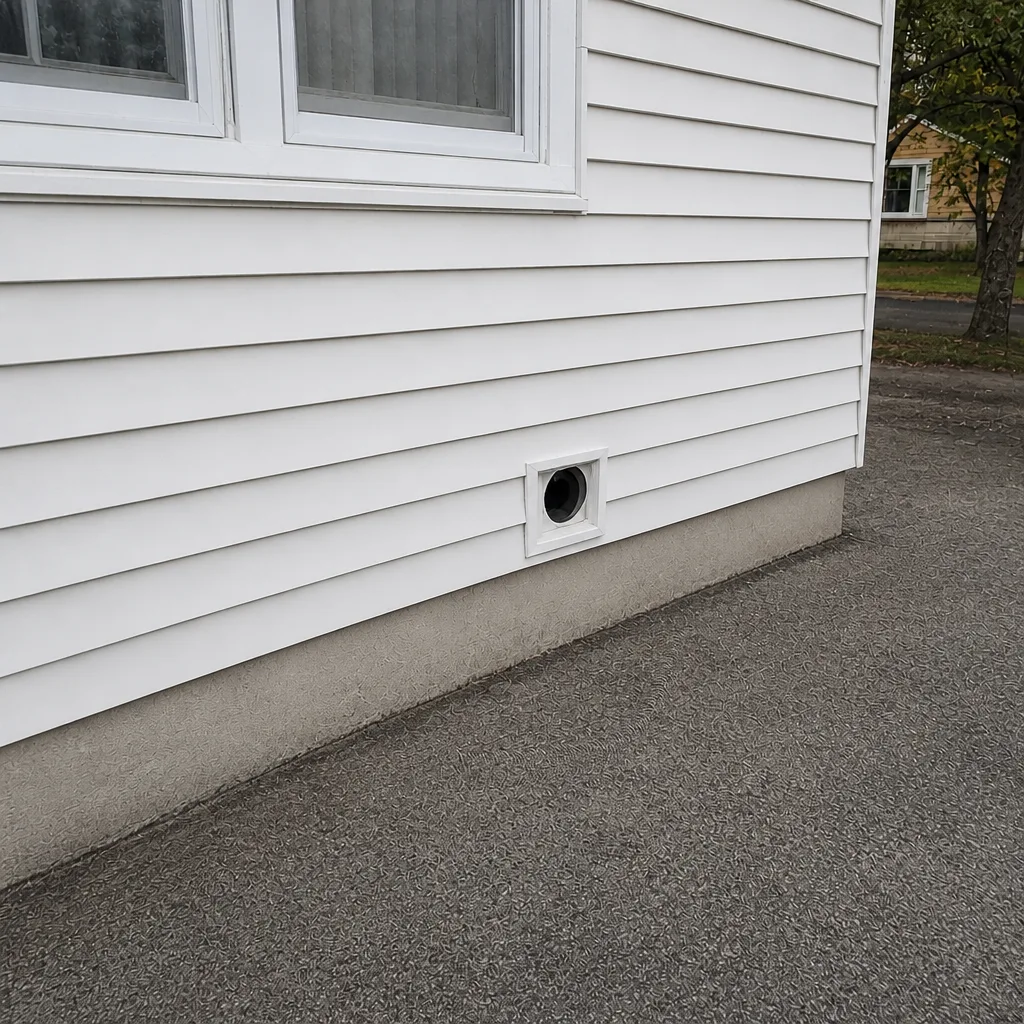 After
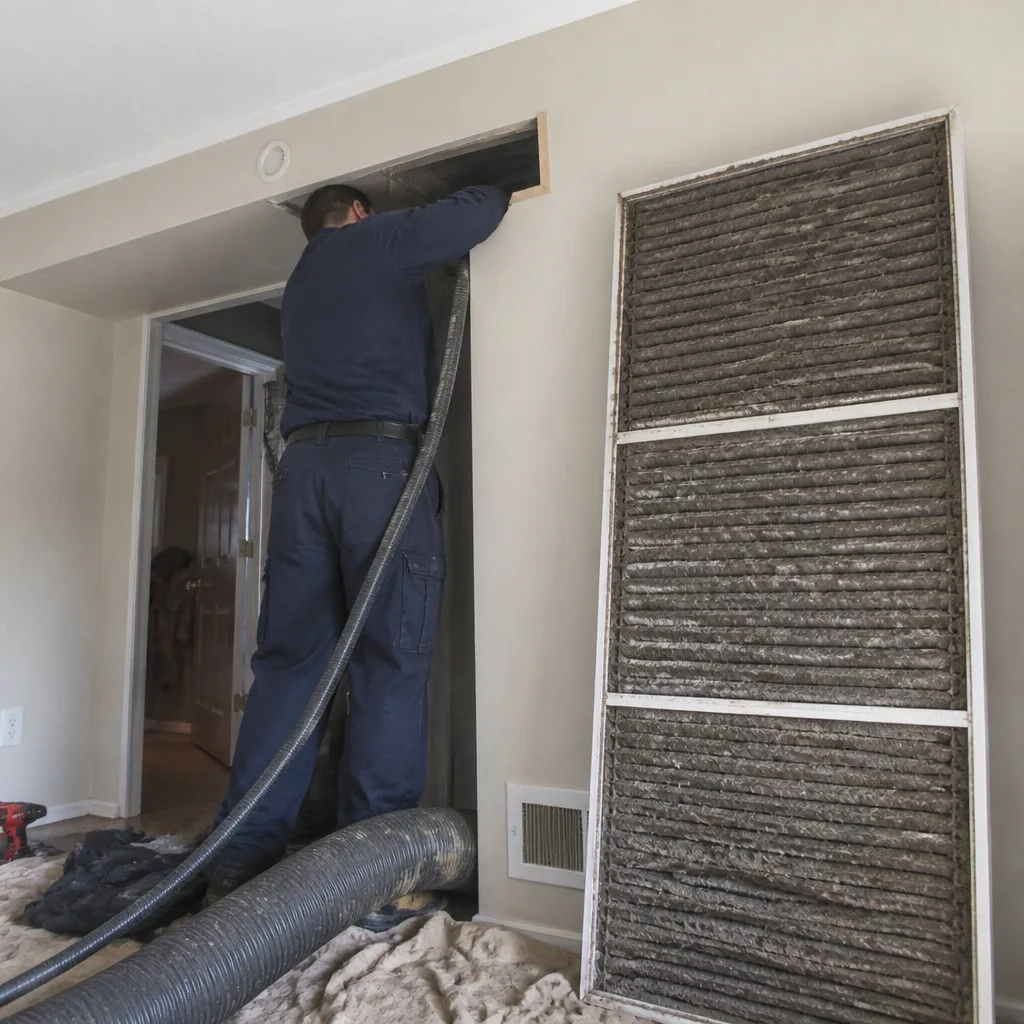 Before
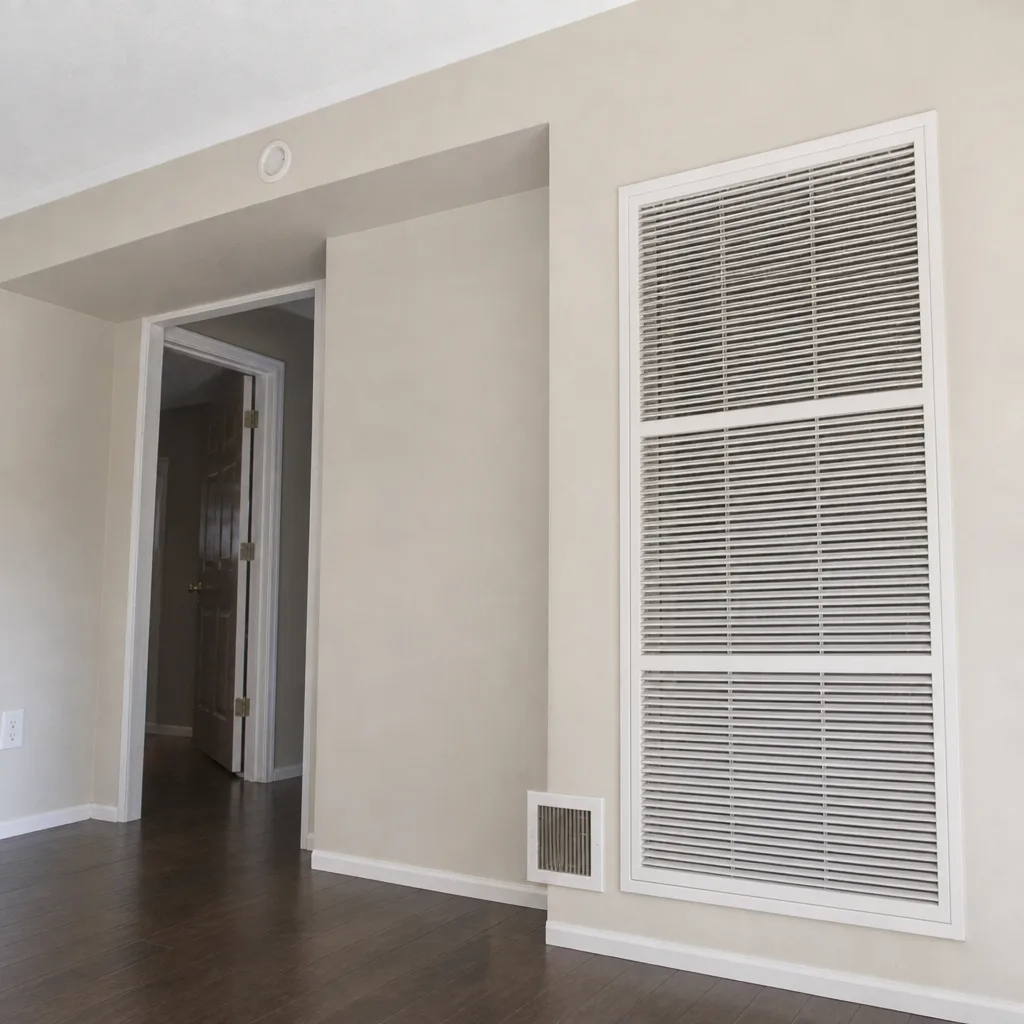 After
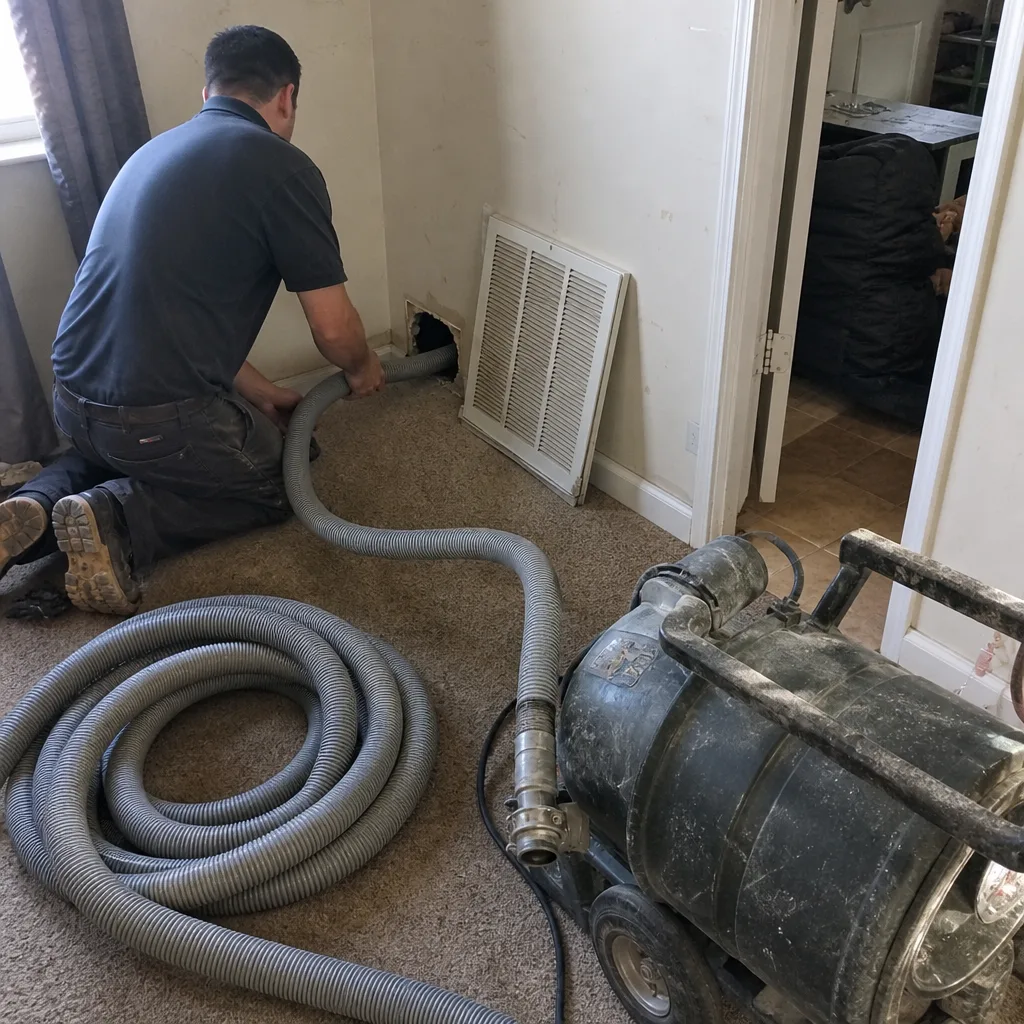 Before
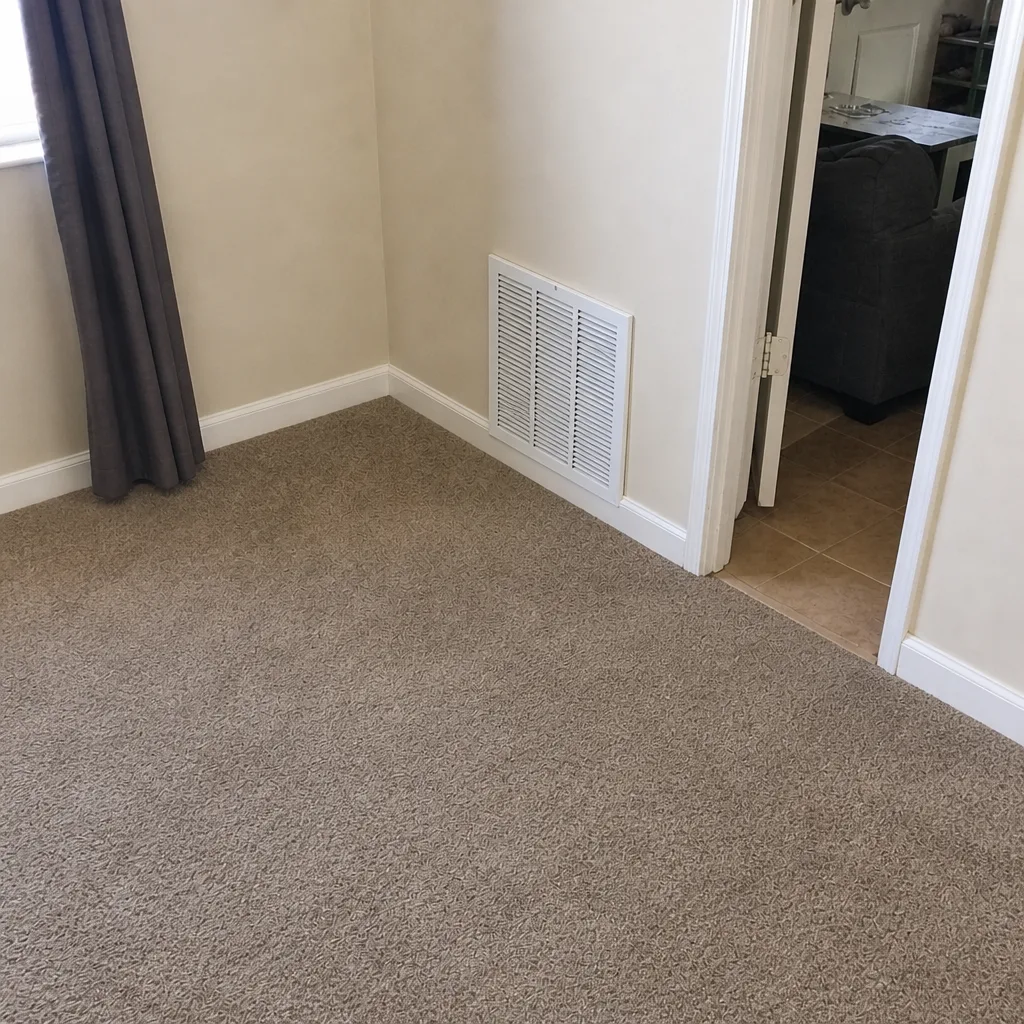 After
When to Call a Professional
Call a professional when any of these apply: a duct run is disconnected or crushed, airflow has visibly dropped in a room, you can smell mustiness that tracks with the HVAC, you’ve had a renovation, a flooded basement, or a rodent intrusion, or you’re past the three-to-five-year professional interval with no service on record. Also call if a return-air static check turns up leaks you can’t safely reach. The work involves confined spaces, high-efficiency systems, and containment procedures for contaminants, and it’s not a job for a homeowner with a shop vac.
Duct Cleaning Joliet offers free estimates in Joliet – call (833) 734-7685. We answer 24/7. Fast dispatch from 7am to 7pm, Sunday through Friday.
Frequently Asked Questions
Most Joliet homes do well with a professional cleaning every three to five years, but that interval shifts based on the trigger events in this guide – renovation, rodent intrusion, water intrusion, or a home you just bought. The routine maintenance between cleanings is monthly filter checks and semi-annual walkthroughs. If you’re overdue, a free estimate tells you what the system actually needs.
You can do most of it. Filter changes, register checks, photographing dust streaks, and the tissue-and-incense static check are all homeowner-level tasks. Cleaning the duct interiors and any repair work needs contractor-grade equipment. The line is clear: inspect it yourself, clean and fix it with a professional.
MERV 8 or below is the safer choice for older galvanized duct systems and standard blowers. Higher MERV filters capture more, but add restriction that an aging system can’t always handle. High-MERV filters sometimes cause more airflow problems than they solve. Have a technician confirm what your system’s set up for before going higher.
Pricing depends on the size of the system and the number of duct runs, so a whole-system estimate is the honest way to quote it. Beware any per-vent teaser price – that’s a common bait-and-switch pattern in this trade. Call (833) 734-7685 for a free estimate with one flat price per system agreed before work starts.
Ask for before-and-after photos of your own ducts, not stock imagery. A reputable contractor photographs the duct interior and the plenum before cleaning and after. It’s the simplest way to verify the work matched the estimate, and it’s the standard we hold every job to.
Yes. Dryer vents clog with lint, and lint accumulation is a leading cause of residential structure fires. It’s a fire-safety service, not a maintenance afterthought, which is why we handle it at the same semi-annual point you do your duct walkthrough. If it’s been a while since your vent was cleared, call (833) 734-7685 for an estimate.
The Bottom Line
Air duct maintenance is a habit, not a purchase. The monthly ten-minute check, the semi-annual walkthrough, and the three-to-five-year professional cleaning form the backbone, and the trigger events – renovation, rodents, water, or a recent move – tell you when to accelerate that cycle. Match your filter MERV to the system’s actual capacity, use the tissue and incense check to map leaks, and keep a photo-and-filter log so a technician walks in with real context. Do those things and you’ll spend less on repairs and more on the maintenance that keeps Joliet homes running efficiently.
For a proper baseline on a system you don’t know yet, the team at Duct Cleaning Joliet runs Rotobrush rotary brush systems and Nikro HEPA-rated vacuum equipment – the same contractor-grade setup commercial jobs rely on. Call (833) 734-7685 for a free estimate. We answer 24/7. Fast dispatch from 7am to 7pm, Sunday through Friday.
Written by the team at Duct Cleaning Joliet.